
Johnson's Dictionary Published: The English Language Defined
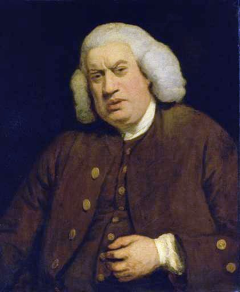
Samuel Johnson published A Dictionary of the English Language on April 15, 1755, a work of such ambition and personality that it dominated English lexicography for 173 years until the Oxford English Dictionary superseded it. Johnson completed the dictionary in nine years with the help of just six assistants, all of them copyists rather than scholars. The French Academy had taken 55 scholars forty years to produce a comparable work, and Johnson reportedly enjoyed pointing this out. The dictionary contained approximately 42,773 entries with 114,000 illustrative quotations drawn from English literature spanning two centuries. Johnson read widely and selected quotations personally, favoring Shakespeare, Milton, Dryden, Pope, and the King James Bible. Each word received a definition written in Johnson's characteristically precise and occasionally opinionated prose. His definition of "lexicographer" as "a harmless drudge" and "oats" as "a grain which in England is generally given to horses, but in Scotland supports the people" became famous examples of his wit infiltrating the work. Johnson had proposed the project to a consortium of London booksellers in 1746, promising to complete it in three years. Robert Dodsley and his partners advanced him 1,575 pounds, a substantial sum that nevertheless barely covered the costs of assistants, reference books, and nine years of living expenses. Johnson worked in the garret of his house at 17 Gough Square, standing at a desk surrounded by books propped open to pages he was mining for quotations. His method was to read widely and underline words and passages for his copyists to transcribe. The dictionary standardized English spelling and usage at a critical moment in the language's global expansion. British colonialism was spreading English across India, North America, and the Caribbean, and Johnson's dictionary became the reference standard for educated usage throughout the English-speaking world. His approach of defining words through literary quotation rather than abstract description established a methodology that lexicographers still follow. The garret on Gough Square is now a museum, the only surviving house Johnson occupied during his forty years in London.
April 15, 1755
271 years ago
Key Figures & Places
What Else Happened on April 15
Pope Stephen III convened the Lateran Council to formally reject the iconoclastic decrees issued by the Council of Hieria fifteen years earlier. By anathematizi…
Robert Guiscard captured Bari, ending five centuries of Byzantine rule in southern Italy. This surrender forced the Eastern Roman Empire to retreat entirely fro…
A river of blood ran red at the Terek as Timur's vultures circled Sarai's ashes. The Golden Horde's capital didn't just fall; it vanished under fire, leaving on…
French cavalry and cannon shattered the English army at Formigny on April 15, 1450, killing or capturing nearly the entire 4,000-man force and shattering Englan…
Swedish infantry didn't just fight; they marched in perfect lockstep while musketeers fired volleys that turned the mud red. Gustavus Adolphus led them at Lütze…
Thousands of starving peasants and hidden Christians held out for months inside Hara Castle. When the Tokugawa forces finally stormed the walls, they didn't jus…
Talk to History
Have a conversation with historical figures who witnessed this era. Ask questions, explore perspectives, and bring history to life.