

Shiloh's Brutal Dawn: Grant Defeats Confederates
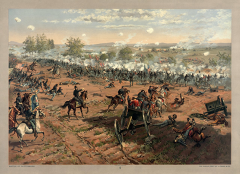
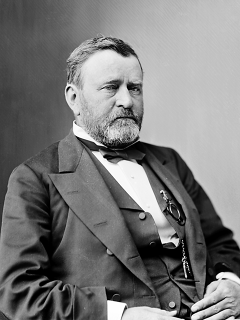
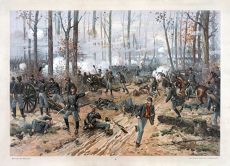
Confederate forces under General Albert Sidney Johnston launched a surprise dawn attack on Ulysses Grant's camps near Shiloh Church in southwestern Tennessee on April 6, 1862, catching the Union army completely unprepared. Grant's troops had not entrenched or posted adequate pickets, and the initial assault drove them back over a mile toward the Tennessee River. By the end of the first day's fighting, the battle had produced more American casualties than the Revolution, the War of 1812, and the Mexican War combined. The second day reversed the result when reinforcements arrived and Grant counterattacked, but Shiloh shattered the illusion on both sides that the war would be short. Johnston had concentrated 44,000 troops at Corinth, Mississippi, and marched them north to strike Grant's 40,000 before they could be reinforced by General Don Carlos Buell's Army of the Ohio, which was approaching from Nashville. The march was poorly coordinated and took three days instead of one, repeatedly alerting Grant's outlying units. Confederate General P.G.T. Beauregard wanted to cancel the attack, arguing that surprise had been lost. Johnston overruled him, reportedly saying, "I would fight them if they were a million." The first day's fighting centered on a sunken road that Union troops used as a natural trench, holding their position for six hours against repeated Confederate assaults. The position became known as the Hornets' Nest for the sound of bullets passing through the dense undergrowth. Johnston was struck in the leg by a bullet that severed an artery while leading a charge near the Peach Orchard. He bled to death within an hour, becoming the highest-ranking officer on either side killed during the entire war. Beauregard assumed command and halted the attack at dusk, believing victory was assured. Overnight, Buell's 18,000 fresh troops crossed the Tennessee River and joined Grant's battered forces. Lew Wallace's division, which had been lost on country roads for most of the first day, also arrived. Grant attacked at dawn on April 7 and pushed the Confederates back to their starting positions. Beauregard ordered a retreat to Corinth. Combined casualties exceeded 23,000, more than in all previous American wars combined, and the nation recoiled from the scale of killing that would become routine.
April 7, 1862
164 years ago
Key Figures & Places

What Else Happened on April 7
Attila the Hun razed the city of Metz, slaughtering its inhabitants and incinerating the structures in a brutal display of force. This devastation forced the Ro…

Attila the Hun sacked the Roman city of Metz on April 7, 451 AD, burning it so thoroughly that only a single chapel reportedly survived the destruction. The att…

Emperor Justinian I commissioned the Corpus Juris Civilis in 529 AD, ordering the jurist Tribonian to compile, organize, and reconcile over a thousand years of …
King Uneh Chan of Calakmul shattered the defenses of Palenque, plunging the rival city-state into a period of political chaos and architectural stagnation. This…
She didn't just wear a crown; she marched into London with her brother-in-law's head in a basket. In 1141, after crushing King Stephen at Lincoln, Matilda decla…
A single scroll in 1348 didn't just open doors; it burned bridges between Prague and Paris, forcing scholars to flee France for Bohemia. Charles IV bet his crow…
Talk to History
Have a conversation with historical figures who witnessed this era. Ask questions, explore perspectives, and bring history to life.