Electric Theatre Opens: The Dawn of the Movie Era
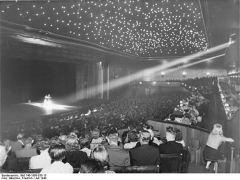
Thomas Tally charged ten cents admission at 262 South Main Street in Los Angeles and showed projected films in a dedicated indoor space. His Electric Theatre, which opened on April 2, 1902, was the first full-time movie theater in the United States, a permanent venue built specifically for the purpose of showing motion pictures to paying audiences. Before Tally, films were novelties shown in vaudeville houses between live acts, projected onto bedsheets at traveling shows, or viewed individually through Edison's Kinetoscope peep boxes. Tally was a Texas-born entrepreneur who had operated a Kinetoscope parlor in Los Angeles during the 1890s and recognized that the future belonged to projected images watched communally rather than peep shows viewed alone. His theater seated about 200 people and ran a continuous loop of short films, most lasting only a few minutes. Audiences could enter at any point, watch the program cycle through, and leave when they'd seen everything. The concept of a fixed showtime had not yet been invented. The films themselves were primitive by any standard. Edison's manufacturing company and the Lumière brothers produced most of the available content: trains arriving at stations, workers leaving factories, brief comic sketches, and actualities (early documentaries) of news events. A full program at the Electric Theatre might last 30 minutes. Audiences came anyway, drawn by the novelty and the price. Tally's model spread rapidly. By 1905, Pittsburgh entrepreneur Harry Davis had opened the Nickelodeon, charging five cents and attracting thousands of working-class patrons daily. Within two years, there were an estimated 8,000 nickelodeons across the United States. The storefront theater became the dominant form of public entertainment for American immigrants and working families who could not afford vaudeville or legitimate theater. The Electric Theatre also anchored Los Angeles as the center of American film culture, a geographic accident that would prove consequential when filmmakers began migrating west to escape Edison's patent enforcement and exploit Southern California's reliable sunlight.
April 2, 1902
124 years ago
Key Figures & Places

What Else Happened on April 2
Mehmed II positioned his massive bronze cannons before the walls of Constantinople, initiating a siege that shattered the final remnants of the Byzantine Empire…
Juan Ponce de León waded ashore on the Florida coast, claiming the peninsula for the Spanish Crown under the name La Florida. This expedition initiated centurie…
He thought he'd found an island full of gold and youth springs, not a swampy peninsula. Ponce de León's men suffered scurvy and heatstroke while mapping a land …
Juan Ponce de Leon made landfall near present-day St. Augustine on April 2, 1513, naming the land "La Florida" because he arrived during Pascua Florida, the Spa…
J. S. Bach premiered his cantata "Bleib bei uns, denn es will Abend werden" (BWV 6) in Leipzig on Easter Monday, weaving a luminous oboe melody through a medita…
Commodore William James shattered the perceived invincibility of the Maratha Navy by capturing the fortress of Suvarnadurg with a small squadron. This victory d…
Talk to History
Have a conversation with historical figures who witnessed this era. Ask questions, explore perspectives, and bring history to life.