

Ponce de León Lands in Florida: Spain Claims New World
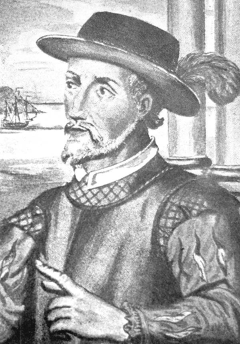
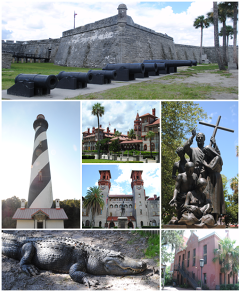
Juan Ponce de Leon made landfall near present-day St. Augustine on April 2, 1513, naming the land "La Florida" because he arrived during Pascua Florida, the Spanish Feast of Flowers celebrated at Easter. The expedition was the first documented European contact with the North American mainland, and the name Ponce de Leon chose for the territory has endured for over five centuries. The legend that he was searching for a Fountain of Youth was likely invented decades later by rival Spanish chroniclers trying to make him look foolish. Ponce de Leon was no wide-eyed adventurer. He had sailed on Columbus's second voyage in 1493, conquered and governed Puerto Rico, and amassed considerable wealth from gold mining and slave labor. His Florida expedition was a business venture authorized by a royal contract that granted him the right to discover, settle, and govern "the island of Bimini" and any other lands he found. The Spanish crown expected a return on its investment in the form of gold, converts, and territorial claims. The landing party encountered a coastline that was anything but empty. The Timucua and other indigenous peoples had inhabited Florida for thousands of years, building complex societies with extensive trade networks. Ponce de Leon's second expedition to Florida in 1521, an attempt to establish a permanent colony near Charlotte Harbor, met fierce Calusa resistance. Warriors attacked the landing party with arrows, and Ponce de Leon was struck in the thigh. He retreated to Cuba, where the wound became infected and killed him. Spain's subsequent colonization of Florida produced the oldest continuously occupied European settlement in the United States when Pedro Menendez de Aviles founded St. Augustine in 1565. Florida remained a Spanish possession for most of the next 300 years, briefly passing to Britain from 1763 to 1783 before reverting to Spain. The United States acquired it through the Adams-Onis Treaty in 1819. Ponce de Leon's landing initiated three centuries of European competition for control of southeastern North America.
April 2, 1513
513 years ago
Key Figures & Places


What Else Happened on April 2
Mehmed II positioned his massive bronze cannons before the walls of Constantinople, initiating a siege that shattered the final remnants of the Byzantine Empire…
Juan Ponce de León waded ashore on the Florida coast, claiming the peninsula for the Spanish Crown under the name La Florida. This expedition initiated centurie…
He thought he'd found an island full of gold and youth springs, not a swampy peninsula. Ponce de León's men suffered scurvy and heatstroke while mapping a land …
J. S. Bach premiered his cantata "Bleib bei uns, denn es will Abend werden" (BWV 6) in Leipzig on Easter Monday, weaving a luminous oboe melody through a medita…
Commodore William James shattered the perceived invincibility of the Maratha Navy by capturing the fortress of Suvarnadurg with a small squadron. This victory d…

The Coinage Act of 1792 created far more than a building where coins were stamped. Signed into law on April 2, 1792, it established a decimal currency system fo…
Talk to History
Have a conversation with historical figures who witnessed this era. Ask questions, explore perspectives, and bring history to life.