

Scott Dies in Antarctica: Eleven Miles From Safety
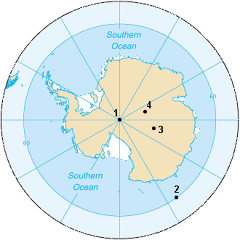
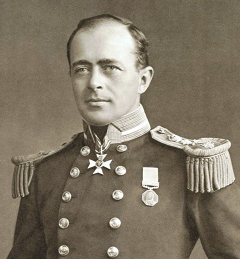
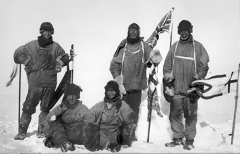
Robert Falcon Scott's last diary entry reads: "It seems a pity, but I do not think I can write more." He was found frozen in his tent on the Ross Ice Shelf, eleven miles from a supply depot that could have saved his life. Scott and his two remaining companions, Edward Wilson and Henry Bowers, died around March 29, 1912, after failing to reach the South Pole first and failing to survive the journey home. Their bodies were discovered eight months later, along with the diary that made Scott a legend. Scott's Terra Nova Expedition had reached the South Pole on January 17, 1912, only to find a Norwegian flag planted by Roald Amundsen's team 34 days earlier. "The worst has happened," Scott wrote. "Great God! This is an awful place." The five-man polar party began the 800-mile return journey in deteriorating conditions, hauling sledges that Amundsen's dog teams would have made light work of. Scott had rejected dogs in favor of man-hauling, a decision that cost everything. The retreat was a catalog of catastrophe. Edgar Evans, the strongest man in the party, collapsed from a head injury and died on February 17. Lawrence Oates, crippled by frostbitten feet that had turned gangrenous, walked out of the tent into a blizzard on March 16 with the words, "I am just going outside and may be some time," sacrificing himself to avoid slowing the others. Scott, Wilson, and Bowers made camp eleven miles from One Ton Depot, but a nine-day blizzard pinned them in place. The expedition's scientific specimens, 35 pounds of geological samples that Scott refused to abandon even as his party died, proved to contain fossils of Glossopteris, a fern that helped confirm the theory of continental drift. Scott's diary transformed him from a failed explorer into a symbol of British endurance, though later generations would question whether his decisions killed his men.
March 29, 1912
114 years ago
Key Figures & Places

What Else Happened on March 29

A barbarian king did what Rome couldn't: made conquerors and conquered equal under law. Gundobad's Lex Burgundionum at Lyon didn't just allow Gallo-Romans to ke…

Ottoman forces under Sultan Murad II stormed the walls of Thessalonica on March 29, 1430, overwhelming the Venetian garrison and the remaining Byzantine defende…

Edward of York destroyed Queen Margaret's Lancastrian army at Towton on March 29, 1461, in a snowstorm that became the bloodiest battle ever fought on English s…

His father was the Pope, and that was not even the scandalous part. Rodrigo Borgia, Pope Alexander VI, handed his illegitimate son Cesare the highest military c…

The Portuguese built Brazil's first capital on a cliff 279 feet above the harbor specifically so that goods, particularly sugar, would have to be hauled up the …

England handed Quebec back to France for the price of a peace treaty. The Treaty of Saint-Germain-en-Laye, signed on March 29, 1632, restored New France to Fren…
Talk to History
Have a conversation with historical figures who witnessed this era. Ask questions, explore perspectives, and bring history to life.