Naval Act of 1794: Birth of the U.S. Navy
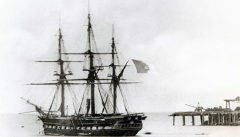
Algerian pirates were the reason America built a navy. Congress passed the Naval Act of 1794 on March 27 after corsairs from the Barbary states captured eleven American merchant ships and enslaved over 100 sailors in the Mediterranean. The act authorized the construction of six frigates, creating the foundation of what would become the United States Navy. The young republic had dismantled its Continental Navy after the Revolution, leaving its merchant fleet completely unprotected. American ships had previously sailed under the protection of treaties that Britain and France maintained with the Barbary states of North Africa. Independence stripped that protection away. The Barbary corsairs, operating from Algiers, Tunis, and Tripoli, demanded tribute payments from any nation whose ships entered the Mediterranean. The U.S. initially paid, but the ransoms and annual tribute consumed nearly 20 percent of the federal government's revenue by the early 1790s. The six frigates authorized by the act were designed by Joshua Humphreys, a Philadelphia shipbuilder who created vessels that were larger, faster, and more heavily armed than standard frigates of any European navy. The most famous, USS Constitution, carried 44 guns and was built with live oak from Georgia so dense that cannonballs bounced off her hull, earning the nickname "Old Ironsides." Construction took years and cost $688,888, an enormous sum for the infant republic. The frigates proved their worth almost immediately. The Quasi-War with France in 1798-1800 and the First Barbary War of 1801-1805 demonstrated that the United States could project naval power across the Atlantic. The War of 1812 confirmed it, as American frigates won a series of shocking single-ship victories against the Royal Navy. The Naval Act of 1794 transformed the United States from a coastal trading nation into a maritime power capable of defending its commerce worldwide.
March 27, 1794
232 years ago
Key Figures & Places

What Else Happened on March 27
Emperor Wu of Han secured the future of his dynasty by naming his eight-year-old son, Fuling, as his successor. This transition prevented a power vacuum during …
He was five years old when they placed the double crown on his head. Ptolemy V's regents immediately murdered his mother and plunged Egypt into civil war, losin…
He'd just murdered his rival in a church. Twenty-four hours earlier. Still, Robert the Bruce showed up at Scone for his coronation, knowing Edward I had spies e…
Pope Clement V excommunicated the entire city of Venice and banned all international trade with its merchants after the Republic seized the papal territory of F…
Pope John XXII issued the papal bull In Agro Dominico, formally condemning twenty-eight propositions from Meister Eckhart’s mystical writings as heretical. This…
Juan Ponce de Leon was not looking for the Fountain of Youth. That story was invented decades after his death by a political rival. What the Spanish conquistado…
Talk to History
Have a conversation with historical figures who witnessed this era. Ask questions, explore perspectives, and bring history to life.