Ponce de León Sees Florida: First European Sightings Begin
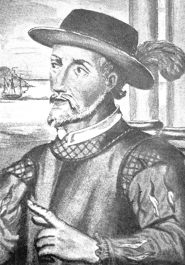
Juan Ponce de Leon was not looking for the Fountain of Youth. That story was invented decades after his death by a political rival. What the Spanish conquistador actually sought when he spotted the coast of Florida on March 27, 1513, was new territory to govern and, like every other Spanish explorer of his era, gold. He had sailed from Puerto Rico with three ships and a royal patent authorizing him to colonize any new lands he discovered. Ponce de Leon had grown rich as the first governor of Puerto Rico, where he enslaved the indigenous Taino population to mine gold and work plantations. When a political rival secured his removal from the governorship, Ponce de Leon obtained a contract from King Ferdinand to explore and settle islands reported to lie north of Cuba. He sailed on March 3, 1513, and first sighted land near present-day St. Augustine on April 2, during the season of Easter, which the Spanish called Pascua Florida, the "feast of flowers." He named the territory La Florida and claimed it for Spain, believing it was a large island. His expedition sailed south along the Atlantic coast, rounded the Florida Keys, and traveled partway up the Gulf coast before encounters with hostile Calusa warriors forced a retreat. Ponce de Leon returned to Puerto Rico, organized a colonization expedition, and sailed back to Florida in 1521. The Calusa attacked again, and Ponce de Leon was struck by an arrow. He retreated to Havana, where he died of his wound. The Fountain of Youth legend was popularized by Gonzalo Fernandez de Oviedo, a chronicler who disliked Ponce de Leon and used the story to portray him as gullible. No contemporary document from the expedition mentions a fountain. Ponce de Leon's actual legacy was introducing European colonization to mainland North America, beginning a process that would reshape the continent over the next five centuries.
March 27, 1513
513 years ago
Key Figures & Places

What Else Happened on March 27
Emperor Wu of Han secured the future of his dynasty by naming his eight-year-old son, Fuling, as his successor. This transition prevented a power vacuum during …
He was five years old when they placed the double crown on his head. Ptolemy V's regents immediately murdered his mother and plunged Egypt into civil war, losin…
He'd just murdered his rival in a church. Twenty-four hours earlier. Still, Robert the Bruce showed up at Scone for his coronation, knowing Edward I had spies e…
Pope Clement V excommunicated the entire city of Venice and banned all international trade with its merchants after the Republic seized the papal territory of F…
Pope John XXII issued the papal bull In Agro Dominico, formally condemning twenty-eight propositions from Meister Eckhart’s mystical writings as heretical. This…
Nicholas Guy arrived at Cuper’s Cove, Newfoundland, becoming the first English child recorded in the territory. This birth signaled the transition of the colony…
Talk to History
Have a conversation with historical figures who witnessed this era. Ask questions, explore perspectives, and bring history to life.