

Charles I Ascends: The Path to English Civil War
Charles I inherited three kingdoms and managed to start a civil war in each one. When he became King of England, Scotland, and Ireland on March 27, 1625, upon the death of his father James I, he took over realms already strained by religious conflict, parliamentary assertiveness, and chronic underfunding of the crown. Within two decades, he would be at war with his own subjects, and within 24 years, he would lose his head on a scaffold outside his own banqueting hall. Charles believed in the divine right of kings with a fervor that made compromise impossible. He married the Catholic French princess Henrietta Maria, alarming Protestant England. He appointed William Laud as Archbishop of Canterbury, whose High Church reforms angered Puritans who saw them as a return to Catholicism. When Parliament refused to fund his policies, Charles dissolved it and ruled without it for eleven years, financing his government through unpopular measures like ship money, a medieval tax he extended to inland counties. Scotland broke first. When Charles tried to impose a new prayer book on the Scottish Kirk in 1637, Edinburgh erupted in riots. The Scots raised an army, and Charles, unable to fund a military response without Parliament, was forced to recall it. The Long Parliament of 1640 immediately began dismantling royal power, executing the king's chief minister, the Earl of Strafford, and abolishing the Star Chamber. By 1642, king and Parliament had raised rival armies, and the English Civil War began. Charles lost. Parliamentary forces under Oliver Cromwell defeated the Royalists, and Charles was tried by a specially created court for treason against the English people. He was executed on January 30, 1649, maintaining his dignity on the scaffold and wearing an extra shirt so he would not shiver in the cold and appear afraid. His execution made England a republic for the only time in its history, an experiment that lasted eleven years before his son was restored to the throne.
March 27, 1625
401 years ago
Key Figures & Places

Scotland
Wikipedia
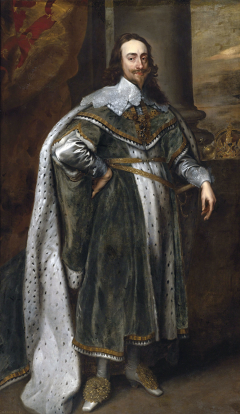
Charles I of England
Wikipedia
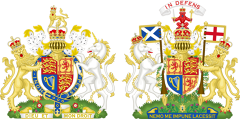
British monarchy
Wikipedia

Ireland
Wikipedia
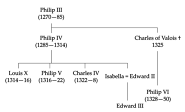
English claims to the French throne
Wikipedia

Charles I of England
Wikipedia

Monarchy of the United Kingdom
Wikipedia

English claims to the French throne
Wikipedia

England
Wikipedia

Scotland
Wikipedia

James VI and I
Wikipedia

England
Wikipedia

Scotland
Wikipedia

Ireland
Wikipedia

1566
Wikipedia

Republic of Ireland
Wikipedia

France
Wikipedia
What Else Happened on March 27
Emperor Wu of Han secured the future of his dynasty by naming his eight-year-old son, Fuling, as his successor. This transition prevented a power vacuum during …
He was five years old when they placed the double crown on his head. Ptolemy V's regents immediately murdered his mother and plunged Egypt into civil war, losin…
He'd just murdered his rival in a church. Twenty-four hours earlier. Still, Robert the Bruce showed up at Scone for his coronation, knowing Edward I had spies e…
Pope Clement V excommunicated the entire city of Venice and banned all international trade with its merchants after the Republic seized the papal territory of F…
Pope John XXII issued the papal bull In Agro Dominico, formally condemning twenty-eight propositions from Meister Eckhart’s mystical writings as heretical. This…

Juan Ponce de Leon was not looking for the Fountain of Youth. That story was invented decades after his death by a political rival. What the Spanish conquistado…
Talk to History
Have a conversation with historical figures who witnessed this era. Ask questions, explore perspectives, and bring history to life.