Napoleon Returns: The Hundred Days Begin
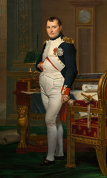
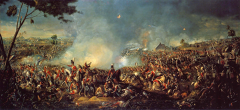
Napoleon marched into Paris on March 20, 1815, at the head of a growing army, without firing a shot. Louis XVIII, the Bourbon king restored to the throne after Napoleon's abdication ten months earlier, had fled the city hours before. The emperor who had been exiled to the tiny Mediterranean island of Elba was back in power, and Europe's great powers faced the nightmare they thought they had buried. Napoleon had escaped Elba on February 26 with roughly 1,000 men and landed near Cannes on March 1. The journey north became a masterclass in political theater. At Laffrey, south of Grenoble, Napoleon encountered the 5th Regiment of the Line, sent to arrest him. He walked forward alone, opened his greatcoat, and reportedly declared: "Soldiers, if there is one among you who wishes to kill his Emperor, here I am." The regiment defected to him on the spot. Marshal Ney, who had promised Louis XVIII he would bring Napoleon back to Paris in an iron cage, joined Napoleon with his entire force at Auxerre. The Bourbon monarchy collapsed without a battle. Louis XVIII's support evaporated as soldiers, officers, and entire garrisons declared for Napoleon. The king's flight to Ghent on the night of March 19-20 completed the restoration of Napoleonic power in exactly twenty days. The Congress of Vienna, where European diplomats were redrawing the continent's borders, reacted with a joint declaration on March 13 branding Napoleon an outlaw and enemy of peace. Britain, Austria, Prussia, and Russia pledged 150,000 troops each to destroy him. Napoleon attempted to preempt the coalition by striking north into Belgium, defeating the Prussians at Ligny on June 16 and engaging Wellington at Waterloo on June 18. Waterloo ended it. Napoleon's defeat, caused by a combination of tactical errors, the late arrival of Prussian reinforcements on Wellington's flank, and the exhaustion of the Imperial Guard, was total. He abdicated on June 22, surrendered to the British on July 15, and was exiled to Saint Helena in the South Atlantic, where he died in 1821. The Hundred Days proved Napoleon could still inspire armies, but no longer defeat them.
March 20, 1815
211 years ago
Key Figures & Places

What Else Happened on March 20
A Thracian shepherd who couldn't speak proper Latin became master of Rome. Maximinus Thrax never set foot in the Senate, never visited the capital during his en…
Emperor Tenmu ascended the throne at the Palace of Kiyomihara, consolidating imperial authority after his victory in the Jinshin War. By centralizing power and …
He didn't want the job. Michael IV Autoreianos, a respected scholar and monk, tried to refuse when Emperor Theodore I Laskaris appointed him Ecumenical Patriarc…
Five Swedish noblemen were publicly beheaded in Linkoping on Maundy Thursday, executed by Duke Charles for supporting King Sigismund during the civil war over S…
Five noblemen were beheaded in Linkoping's main square on Maundy Thursday, the day Christians commemorate Jesus washing his disciples' feet as an act of humilit…
The Dutch government chartered the United East Indies Company, granting it a monopoly over Asian trade and the unprecedented power to maintain armies and sign t…
Talk to History
Have a conversation with historical figures who witnessed this era. Ask questions, explore perspectives, and bring history to life.