

Union Army Stops Returning Fugitive Slaves
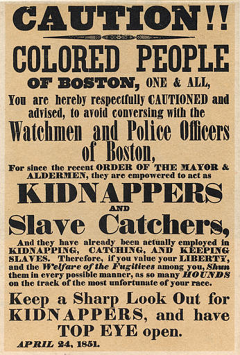
The United States government ordered all Union Army officers to stop returning fugitive slaves to their owners on March 13, 1862, a directive that effectively nullified the Fugitive Slave Act of 1850 and marked a decisive shift in the moral character of the Civil War. The order came ten months before the Emancipation Proclamation and represented the moment when the Union began fighting not just to preserve the nation but to dismantle slavery. The Fugitive Slave Act had been among the most hated laws in the North. It required federal marshals and private citizens to assist in the capture and return of escaped slaves, imposed heavy fines on anyone who aided runaways, and denied accused fugitives the right to a jury trial. Abolitionists had defied the law openly through the Underground Railroad, but Union Army commanders in the field faced an immediate practical dilemma: enslaved people were fleeing to Union lines in growing numbers, and officers were divided on whether to return them. General Benjamin Butler had improvised a solution in May 1861 by declaring escaped slaves "contraband of war," refusing to return them on the grounds that they had been used to support the Confederate military effort. Other commanders adopted the policy, but it lacked uniform legal backing. Some Union officers in border states continued returning fugitives to maintain the loyalty of slaveholding Unionists in Kentucky, Maryland, and Missouri. The March 13, 1862, directive, formalized in an additional article of war that Congress passed the same day, ended the ambiguity. Any Union officer who returned a fugitive slave to a Confederate owner faced dismissal from service. The measure passed with support from moderate Republicans who had previously resisted interference with slavery. The ban did not free slaves directly, but it guaranteed that the Union Army would function as an instrument of liberation rather than an enforcer of the slaveholder's property claims. Freedom now advanced with every mile the army marched south.
March 13, 1862
164 years ago
Key Figures & Places

United States
Wikipedia
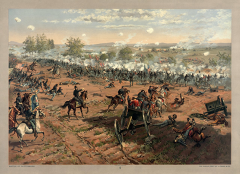
American Civil War
Wikipedia
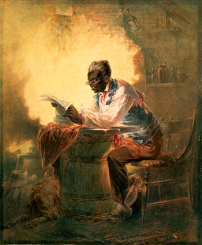
Emancipation Proclamation
Wikipedia
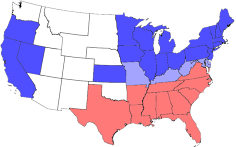
Union (American Civil War)
Wikipedia
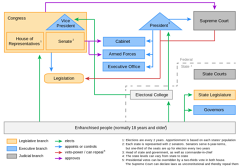
Federal government of the United States
Wikipedia
Fugitive Slave Law of 1850
Wikipedia
Fugitive Slave Act of 1850
Wikipedia

Act Prohibiting the Return of Slaves
Wikipedia

United States Congress
Wikipedia
Fugitive Slave Act of 1850
Wikipedia

Emancipation Proclamation
Wikipedia

American Civil War
Wikipedia
Southern United States
Wikipedia

Negro Soldier Bill
Wikipedia

African American
Wikipedia

Confederate States Army
Wikipedia

Confederate
Wikipedia
What Else Happened on March 13
The Praetorian Guard dragged both bodies through Rome's streets before dumping them in the Tiber River. Elagabalus was eighteen when soldiers murdered him in th…
The Roman Senate chose him — not the clergy. Felix III became pope in 483 because Gothic King Odoacer, who'd deposed the last Western Roman emperor seven years …

Three hundred thirteen men defeated an army three times their size and changed the trajectory of a religion. The Battle of Badr on March 13, 624 CE, fought at t…
Three hundred thirteen men faced a thousand. Muhammad's followers were outnumbered three-to-one at Badr's wells, seventy miles from Medina, but they'd seized th…
The remains of Saint Nicephorus returned to Constantinople, finding their final resting place in the Church of the Holy Apostles. This ceremonial reburial signa…
Cardinal Gregorio Conti assumed the title of Victor IV, challenging the legitimacy of Pope Innocent II after the death of Anacletus II. This schism deepened the…
Talk to History
Have a conversation with historical figures who witnessed this era. Ask questions, explore perspectives, and bring history to life.