Victory at Badr: Islam Emerges as Arabia's Force
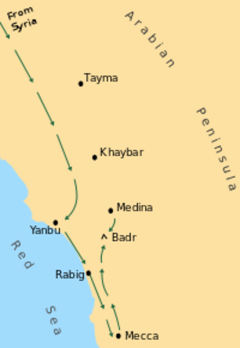
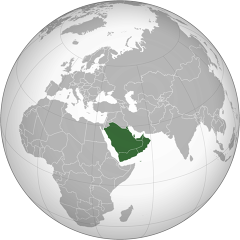
Three hundred thirteen men defeated an army three times their size and changed the trajectory of a religion. The Battle of Badr on March 13, 624 CE, fought at the wells of Badr roughly 80 miles southwest of Medina, gave Muhammad his first major military victory and transformed Islam from a persecuted religious community into a political and military force that would reshape Arabia within a decade. Muhammad and his followers had emigrated from Mecca to Medina two years earlier, driven out by the Quraysh, Mecca's ruling merchant tribe. The Muslim community survived partly through raiding Meccan caravans, a practice that provided both economic sustenance and political pressure. In March 624, Muhammad led 313 fighters to intercept a large Quraysh caravan returning from Syria. The caravan's leader, Abu Sufyan, diverted his route and sent word to Mecca for reinforcements. A Meccan army of approximately 1,000 men marched north to confront the Muslim force. The two armies met at the wells of Badr. Muhammad positioned his forces at the nearest well, with the desert at their backs, and ordered the other wells filled to deny water to the Quraysh. The Muslim fighters were outnumbered but motivated by religious conviction and tactical advantages. The battle began with individual combat between champions from both sides, followed by a general engagement. Muhammad directed the fighting from a shelter behind the lines. The Muslim archers and infantry held their formation while the larger Meccan force fought in a less coordinated manner. After several hours, the Quraysh broke and fled, leaving approximately 70 dead and 70 captured. Muslim losses numbered around 14. The Quran references Badr directly, attributing the victory to divine intervention. The political consequences were enormous. Tribes across Arabia took notice. Muhammad's authority in Medina was consolidated, the Quraysh's aura of invincibility was shattered, and the foundations of an Islamic state were laid. Badr made Islam a power that could not be ignored.
March 13, 624
1402 years ago
Key Figures & Places

What Else Happened on March 13
The Praetorian Guard dragged both bodies through Rome's streets before dumping them in the Tiber River. Elagabalus was eighteen when soldiers murdered him in th…
The Roman Senate chose him — not the clergy. Felix III became pope in 483 because Gothic King Odoacer, who'd deposed the last Western Roman emperor seven years …
Three hundred thirteen men faced a thousand. Muhammad's followers were outnumbered three-to-one at Badr's wells, seventy miles from Medina, but they'd seized th…
The remains of Saint Nicephorus returned to Constantinople, finding their final resting place in the Church of the Holy Apostles. This ceremonial reburial signa…
Cardinal Gregorio Conti assumed the title of Victor IV, challenging the legitimacy of Pope Innocent II after the death of Anacletus II. This schism deepened the…
Michael VIII Palaiologos handed over the entire Byzantine trade network to Genoa in exchange for fifty warships and a promise. The Treaty of Nymphaeum gave Geno…
Talk to History
Have a conversation with historical figures who witnessed this era. Ask questions, explore perspectives, and bring history to life.