

Lincoln Conspirators Hanged: First U.S. Woman Executed
Four people were hanged in the yard of the Old Arsenal Penitentiary in Washington on July 7, 1865, convicted of conspiring with John Wilkes Booth to assassinate President Abraham Lincoln. Among them was Mary Surratt, the first woman executed by the United States federal government, whose death sentence sparked immediate controversy that has never fully resolved. The conspiracy had originally planned to kidnap Lincoln and trade him for Confederate prisoners of war. When the Confederacy collapsed in April 1865, Booth transformed the plot into a coordinated assassination targeting Lincoln, Vice President Andrew Johnson, and Secretary of State William Seward. On the night of April 14, Booth shot Lincoln at Ford s Theatre. Lewis Powell forced his way into Seward s home and slashed the Secretary of State with a knife, nearly killing him. George Atzerodt, assigned to kill Johnson, lost his nerve and spent the evening drinking at a hotel bar. The military tribunal that tried the conspirators was controversial from the start. Civilian courts were functioning in Washington, and critics argued that civilians should not face military justice. The eight defendants were tried together over seven weeks. David Herold, who had accompanied Booth during his escape, was convicted for aiding the assassin. Powell was convicted for the attack on Seward. Atzerodt was convicted for his role in the conspiracy despite his failure to act. Mary Surratt was convicted for providing her boarding house as a meeting place for the conspirators. Surratt s conviction remains the most contested. Five of the nine military commissioners signed a petition recommending clemency for her on the grounds that the evidence was circumstantial. President Andrew Johnson later claimed he never saw the clemency petition, though Judge Advocate General Joseph Holt insisted he had presented it. Surratt maintained her innocence to the end. The executions were photographed by Alexander Gardner, producing some of the most haunting images in American history. The hooded figures on the scaffold, the trap doors falling open, and the bodies hanging in the July heat created a visual record of government vengeance that Americans debated for generations.
July 7, 1865
161 years ago
Key Figures & Places
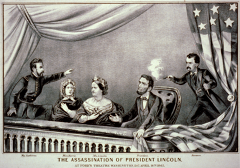
assassination of Abraham Lincoln
Wikipedia
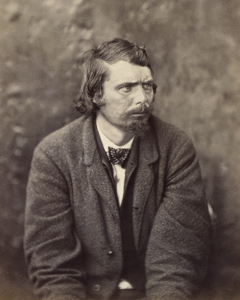
George Atzerodt
Wikipedia
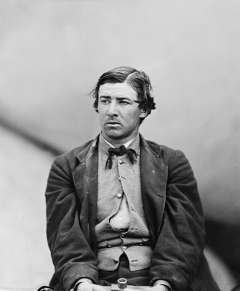
David Herold
Wikipedia
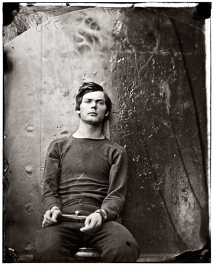
Lewis Powell
Wikipedia
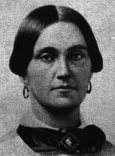
Mary Surratt
Wikipedia

George Atzerodt
Wikipedia

David Herold
Wikipedia

Lewis Powell (conspirator)
Wikipedia

Mary Surratt
Wikipedia

John Wilkes Booth
Wikipedia

Abraham Lincoln
Wikipedia
What Else Happened on July 7
Nineteen weeks. That's how long Tyre held out against the Venetian fleet and Jerusalem's Crusader army in 1124. The Doge himself, Domenico Michiel, commanded 12…
The siege lasted five months, but it was the Venetian fleet's 120 ships that decided Tyre's fate. Doge Domenico Michiel didn't just want victory—he demanded a t…

Pope Callixtus III ordered a formal retrial of Joan of Arc s case in 1456, and on July 7 the ecclesiastical court declared her innocent of all charges, annullin…
Hernán Cortés commanded maybe 440 Spanish soldiers and a few thousand Tlaxcalan allies. Against them: somewhere between 20,000 and 40,000 Aztec warriors on an o…
Jacques Cartier's crew offered knives and iron goods to the Mi'kmaq on July 7, 1534. The Mi'kmaq responded by lifting furs on sticks, signaling trade. Within ho…
Jacques Cartier traded furs for European goods with the Mi'kmaq people in the Chaleur Bay, initiating the first formal contact between France and the Indigenous…
Talk to History
Have a conversation with historical figures who witnessed this era. Ask questions, explore perspectives, and bring history to life.