

Pink's War Begins: Air Power Rises Alone
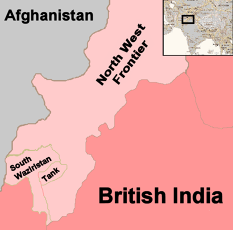
The Royal Air Force flew its first independent military operation on March 9, 1925, when aircraft bombed positions of the Howi Mahsud tribe in South Waziristan on the Northwest Frontier of British India. Pink's War, named after Wing Commander Richard Pink who commanded the operation, lasted fifty-four days and demonstrated that air power alone could achieve results that had previously required thousands of ground troops and months of costly mountain warfare. The RAF had been fighting for institutional survival since the end of World War I. Both the British Army and Royal Navy wanted to absorb the air service back into their own structures, arguing that independent air power was an unnecessary expense. Air Marshal Hugh Trenchard, the RAF's chief, needed to prove that aircraft could perform missions more cheaply and effectively than traditional forces. The tribal frontier of India provided the testing ground. The Howi Mahsud, a sub-section of the Mahsud tribe in Waziristan, had been raiding settled areas and refusing to surrender culprits to British authorities. Standard British practice would have sent a punitive column of infantry, cavalry, and artillery into the mountains — an expensive, slow, and casualty-producing operation that the local terrain heavily favored the defenders. Trenchard proposed an alternative: sustained aerial bombing and strafing to pressure the tribe into compliance without committing ground forces. Pink assembled a force of Bristol F.2 Fighters and de Havilland DH.9As at Miranshah and Tank airfields. Beginning March 9, the aircraft bombed tribal villages, livestock, and fortified positions in daily sorties. Leaflets warned civilians to evacuate before attacks. The campaign was not exclusively aerial — political officers maintained contact with tribal leaders throughout, and the combination of bombing pressure and negotiation was the actual mechanism of coercion. The Howi Mahsud submitted on May 1, 1925, agreeing to British terms including the surrender of rifles and payment of fines. RAF casualties were minimal: two aircraft lost to ground fire, with both crews surviving. Pink's War proved Trenchard's thesis and secured the RAF's independence as a separate service branch. The doctrine of "air policing" became standard British imperial practice in Iraq, Aden, and the Northwest Frontier throughout the 1920s and 1930s, using air power to control vast territories at a fraction of the cost of ground garrisons. The operation's success also raised ethical questions about bombing civilian areas that would intensify dramatically during World War II.
March 9, 1925
101 years ago
Key Figures & Places

What Else Happened on March 9

Emperor Wu of Han took the Chinese throne at age fifteen in 141 BC and held it for 54 years, the longest reign in Chinese imperial history until the Kangxi Empe…
Liu Che ascended the throne as Emperor Wu, initiating a fifty-four-year reign that transformed China into a centralized Confucian state. By expanding imperial b…
100,000 pilgrims heard Muhammad deliver what nobody knew would be his final words at Mount Arafat. The sermon lasted just minutes, but Muhammad made his scribe …
Monks at the Quedlinburg Abbey recorded the name Litua for the first time in 1009, documenting the death of Saint Bruno of Querfurt during his mission to conver…
The emperor's mistress got her own palace wing, wore purple silks reserved for empresses, and sat beside Constantine IX at state banquets while his actual wife …
Jalal ad-Din Mingburnu seized Tbilisi, slaughtering thousands of its Christian inhabitants and forcing the Georgian royal court to flee to Kutaisi. This brutal …
Talk to History
Have a conversation with historical figures who witnessed this era. Ask questions, explore perspectives, and bring history to life.