

Emperor Wu Expands China: Han Dynasty Rises Through Confucian Rule
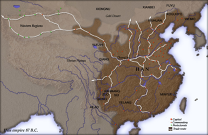
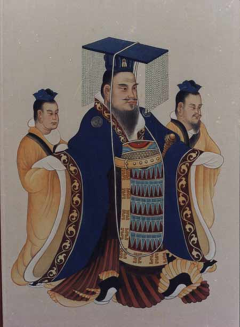
Emperor Wu of Han took the Chinese throne at age fifteen in 141 BC and held it for 54 years, the longest reign in Chinese imperial history until the Kangxi Emperor surpassed it more than 1,800 years later. Under Wu, the Han Dynasty expanded from a cautious, inward-looking state into an empire stretching from Korea to Central Asia, and the Confucian philosophy he adopted as state ideology would shape Chinese governance for the next two millennia. Wu inherited a prosperous but strategically defensive empire. His predecessors had followed a policy of accommodation with the Xiongnu, the nomadic confederation that dominated the northern steppe. They paid tribute in silk, grain, and imperial brides to keep the peace. Wu reversed this policy entirely. Beginning in 133 BC, he launched a series of massive military campaigns against the Xiongnu that pushed them out of the Ordos region and deep into Mongolia. His cavalry forces, sometimes numbering over 100,000, fought across deserts and grasslands in campaigns that lasted years. The diplomatic consequences were equally transformative. In 139 BC, Wu sent Zhang Qian westward to seek an alliance with the Yuezhi, a people displaced by the Xiongnu. Zhang Qian's thirteen-year journey — he was captured by the Xiongnu and held for ten years before escaping — took him to the Fergana Valley, Bactria, and the edges of the Parthian Empire. Although the diplomatic mission failed, Zhang Qian's reports opened Chinese eyes to a world of wealthy civilizations to the west. Trade routes that would later be called the Silk Road grew from these initial contacts. Domestically, Wu centralized power more aggressively than any previous Han emperor. He adopted Confucianism as the state philosophy in 136 BC on the recommendation of scholar Dong Zhongshu, establishing an imperial academy to train officials in the Confucian classics. This created the examination-based bureaucracy that would endure, with modifications, until 1905. He also nationalized the salt and iron industries, imposed government monopolies on key commodities, and debased the currency to fund his wars. The costs of Wu's ambitions were severe. Military campaigns drained the treasury and devastated farming populations conscripted to fight or supply the armies. By the end of his reign, the empire's population had declined significantly, and Wu himself issued a rare imperial apology acknowledging the suffering his policies had caused. Emperor Wu's reign established the geographic, philosophical, and administrative foundations of the Chinese state that would persist for two thousand years.
March 9, 141 BC
Key Figures & Places

What Else Happened on March 9
Liu Che ascended the throne as Emperor Wu, initiating a fifty-four-year reign that transformed China into a centralized Confucian state. By expanding imperial b…
100,000 pilgrims heard Muhammad deliver what nobody knew would be his final words at Mount Arafat. The sermon lasted just minutes, but Muhammad made his scribe …
Monks at the Quedlinburg Abbey recorded the name Litua for the first time in 1009, documenting the death of Saint Bruno of Querfurt during his mission to conver…
The emperor's mistress got her own palace wing, wore purple silks reserved for empresses, and sat beside Constantine IX at state banquets while his actual wife …
Jalal ad-Din Mingburnu seized Tbilisi, slaughtering thousands of its Christian inhabitants and forcing the Georgian royal court to flee to Kutaisi. This brutal …
Tsar Ivan Asen II crushed the forces of Theodore of Epirus at the Battle of Klokotnitsa, capturing the Byzantine ruler and his entire court. This decisive victo…
Talk to History
Have a conversation with historical figures who witnessed this era. Ask questions, explore perspectives, and bring history to life.