

Taft Dies: Only Man to Lead Both Branches
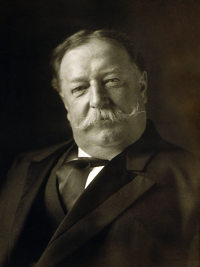
William Howard Taft is the only person in American history to serve as both President of the United States and Chief Justice of the Supreme Court, and by his own account, only one of those jobs made him happy. Taft died on March 8, 1930, at age 72, roughly five weeks after retiring from the Court due to declining health. He had spent the presidency miserable and the chief justiceship fulfilled, making his career a study in how the wrong job can diminish a capable person and the right one can restore them. Taft was born on September 15, 1857, in Cincinnati, Ohio, to a politically connected family — his father, Alphonso Taft, had served as Secretary of War and Attorney General under Ulysses Grant. William attended Yale, studied law at the University of Cincinnati, and began a judicial career that was his true calling. He served as a federal circuit judge, Solicitor General, the first civilian governor of the Philippines, and Secretary of War under Theodore Roosevelt before Roosevelt handpicked him as his presidential successor in 1908. Taft won the presidency easily, defeating William Jennings Bryan. But the office suited him poorly. He lacked Roosevelt's political instincts and energy, moved slowly on reform, and alienated progressives within his own party by supporting the Payne-Aldrich Tariff, which raised rates rather than lowering them as promised. Roosevelt grew disgusted with his protege, challenged him for the 1912 Republican nomination, and when that failed, ran as a third-party candidate. The split handed the election to Woodrow Wilson. After leaving the White House in 1913, Taft taught law at Yale and served on the National War Labor Board during World War I. Warren Harding appointed him Chief Justice in 1921, and Taft later said it was the highest honor of his life. He proved an effective administrator, lobbying Congress successfully for the construction of the Supreme Court Building (completed after his death) and streamlining the Court's docket through the Judiciary Act of 1925, which gave the Court discretion over which cases to hear. Taft's weight — he exceeded 300 pounds during his presidency — contributed to chronic health problems including heart disease that forced his retirement on February 3, 1930. His dual career remains unique in American constitutional history, a reminder that the presidency is not always the pinnacle even for those who hold it.
March 8, 1930
96 years ago
Key Figures & Places



What Else Happened on March 8
Ferdowsi finished his monumental epic, the Shāhnāmeh, after thirty years of meticulous labor. By recording the myths and history of ancient Persia in pure Persi…
His mother ruled for seventeen years while nobles tried to replace her with every available man — her husband, her ex-husband, even her teenage son. But Urraca …
They entered through the latrine chute. That's how Philip II's soldiers finally breached Richard the Lionheart's supposedly impregnable fortress after six month…
The butchers and bakers won. On the frozen fields of Hausbergen, Strasbourg's shopkeepers and guild members—armed with pikes they'd forged themselves—faced down…
Duke John of Finland established the city of Pori on the banks of the Kokemäenjoki River to consolidate trade along the Gulf of Bothnia. By relocating merchants…
The Spanish explorer stumbled onto a ghost city swallowed by jungle and didn't realize he'd found one of history's greatest astronomical observatories. Diego Ga…
Talk to History
Have a conversation with historical figures who witnessed this era. Ask questions, explore perspectives, and bring history to life.