Bell Receives Patent: The Telephone Era Begins
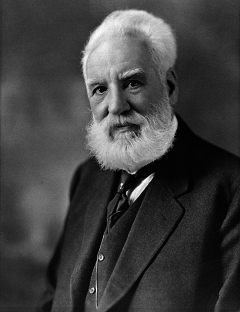
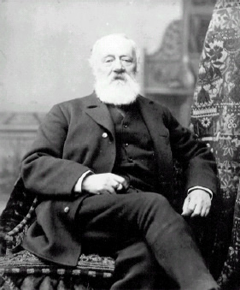
Alexander Graham Bell beat his rival to the patent office by hours. On March 7, 1876, the US Patent Office granted Bell patent number 174,465 for "the method of, and apparatus for, transmitting vocal or other sounds telegraphically," giving him legal ownership of the telephone. Elisha Gray had filed a patent caveat for a remarkably similar device the same day — February 14, 1876 — but Bell's full patent application was recorded first. The controversy over who truly invented the telephone has never been fully resolved. Bell was born in Edinburgh, Scotland, in 1847, to a family professionally devoted to speech and hearing. His father developed a system of "Visible Speech" to teach the deaf, and Bell continued this work after emigrating to Canada and then the United States. His experiments with transmitting sound electrically grew from his work with deaf students, including his future wife Mabel Hubbard, who had lost her hearing to scarlet fever at age five. The critical breakthrough came at Bell's laboratory in Boston. His patent described a transmitter that used a vibrating membrane to vary an electric current in response to sound waves, and a receiver that converted those varying currents back into sound. The first successful transmission of intelligible speech occurred on March 10, 1876, three days after the patent was granted, when Bell spoke the famous words: "Mr. Watson, come here — I want to see you." His assistant Thomas Watson, in an adjacent room, heard them clearly through the receiver. The patent became the most litigated in American history. Bell and his financial backers faced over 600 lawsuits, including five that reached the Supreme Court. Gray, Antonio Meucci, Daniel Drawbaugh, and others all claimed priority. The courts consistently upheld Bell's patent, though historians continue to debate whether Bell may have had access to Gray's caveat. Bell founded the Bell Telephone Company in 1877. By 1886, over 150,000 telephone subscribers were connected in the United States. Bell himself moved on to other interests, including aviation and hydrofoils, and never made another telephone call after the initial years of invention. The telephone transformed human communication more fundamentally than any invention since writing, and it began with a patent filed on a single contested morning.
March 7, 1876
150 years ago
Key Figures & Places
What Else Happened on March 7
Antoninus Pius died after a peaceful twenty-three-year reign, leaving the Roman Empire to his adoptive sons, Marcus Aurelius and Lucius Verus. This transition e…
Rome got two emperors for the price of one when Marcus Aurelius refused to rule alone. His adoptive father Antoninus Pius had just died, and Marcus immediately …
The 80-year-old governor was reading poetry when the mob arrived demanding he become emperor. Gordian I hadn't sought power—African landowners rebelled against …
Emperor Constantine I declared the dies Solis — the day of the Sun — an official day of rest throughout the Roman Empire on March 7, 321 AD, and the world has o…
Macarius I refused to recant even as the emperor's guards dragged him from the council chamber. The Third Council of Constantinople had spent months debating wh…
Konrad III secured the German throne at Coblenz, backed by the papal legate Theodwin. This election formally launched the Hohenstaufen dynasty, initiating a cen…
Talk to History
Have a conversation with historical figures who witnessed this era. Ask questions, explore perspectives, and bring history to life.