Augustus Claims Crown: Rome Unifies Church and State
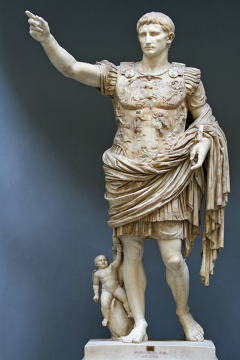
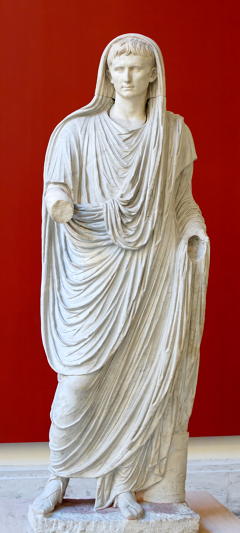
Augustus merged the Roman state with Roman religion on a single day in 12 BC when he assumed the title of Pontifex Maximus, making himself both the political ruler of the empire and the supreme authority over its religious life. The office had existed for centuries as an elected position among Roman priests. Augustus made it inseparable from imperial power, and every emperor after him held it until Gratian renounced the title in 382 AD — nearly four centuries later. The timing was deliberate. Augustus had waited years for this moment. The previous Pontifex Maximus was Marcus Aemilius Lepidus, his former ally in the Second Triumvirate, who had been stripped of political power after a failed power grab in 36 BC but retained the religious title because it was held for life. Augustus refused to seize it by force, choosing instead to wait for Lepidus to die. When Lepidus died in 13 BC, Augustus allowed a decent interval before claiming the office through a formal election in March 12 BC. The Pontifex Maximus held authority over the Vestal Virgins, the Roman calendar, public religious ceremonies, and the interpretation of sacred law. The position granted access to the Regia, the symbolic heart of Rome's religious establishment in the Forum. Augustus consolidated this with his existing powers as princeps, imperator, and holder of tribunician authority, creating a concentration of sacred and secular power that no Roman had possessed before. Augustus’s assumption of the office completed a transformation of Roman governance that had begun with his victory over Mark Antony and Cleopatra at Actium in 31 BC. By controlling religion alongside legislation, military command, and the treasury, he eliminated any independent institutional check on his authority. The Senate retained formal prerogatives but could not challenge a ruler who spoke for both the state and the gods. The title Pontifex Maximus outlasted the Roman Empire itself. When Christianity became the state religion, the title was eventually adopted by the Bishop of Rome, and the Pope holds it today. Augustus's consolidation of religious and political authority in 12 BC created the template for divine-right rulership that shaped European governance for the next eighteen centuries.
March 6, 12 BC
Key Figures & Places
What Else Happened on March 6
Seven years in a dungeon, and the Caliph still thought they'd break. The 42 Byzantine officers captured when Amorium fell in 838 weren't tortured — they were gi…
Nikephoros Phokas shattered the Emirate of Crete by capturing its capital, Chandax, after a grueling ten-month siege. This victory dismantled the base for Medit…
They climbed through the toilet chute. That's how Philip II's soldiers breached Richard the Lionheart's supposedly impregnable fortress in March 1204. The castl…
The French king agreed to pay England 50,000 livres just to clarify what "homage" actually meant. Charles IV and Edward II had been locked in a bizarre diplomat…
Tommaso Parentucelli ascended the papal throne as Nicholas V, ending the long-standing schism that had fractured the Catholic Church for decades. His election s…
The rebels didn't have an army, so they bought one. When Prussian cities rose against the Teutonic Knights in 1454, pledging allegiance to the Polish Crown on M…
Talk to History
Have a conversation with historical figures who witnessed this era. Ask questions, explore perspectives, and bring history to life.