Feynman Envisions Nanotech: Plenty of Room at the Bottom
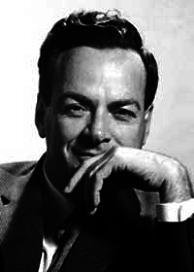
Richard Feynman stood before an audience of physicists at the California Institute of Technology on December 29, 1959, and described a world that did not yet exist: machines built atom by atom, entire libraries written on a pinhead, and surgical instruments small enough to operate inside a human cell. His lecture, "There Plenty of Room at the Bottom," delivered at the annual meeting of the American Physical Society, is now recognized as the conceptual birth of nanotechnology, though the word itself would not be coined for another fifteen years. Feynman, already famous for his work in quantum electrodynamics that would earn him the 1965 Nobel Prize, approached the subject not as abstract theory but as an engineering challenge. He calculated that the entire Encyclopedia Britannica could be written on a pinhead if reduced by 25,000 times. He proposed tiny machines building even tinier machines, each generation manufacturing the next smaller, eventually reaching the atomic level where individual atoms could be arranged at will. The audience found the talk entertaining but not urgent. No tools existed to manipulate individual atoms, and the idea seemed like science fiction. Feynman offered two $1,000 prizes: one for a working motor no larger than 1/64th of an inch, another for writing text at 1/25,000 scale. The motor prize was claimed within months using watchmaking techniques, a result Feynman found disappointingly unimaginative. The text prize went unclaimed until 1985, when a Stanford graduate student used electron beam lithography to write the first page of "A Tale of Two Cities" at the required scale. By then, the scanning tunneling microscope, invented in 1981, had made it possible to image individual atoms. In 1989, IBM researchers used one to spell out the company logo by moving thirty-five xenon atoms on a nickel surface. The field Feynman envisioned now drives a global nanotechnology industry worth over $90 billion annually.
December 29, 1959
67 years ago
Key Figures & Places
What Else Happened on December 29
Four knights walked into Canterbury Cathedral on the evening of December 29, 1170, found Archbishop Thomas Becket at vespers, and hacked him to death with their…
The Ming Dynasty began its final retreat from Hanoi, ending two decades of Chinese occupation in Đại Việt. This withdrawal restored Vietnamese independence unde…
Gonzalo Fernández de Córdoba's Spanish forces crushed the French army at the Garigliano River, ending France's control over southern Italy. This decisive defeat…
Portuguese forces under Francisco de Almeida razed the wealthy trading port of Dabul, slaughtering its inhabitants and burning the city to the ground. This brut…
Pocahontas throws herself between the clubs of Powhatan's warriors and a bound John Smith, halting an execution that would have ended English colonization in Vi…
Three thousand British troops hit Savannah's south side at dawn. The city's 700 defenders—mostly militia who'd never seen combat—broke and ran within an hour. L…
Talk to History
Have a conversation with historical figures who witnessed this era. Ask questions, explore perspectives, and bring history to life.