Solzhenitsyn Exposes Gulag: Soviet Terror Revealed
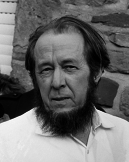
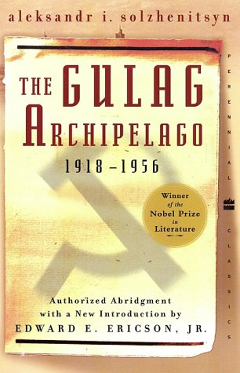
Alexander Solzhenitsyn published the first volume of The Gulag Archipelago in Paris on December 28, 1973, a 1,800-page account of the Soviet forced labor camp system that drew on his own eight years as a prisoner, the testimonies of over 200 fellow survivors, and extensive research conducted in secret within the Soviet Union over more than a decade. Born in Kislovodsk, Russia on December 11, 1918, Solzhenitsyn served as an artillery officer in World War II and was arrested in February 1945 for making derogatory remarks about Stalin in private letters to a friend. The letters were intercepted by military censors. He was sentenced to eight years in the Gulag, followed by permanent internal exile. He spent time in transit camps, a research institute staffed by prisoners (a "sharashka," the setting for his novel The First Circle), and a labor camp in Kazakhstan where he developed stomach cancer. He was released after Stalin's death and began writing. One Day in the Life of Ivan Denisovich, published in the literary journal Novy Mir in 1962 with Khrushchev's personal approval, described a single day in a labor camp with such precise, unsentimental realism that it stunned Soviet readers. It was the first time the Gulag had been depicted in officially sanctioned literature. The Gulag Archipelago was a different order of magnitude. It documented the entire system: arrest procedures, interrogation techniques, transportation, camp conditions, prisoner hierarchies, and the philosophical and legal framework that justified the imprisonment of millions. "Archipelago" referred to the scattered camps as islands in a hidden sea, invisible to citizens going about their daily lives. The book's publication in the West ignited global outrage. European intellectuals who had maintained sympathies for the Soviet project were forced to confront its human cost in documented detail. Solzhenitsyn was expelled from the Soviet Union in February 1974 and eventually settled in Vermont. He won the Nobel Prize in Literature in 1970 but did not attend the ceremony, fearing he would not be allowed to return. He returned to Russia in 1994 after the Soviet collapse. He died on August 3, 2008, at 89.
December 28, 1973
53 years ago
What Else Happened on December 28
The priests picked two popes at once. Eulalius grabbed the Lateran Palace at dawn. Boniface's crew seized another church across town. Both claimed legitimate el…
A general nobody wanted becomes the last hope. Majorian took power with Leo's blessing from Constantinople — rare unity between east and west. He wasn't born to…
The army chose him in the ruins. Majorian had been a general under Aetius — watched his mentor get assassinated, survived the purges, kept his soldiers loyal. N…
Alaric II inherits a Visigothic kingdom stretching from the Loire to Gibraltar — the largest Germanic realm in the West. His father Euric had forged it through …
A massive earthquake leveled the medieval Armenian capital of Dvin, killing an estimated 30,000 residents and burying the city’s grand cathedral under rubble. T…
Westminster Abbey was consecrated on December 28, 1065, just eight days before the death of the king who built it and less than a year before the Norman invasio…
Talk to History
Have a conversation with historical figures who witnessed this era. Ask questions, explore perspectives, and bring history to life.