Norway Surrenders: Nazi Occupation Begins
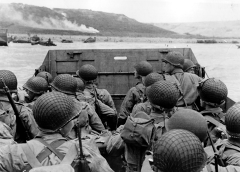
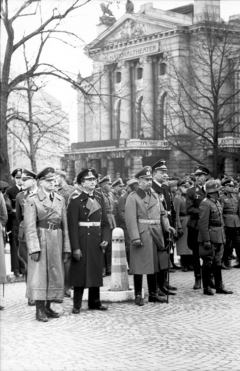
King Haakon VII refused to surrender for sixty-two days, making Norway the country that resisted the Nazi invasion the longest before capitulating. Norwegian armed forces officially laid down their weapons on June 9, 1940, after a campaign that began with Germany’s surprise invasion on April 9. The king, the government, and the gold reserves of the national bank had already been evacuated to Britain, from where the Norwegian government-in-exile would continue the fight for five more years. Germany’s invasion of Norway was one of the boldest operations of the war. On a single morning, German forces simultaneously attacked six Norwegian ports, from Oslo in the south to Narvik above the Arctic Circle. The heavy cruiser Blucher was sunk by torpedoes and guns from the Oscarsborg fortress in the Oslo fjord, delaying the capture of the capital long enough for the royal family and parliament to escape by train to Hamar. The German minister in Oslo, Curt Brauer, demanded that Haakon appoint Vidkun Quisling, the leader of Norway’s fascist party, as prime minister. Haakon refused, telling his cabinet he would abdicate rather than comply. Norwegian, British, French, and Polish forces fought a confused campaign across the mountainous terrain of central and northern Norway throughout April and May. Allied forces actually recaptured Narvik on May 28, the first town taken back from the Germans in the war. But the German invasion of France and the Low Countries on May 10 made Norway a strategic sideshow. Allied troops were withdrawn to defend France, and without them, Norway’s position was untenable. The Norwegian merchant fleet, one of the largest in the world, sailed to British ports and spent the war carrying Allied supplies across the Atlantic, a contribution far out of proportion to Norway’s small population. The resistance movement inside occupied Norway conducted sabotage operations, most famously the destruction of the Norsk Hydro heavy water plant at Vemork in 1943, which disrupted Germany’s nuclear research program. Quisling governed as a puppet minister-president until liberation in May 1945. He was tried for treason and executed by firing squad in October of that year. His surname entered the English language as a synonym for traitor.
June 9, 1940
86 years ago
Key Figures & Places
What Else Happened on June 9
Four hundred men seized Athens without a single battle. The coup of 411 BCE didn't topple democracy with swords — it toppled it with paperwork, fear, and a care…
Emperor Nero wed Claudia Octavia, the daughter of his predecessor Claudius, to solidify his tenuous claim to the imperial throne. This political union failed to…
She was 20 years old, locked in a room, waiting to die. Nero had already divorced her, exiled her to Pandateria — the same island where Augustus had banished hi…
Nero drove a dagger into his own throat on June 9, 68 AD, with the help of his secretary Epaphroditus, while a cavalry detachment sent to arrest him pounded on …
Duke Odo of Aquitaine crushed the Umayyad Caliphate’s forces at the Battle of Toulouse, halting their northward expansion into Gaul. This decisive victory force…
Abu Muslim Khorasani unfurled the Black Standard in the eastern province of Khorasan, launching an open revolt that would topple the Umayyad Caliphate and resha…
Talk to History
Have a conversation with historical figures who witnessed this era. Ask questions, explore perspectives, and bring history to life.