Neon Lights Paris: Georges Claude Illuminates Night
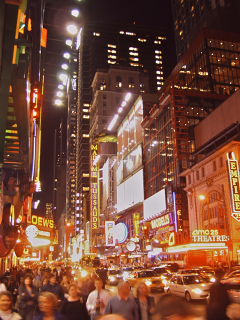
Georges Claude lit two 12-meter glass tubes filled with neon gas at the Paris Motor Show on December 3, 1910, and the modern cityscape was born. The orange-red glow of those tubes was unlike anything spectators had encountered: brighter than incandescent bulbs, visible through fog, and eerily beautiful. Claude, a French engineer and chemist, had discovered that passing electrical current through sealed tubes of noble gases produced a vivid, persistent light that consumed remarkably little power. Claude had been experimenting with the industrial liquefaction of air, a process that yielded large quantities of neon as a byproduct. Other scientists had noted that electrified noble gases glowed, but Claude was the first to engineer practical tubes that could sustain the discharge reliably. He filed his first neon lighting patent in 1910 and formed a company, Claude Neon, to commercialize the technology. The breakthrough reached American shores in 1923 when a Los Angeles Packard car dealership purchased two neon signs for $1,250 apiece. The effect on passersby was reportedly hypnotic, with pedestrians stopping in the street to stare at the glowing tubes. Within a decade, neon signs blanketed Times Square, the Las Vegas Strip, and commercial districts across the developed world. Different gases produced different colors: neon glowed red-orange, argon blue-purple, mercury vapor green, and combinations could yield virtually any hue. Claude's later years darkened considerably. He became a vocal supporter of the Vichy regime during World War II and was convicted of collaboration in 1945, serving a prison sentence and losing his civil rights. His invention, however, outlived his disgrace. Neon signs defined the visual identity of 20th-century urban nightlife, and even as LED technology has replaced many neon installations, the distinctive warm glow of Claude's gas tubes remains an icon of commercial culture.
December 3, 1910
116 years ago
Key Figures & Places
What Else Happened on December 3
Pope John X crowned Berengar I as Holy Roman Emperor, formalizing a desperate alliance to expel Saracen raiders from their fortified base on the Garigliano Rive…
John Paul Jones raised the Grand Union Flag on the USS Alfred in Philadelphia on December 3, 1775, making it the first ship to display this early symbol of Amer…
The Austrians won at Wiesloch, but nobody remembers. Sztáray de Nagy-Mihaly pushed back French forces in this small Baden town, briefly reversing Radical France…
The Electoral College produced an unprecedented tie between Thomas Jefferson and his own running mate Aaron Burr, each receiving 73 votes. The deadlock threw th…
French General Moreau routed Austrian Archduke John's forces near Munich on December 3, 1800, in a blinding snowstorm that gave France the decisive victory it n…
Illinois entered the Union with a lie already in place. The state constitution banned slavery — except it didn't. Existing enslaved people stayed enslaved. Salt…
Talk to History
Have a conversation with historical figures who witnessed this era. Ask questions, explore perspectives, and bring history to life.