

China Clipper Takes Off: Transpacific Air Service Begins
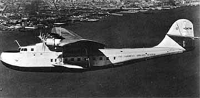
A massive flying boat lifted off from the waters of San Francisco Bay and pointed its nose toward the vast Pacific Ocean. The China Clipper, a Martin M-130 operated by Pan American Airways, departed Alameda, California, on November 22, 1935, carrying mail and a crew of seven on a route that would cover 8,210 miles across the Pacific to Manila in the Philippines. Commercial transpacific aviation had begun. Pan Am's founder, Juan Trippe, had spent years preparing for this moment. The Pacific crossing required building bases and refueling stations on remote islands, including Midway, Wake, and Guam. Pan Am constructed hotels, radio facilities, and maintenance shops on these tiny atolls, essentially building an infrastructure chain across the world's largest ocean. The Martin M-130 flying boat was designed specifically for the route, capable of carrying up to 32 passengers and cruising at 130 miles per hour with a range of 3,200 miles between stops. The first flight carried only mail, over 110,000 pieces in total. The departure was a national spectacle. Crowds packed the Alameda shoreline, and NBC broadcast the takeoff live by radio. Captain Edwin Musick guided the Clipper through six days of island-hopping, fighting headwinds and tropical weather before touching down in Manila Bay on November 29. Passenger service began the following year, with a one-way ticket costing $799, equivalent to roughly $18,000 today, making it accessible only to the very wealthy. The China Clipper era lasted barely six years before World War II transformed Pacific aviation from luxury travel into military necessity. The same island bases Pan Am had built became strategic targets in the war against Japan. Captain Musick died in 1938 when his Clipper exploded near Pago Pago. But the route he pioneered shrank the Pacific from an impassable barrier into a commuter lane, reshaping global commerce and diplomacy permanently.
November 22, 1935
91 years ago
Key Figures & Places
What Else Happened on November 22
Two popes. Same day. Different buildings. When Anastasius II died, Rome's clergy couldn't agree — so they didn't. Symmachus won his vote at the Lateran Palace …
A Breton duke handed a Frankish king his worst humiliation. Nominoe wasn't even royalty yet — just a regional leader Charles the Bald had trusted to govern Brit…
Simon de Montfort's crusading army breached the Castle of Termes on November 22, 1210, after a four-month siege during the Albigensian Crusade against the Catha…
Pope Honorius III crowned Frederick II as Holy Roman Emperor in Rome, formalizing the union of the Sicilian throne with the imperial title. This consolidation f…
Pope Clement V issued the papal bull Pastoralis Praeeminentiae, ordering every Christian monarch in Europe to arrest the Knights Templar and seize their vast ho…
Portuguese colonists established Niteroi across Guanabara Bay from Rio de Janeiro, creating a strategic settlement on Brazil's southeast coast. The city grew in…
Talk to History
Have a conversation with historical figures who witnessed this era. Ask questions, explore perspectives, and bring history to life.