

Columbus Uses Eclipse: Science as Weapon Against Natives
Christopher Columbus threatened to summon divine wrath by predicting a lunar eclipse, a calculated bluff that terrified the Taíno people into surrendering food and supplies. This desperate gamble secured his crew's survival during their stranded months in Jamaica while demonstrating how European navigators weaponized astronomical knowledge against indigenous populations.
February 29, 1504
522 years ago
Key Figures & Places
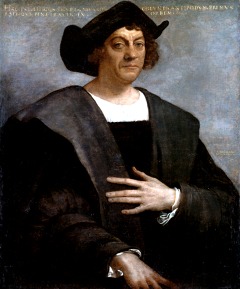
Christopher Columbus
Wikipedia

eclipse
Wikipedia

Native Americans (Americas)
Wikipedia

Christopher Columbus
Wikipedia

March 1504 lunar eclipse
Wikipedia

Jamaica
Wikipedia
Almanaque
Wikipedia

Abraham Zacuto
Wikipedia

Eclipse lunar
Wikipedia

Astronomía
Wikipedia

Moon
Wikipedia

Indigenous peoples of the Americas
Wikipedia
What Else Happened on February 29
Odo wasn't supposed to be king. He was a count, not a Carolingian. But when Vikings besieged Paris in 885, he held the city for eleven months while Emperor Char…
Abel Tasman left Batavia on January 29, 1644, commanding three ships with orders to find out if New Guinea connected to the mysterious southern land he'd glimps…
Abel Tasman left Batavia in 1644 to find whether New Guinea connected to the mysterious southern land he'd glimpsed two years earlier. He sailed the entire nort…

The raid on Deerfield happened at 4 a.m. in a February snowstorm. The attackers walked over snowdrifts piled against the town stockade — winter had built them a…

Sweden tried to phase out the Julian calendar gradually — dropping leap days over 40 years instead of jumping forward 11 days at once like everyone else. They s…
Queen Ulrika Eleonora surrendered the Swedish throne to her husband, Frederick of Hesse-Kassel, ending the absolute monarchy that had defined the previous centu…
Talk to History
Have a conversation with historical figures who witnessed this era. Ask questions, explore perspectives, and bring history to life.