DNA Unlocked: Watson and Crick Reveal Double Helix
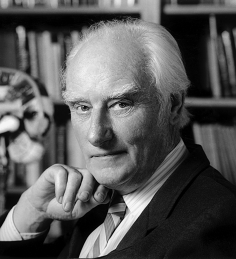
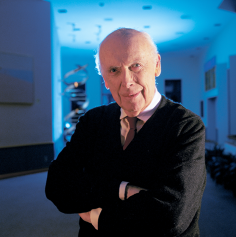
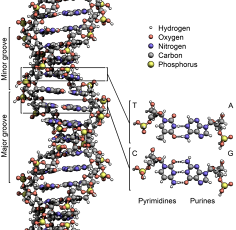
James Watson and Francis Crick walked into the Eagle pub in Cambridge on February 28, 1953, and announced to the lunchtime crowd that they had "found the secret of life." The claim was not hyperbole. That morning, they had completed a model of the DNA molecule that revealed how genetic information is stored, copied, and transmitted — the chemical mechanism behind heredity that scientists had sought for decades. The breakthrough came from combining other people's data with their own theoretical insight. Rosalind Franklin, a crystallographer at King's College London, had produced an X-ray diffraction image of DNA — the famous Photo 51 — that revealed a helical structure with specific dimensional ratios. Maurice Wilkins, Franklin's colleague, showed the image to Watson without her knowledge. Erwin Chargaff had separately demonstrated that DNA's four chemical bases always appeared in specific pairs: adenine with thymine, cytosine with guanine. Watson and Crick synthesized these pieces into a double-helix model with paired bases running like rungs between two sugar-phosphate backbones twisted around each other. The model's beauty was that it immediately suggested how DNA replicates. The two strands could separate like a zipper, and each strand could serve as a template for building a new complementary strand. Watson and Crick's paper, published in Nature on April 25, 1953, ran barely nine hundred words and contained one of science's great understatements: "It has not escaped our notice that the specific pairing we have postulated immediately suggests a possible copying mechanism." The discovery launched molecular biology as a discipline and transformed medicine, agriculture, forensics, and human self-understanding. Watson, Crick, and Wilkins received the Nobel Prize in 1962. Franklin, who had died of ovarian cancer in 1958 at age thirty-seven — possibly caused by her extensive X-ray work — received no recognition. The question of credit remains contentious: Franklin's data was essential, her contributions were marginalized, and Nobel rules prohibited posthumous awards. The double helix stands as both a triumph of scientific reasoning and a cautionary tale about who gets remembered and who gets erased.
February 28, 1953
73 years ago
Key Figures & Places
What Else Happened on February 28
Liu Bang was a former village headman who drank too much, avoided honest work, and had once released a chain gang of convicts rather than deliver them to their …
Liu Bang ascended the throne as Emperor Gaozu, unifying China after the chaotic collapse of the Qin dynasty. By establishing the Han dynasty, he institutionaliz…
Kavadh II ordered the execution of his father, Khosrau II, ending the reign of the last great Sasanian King of Kings. This regicide shattered the stability of t…
The Fourth Council of Constantinople closed after ten sessions. It had one job: decide whether Photius or Ignatius was the legitimate Patriarch of Constantinopl…
Ferdinand III of Castile secured the surrender of Jaén, dismantling the last major defensive stronghold protecting the Nasrid Kingdom of Granada. This victory f…
Hernan Cortes ordered the execution of the last Aztec emperor during a paranoid march through the jungles of Honduras, far from the empire Cuauhtemoc had once r…
Talk to History
Have a conversation with historical figures who witnessed this era. Ask questions, explore perspectives, and bring history to life.