Han Dynasty Rises: Liu Bang Crowned Emperor of China
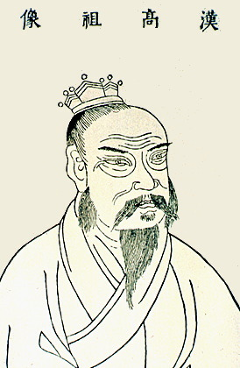
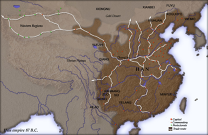
Liu Bang was a former village headman who drank too much, avoided honest work, and had once released a chain gang of convicts rather than deliver them to their punishment. From this unpromising beginning, he defeated every rival in a years-long civil war and founded the Han Dynasty, which would rule China for four centuries and give its name to the ethnic majority of the world's most populous nation. The Qin Dynasty, China's first unified empire under the brutal Qin Shi Huang, collapsed almost immediately after the emperor's death in 210 BC. Peasant rebellions and aristocratic revolts tore the empire apart. Liu Bang, operating from a base in the Han River valley, proved a brilliant judge of talent and a ruthless political operator. He attracted capable generals and administrators by rewarding loyalty generously, and he survived defeat after defeat against his main rival, the aristocratic warrior Xiang Yu, by knowing when to retreat and when to negotiate. The decisive Battle of Gaixia in 202 BC ended Xiang Yu's resistance. Surrounded and outnumbered, Xiang Yu heard his own army's soldiers singing songs from their home state of Chu — a psychological warfare tactic arranged by Liu Bang's forces to suggest mass defection. Xiang Yu fought his way through the encirclement with a handful of followers but took his own life at the Wu River rather than face capture. Liu Bang's coronation ceremony formalized what the battlefield had already decided. The dynasty Liu Bang established as Emperor Gaozu transformed China. The Han developed the civil service examination system, expanded the empire to Central Asia via the Silk Road, established Confucianism as state ideology, and created administrative structures that endured for two millennia. Paper, the seismograph, and advances in ironworking and agriculture all emerged under Han rule. The dynasty's influence was so pervasive that the Chinese word for the dominant ethnic group — Han — derives from Liu Bang's domain. A drinking peasant from the provinces had built a civilization.
February 28, 202 BC
Key Figures & Places

What Else Happened on February 28
Liu Bang ascended the throne as Emperor Gaozu, unifying China after the chaotic collapse of the Qin dynasty. By establishing the Han dynasty, he institutionaliz…
Kavadh II ordered the execution of his father, Khosrau II, ending the reign of the last great Sasanian King of Kings. This regicide shattered the stability of t…
The Fourth Council of Constantinople closed after ten sessions. It had one job: decide whether Photius or Ignatius was the legitimate Patriarch of Constantinopl…
Ferdinand III of Castile secured the surrender of Jaén, dismantling the last major defensive stronghold protecting the Nasrid Kingdom of Granada. This victory f…
Hernan Cortes ordered the execution of the last Aztec emperor during a paranoid march through the jungles of Honduras, far from the empire Cuauhtemoc had once r…
Cuauhtémoc held out for 93 days during the siege of Tenochtitlán. After capture, the Spanish tortured him — burned his feet trying to find gold. He didn't break…
Talk to History
Have a conversation with historical figures who witnessed this era. Ask questions, explore perspectives, and bring history to life.