

Spain Destroys Hawkins's Fleet: Drake Vows Revenge
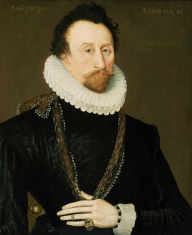
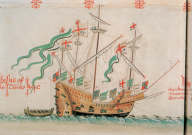
A young English captain named Francis Drake watched from the deck of the Judith as Spanish warships destroyed his fleet at San Juan de Ulúa, and he swore revenge. The battle off the coast of Veracruz on September 23, 1568, was a minor naval engagement by European standards, but its consequences rippled across the Atlantic for decades. John Hawkins had led a small English fleet to the Caribbean on a slaving expedition, capturing hundreds of Africans in West Africa and selling them to Spanish colonists in violation of Spain's trade monopoly. Battered by storms on the return voyage, Hawkins's squadron of six ships limped into the fortified harbor at San Juan de Ulúa for repairs. The next day, a Spanish fleet of thirteen ships carrying the new viceroy of Mexico arrived and anchored alongside. Both sides agreed to a truce while Hawkins completed repairs, but the Spanish attacked without warning on September 23. The assault was devastating. Spanish soldiers and sailors overwhelmed the English positions on the island fortress and turned the harbor's cannons on the trapped ships. Hawkins lost four of his six vessels along with most of his men. Only the Minion, under Hawkins, and the Judith, commanded by the twenty-two-year-old Drake, escaped into the open sea. The voyage home was a nightmare. The Minion was so overcrowded that Hawkins put half his crew ashore in Mexico, where most died or were captured by the Inquisition. Of the roughly 400 Englishmen who sailed into San Juan de Ulúa, fewer than 70 made it back to England. Drake never forgot the betrayal. Over the next three decades, he waged a personal war against the Spanish Empire, raiding ports from Panama to Cádiz and circumnavigating the globe. Hawkins reformed the Royal Navy's ship designs, creating the fast, low-profile warships that would defeat the Spanish Armada in 1588. The humiliation at San Juan de Ulúa, more than any treaty or royal decree, launched England's transformation from a minor maritime power into Spain's most dangerous rival.
September 23, 1568
458 years ago
Key Figures & Places


What Else Happened on September 23
Caligula elevated his late sister Drusilla to the status of a goddess, the first time a Roman woman received such an honor. By granting her divine rank, he asse…

A fifty-year power struggle between popes and emperors ended with a handshake and a piece of parchment. On September 23, 1122, Pope Callixtus II and Holy Roman …
The English ship Christofer carried three iron cannons and one hand gun into the harbor at Arnemuiden in 1338 — and changed naval warfare before anyone knew wha…
French forces decimated an English fleet off the coast of Arnemuiden, capturing five ships and seizing a massive cargo of wool. This clash introduced gunpowder …
Mongol forces crushed a Ming Chinese army at the Battle of Kherlen, securing their second major military triumph since the collapse of the Yuan Dynasty. This vi…
Yorkist forces under the Earl of Salisbury routed a larger Lancastrian army at Blore Heath in Staffordshire, the first major bloodshed of the Wars of the Roses.…
Talk to History
Have a conversation with historical figures who witnessed this era. Ask questions, explore perspectives, and bring history to life.