

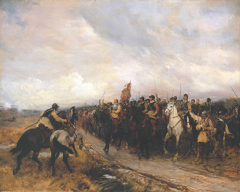
Battle of Dunbar: Cromwell Crushes the Scots
Oliver Cromwell had roughly 11,000 men at Dunbar. David Leslie had 22,000 Scots on the high ground above him and simply had to wait — so Leslie's officers convinced him to come down. That decision handed Cromwell the battle. In one dawn charge on September 3, 1650, the English Parliamentary forces killed 2,000 Scots and captured 10,000 more. Cromwell called it 'one of the most signal mercies God hath done for England.' Leslie had been winning until he moved.
September 3, 1650
376 years ago
Key Figures & Places
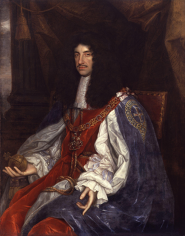
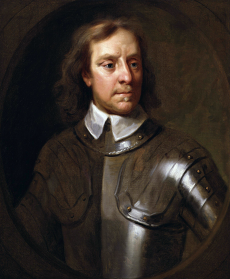
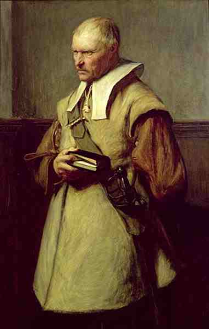
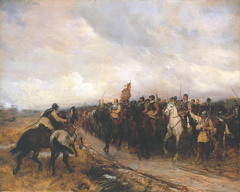
What Else Happened on September 3
en Cunaxa (aldea a unos 70 km al norte de Babilonia) sucede la batalla de Cunaxa entre Artajerjes II y el príncipe Ciro el Joven.
Agrippa's fleet destroyed Sextus Pompeius's armada at Naulochus off the coast of Sicily, sinking or capturing nearly all 300 enemy ships in a single afternoon. …
en México se escriben los primeros documentos de América en estelas de época olmeca tardía (Ver Tres Zapotes).

Saint Marinus established a refuge on Mount Titano that evolved into the world's oldest surviving republic. This tiny enclave survived centuries of shifting emp…
Gregory didn't want the job. He'd been living as a monk, and when the previous pope died of plague, Gregory tried to flee Rome to avoid being chosen. He was cau…
Visigothic King Wamba marched his army into southern Gaul and crushed the rebellion of Hilderic, the governor of Nimes who had seized power with local support. …
Talk to History
Have a conversation with historical figures who witnessed this era. Ask questions, explore perspectives, and bring history to life.