British Burn Washington: White House and Capitol Ablaze
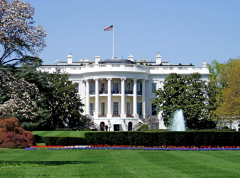
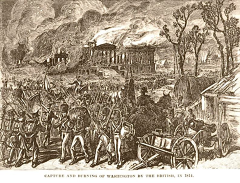
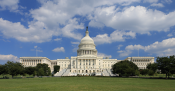
Flames lit up the night sky over Washington, D.C., on August 24, 1814, as British soldiers put torches to the White House, the Capitol, the Treasury, and nearly every other public building in the American capital. The Burning of Washington remains the only time since the American Revolution that a foreign power has captured and occupied the capital of the United States. The attack came during the War of 1812, a conflict often overshadowed by the Napoleonic Wars raging in Europe. With Napoleon defeated and exiled to Elba in April 1814, Britain could redirect experienced veterans to the American theater. Rear Admiral George Cockburn and Major General Robert Ross landed 4,500 battle-hardened troops at Benedict, Maryland, and marched northwest toward Washington. President James Madison and Secretary of State James Monroe personally scouted the British advance. The American defense, roughly 7,000 militia and regulars hastily assembled at Bladensburg, collapsed after a brief engagement. The militia broke and ran so quickly that the battle was later nicknamed "the Bladensburg Races." Madison fled the capital. First Lady Dolley Madison famously stayed behind long enough to save Gilbert Stuart's full-length portrait of George Washington before escaping by carriage. British troops ate a dinner that had been prepared for the president at the White House before setting it ablaze. The Capitol, still under construction, burned so intensely that its interior was gutted. A violent thunderstorm the following day may have helped extinguish some fires and reportedly spawned a tornado that killed more British soldiers than the Battle of Bladensburg had. The British withdrew after less than 26 hours, but the psychological damage was enormous. The destruction galvanized American resistance and contributed to Andrew Jackson's decisive victory at New Orleans five months later. The White House was rebuilt with its iconic white-painted exterior, and the Capitol was reconstructed over the following decade. The burning became a rallying point for American nationalism and a reminder that the young republic's survival had never been guaranteed.
August 24, 1814
212 years ago
Key Figures & Places
What Else Happened on August 24
Gaius Scribonius Curio crossed into Africa in 49 BC with two legions, chasing Pompey's allies, certain he had the upper hand. He didn't. Publius Attius Varus ha…
A column of superheated gas and rock shot 33 kilometers into the sky above the Bay of Naples on August 24, 79 AD, as Mount Vesuvius tore itself apart in one of …
Valentinian I elevated his eight-year-old son Gratian to the rank of co-Augustus, formalizing a dynastic succession plan to secure the imperial throne. This mov…
The last known inscription in Egyptian hieroglyphs was carved at the Temple of Isis on the island of Philae in 394 AD, a dedication by a priest named Esmet-Akho…
Alaric I and his Visigoth forces breached the Salarian Gate, initiating the first sack of Rome in eight centuries. This collapse of the city’s perceived invulne…
Vandal King Genseric led his forces into Rome in 455 AD after Pope Leo I negotiated terms: the gates would be opened in exchange for the Vandals refraining from…
Talk to History
Have a conversation with historical figures who witnessed this era. Ask questions, explore perspectives, and bring history to life.