Pendle Witch Trial Opens: England's Darkest Hunt
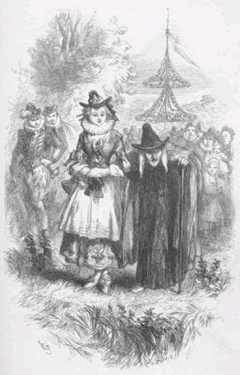
Twelve accused witches stood trial at Lancaster Assizes on August 18, 1612, in proceedings that became the most thoroughly documented witch trial in English history. Ten of the accused came from the area around Pendle Hill in Lancashire, a remote and impoverished region where feuding families, religious tensions, and local superstition created perfect conditions for accusations of witchcraft. Ten were found guilty. One had already died in prison. The remaining nine were hanged. The case began in March 1612 when a young woman named Alizon Device encountered a peddler named John Law on a road near Colne. She asked him for pins; he refused. When Law suffered what was almost certainly a stroke shortly afterward, Alizon confessed to having cursed him, claiming she had been taught witchcraft by her grandmother, Elizabeth Southerns, known locally as Old Demdike. Alizon's confession triggered an investigation by the local magistrate, Roger Nowell, that expanded rapidly to encompass members of two rival families, the Demdikes and the Chattoxes. The accused were overwhelmingly poor, elderly, and female. Old Demdike was blind and in her eighties. Several of the accused were what modern historians would describe as cunning folk, local practitioners who sold herbal remedies, charms, and curses in a community with no access to professional medicine. The evidence against them consisted primarily of confessions extracted under intense questioning, accusations by family members seeking to deflect blame, and testimony from a nine-year-old child, Jennet Device, who testified against her own mother, brother, and sister. The trial was meticulously recorded by Thomas Potts, the court clerk, whose published account, The Wonderfull Discoverie of Witches in the Countie of Lancaster, remains the primary source for the case. The Pendle trial occurred during a period of intense anxiety about witchcraft in England, encouraged by King James I, who had published Daemonologie in 1597 and believed firmly in the reality of diabolical magic. The case established evidentiary standards for witchcraft prosecution, particularly the use of child testimony, that influenced trials for decades afterward.
August 18, 1612
414 years ago
Key Figures & Places
What Else Happened on August 18
Rome dedicates its first known temple to Venus, establishing the festival of Vinalia Rustica — originally a wine harvest celebration tied to Jupiter that absorb…
Umayyad partisans defeated supporters of Ibn al-Zubayr at the Battle of Marj Rahit in 684 CE, cementing Umayyad control over Syria. The battle was fought betwee…
Princess Abe became Empress Genmei of Japan, the fourth woman to rule as sovereign in her own right. During her eight-year reign, she commissioned the Kojiki — …
Bishop Albert of Buxhoeveden founds Riga as a base for the Christianization of the Baltic peoples. The settlement grew rapidly into a major Hanseatic trading po…
The man who conquered more territory than any individual in human history died in August 1227, during the final campaign against the Western Xia kingdom in nort…
French knights and Flemish infantry fought to a bloody stalemate at Mons-en-Pévèle, exhausting both sides after a day of brutal combat. While the tactical draw …
Talk to History
Have a conversation with historical figures who witnessed this era. Ask questions, explore perspectives, and bring history to life.