
O'Connor Nominated: First Woman on Supreme Court
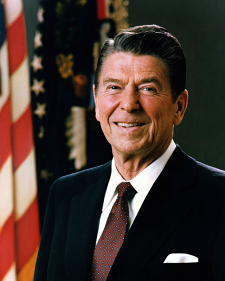
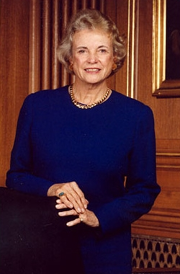
Ronald Reagan fulfilled a campaign promise on July 7, 1981, nominating Sandra Day O Connor to become the first woman on the United States Supreme Court. O Connor, a 51-year-old Arizona Court of Appeals judge, had graduated third in her Stanford Law School class of 1952 — yet no California law firm would hire her as an attorney. One firm offered her a position as a legal secretary. The nomination shattered a 191-year barrier on the nation s highest court. Reagan s decision was politically shrewd as well as historically overdue. The gender gap in polling data showed women increasingly favoring Democrats, and appointing a woman to the Court generated enormous goodwill without costing Reagan anything with his base. O Connor s conservative credentials were solid: she had served in the Arizona state senate, where she became the first female majority leader of any state legislature in the country, and her judicial record was reliably conservative on most issues. The confirmation hearing was a carefully managed affair. O Connor declined to answer specific questions about how she would rule on abortion, a tactic that became standard for future nominees. Conservative groups led by Jerry Falwell s Moral Majority opposed her nomination, concerned that she was insufficiently committed to overturning Roe v. Wade. Barry Goldwater, Arizona s senior senator, told Falwell that "every good Christian ought to kick him right in the ass." The Senate confirmed O Connor 99-0. O Connor served for twenty-four years and became the Court s most powerful swing vote, often determining the outcome of closely divided cases. Her pragmatic, case-by-case approach to jurisprudence frustrated ideologues on both sides but reflected a judicial philosophy rooted in her experience as a state legislator and judge who understood that law operates in practical contexts, not just theoretical ones. She authored or co-authored landmark opinions on affirmative action, federalism, and religious liberty. Her retirement in 2006 to care for her husband, who had been diagnosed with Alzheimer s disease, shifted the Court s balance significantly to the right. O Connor later expressed regret at the timing of her departure.
July 7, 1981
45 years ago
Key Figures & Places
President of the United States
Wikipedia
Supreme Court of the United States
Wikipedia
Ronald Reagan
Wikipedia
Sandra Day O'Connor
Wikipedia
President
Wikipedia
Ronald Reagan
Wikipedia
Sandra Day O'Connor
Wikipedia
Supreme Court of the United States
Wikipedia
William McKinley
Wikipedia
Newlands Resolution
Wikipedia
Republic of Hawaii
Wikipedia
Territory of Hawaii
Wikipedia
Hawaii
Wikipedia
Anexação do Havaí
Wikipedia
What Else Happened on July 7
Nineteen weeks. That's how long Tyre held out against the Venetian fleet and Jerusalem's Crusader army in 1124. The Doge himself, Domenico Michiel, commanded 12…
The siege lasted five months, but it was the Venetian fleet's 120 ships that decided Tyre's fate. Doge Domenico Michiel didn't just want victory—he demanded a t…
Pope Callixtus III ordered a formal retrial of Joan of Arc s case in 1456, and on July 7 the ecclesiastical court declared her innocent of all charges, annullin…
Hernán Cortés commanded maybe 440 Spanish soldiers and a few thousand Tlaxcalan allies. Against them: somewhere between 20,000 and 40,000 Aztec warriors on an o…
Jacques Cartier's crew offered knives and iron goods to the Mi'kmaq on July 7, 1534. The Mi'kmaq responded by lifting furs on sticks, signaling trade. Within ho…
Jacques Cartier traded furs for European goods with the Mi'kmaq people in the Chaleur Bay, initiating the first formal contact between France and the Indigenous…
Talk to History
Have a conversation with historical figures who witnessed this era. Ask questions, explore perspectives, and bring history to life.