

Sliced Bread Invented: Greatest Thing Since...Itself
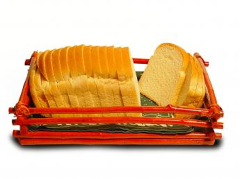
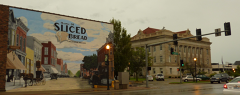
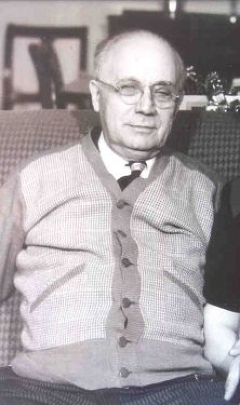
Otto Frederick Rohwedder had spent sixteen years and his entire savings developing a machine to slice bread uniformly, and on July 7, 1928 — his 48th birthday — the Chillicothe Baking Company of Chillicothe, Missouri became the first bakery to sell his pre-sliced loaves. The initial reaction from the baking industry was skepticism bordering on hostility. Bakers insisted sliced bread would go stale faster, fall apart, and look unappealing. Consumers made the question irrelevant by buying every loaf the Chillicothe bakery could produce. Rohwedder, a jeweler and engineer from Davenport, Iowa, had built his first bread-slicing prototype in 1912. A fire destroyed his factory and blueprints in 1917, forcing him to start over from scratch. The technical challenge was not simply cutting bread — it was cutting it uniformly and keeping the slices together in a package that preserved freshness. His final machine sliced an entire loaf and held the pieces together with metal pins, later replaced by a cardboard tray and wax paper wrapping. The Chillicothe Daily Constitution reported the innovation with a prescient headline: "The greatest forward step in the baking industry since bread was wrapped." Within two years, Continental Baking Company began using Rohwedder s machines for its Wonder Bread brand, and sales of sliced bread exploded nationally. By 1933, American bakeries were selling more sliced bread than unsliced for the first time. The U.S. government briefly banned sliced bread during World War II in January 1943, citing the need to conserve steel for the slicing machines and wax paper for the packaging. The ban lasted less than three months. Public outcry was so intense that Secretary of Agriculture Claude Wickard reversed the order, admitting the savings were negligible compared to the inconvenience. The phrase "the greatest thing since sliced bread" entered the American vernacular almost immediately and has persisted for nearly a century. Rohwedder, who licensed his invention rather than manufacturing bread himself, died in 1960 with relatively little public recognition for creating one of the most ubiquitous consumer innovations of the twentieth century.
July 7, 1928
98 years ago
Key Figures & Places


What Else Happened on July 7
Nineteen weeks. That's how long Tyre held out against the Venetian fleet and Jerusalem's Crusader army in 1124. The Doge himself, Domenico Michiel, commanded 12…
The siege lasted five months, but it was the Venetian fleet's 120 ships that decided Tyre's fate. Doge Domenico Michiel didn't just want victory—he demanded a t…

Pope Callixtus III ordered a formal retrial of Joan of Arc s case in 1456, and on July 7 the ecclesiastical court declared her innocent of all charges, annullin…
Hernán Cortés commanded maybe 440 Spanish soldiers and a few thousand Tlaxcalan allies. Against them: somewhere between 20,000 and 40,000 Aztec warriors on an o…
Jacques Cartier's crew offered knives and iron goods to the Mi'kmaq on July 7, 1534. The Mi'kmaq responded by lifting furs on sticks, signaling trade. Within ho…
Jacques Cartier traded furs for European goods with the Mi'kmaq people in the Chaleur Bay, initiating the first formal contact between France and the Indigenous…
Talk to History
Have a conversation with historical figures who witnessed this era. Ask questions, explore perspectives, and bring history to life.