

Churchill Takes Command: Britain Faces Nazi Threat Alone
Winston Churchill became Prime Minister on the worst possible day. On May 10, 1940, as he accepted King George VI's invitation to form a government, German forces launched their invasion of France, Belgium, the Netherlands, and Luxembourg. The man who had spent a decade warning about Hitler from the political wilderness assumed power at the precise moment his warnings came true. Neville Chamberlain resigned after a disastrous parliamentary debate on the failed British campaign in Norway. The Norway Debate, held May 7-8, saw Chamberlain's majority collapse from over 200 to just 81 as Conservative backbenchers revolted. Leo Amery hurled Cromwell's words at the prime minister: "In the name of God, go!" Chamberlain tried to retain power by forming a national coalition, but the Labour Party refused to serve under him. The choice came down to Churchill or Lord Halifax, the Foreign Secretary favored by the Conservative establishment. Halifax, recognizing that a prime minister in the House of Lords would be ineffective during wartime, withdrew his candidacy in a meeting at 10 Downing Street on May 9. Churchill later described the long silence that followed Chamberlain's question about who should succeed him. Halifax spoke first, ruling himself out. Churchill, for once, said nothing. The next morning, the king summoned him. Churchill was 65 years old and had been excluded from government for most of the 1930s, considered a brilliant but erratic figure whose judgment could not be trusted. His warnings about German rearmament had been dismissed as warmongering. His record included the Gallipoli disaster of 1915, an authoritarian response to the General Strike of 1926, and fierce opposition to Indian self-governance. Three days after taking office, Churchill delivered his first speech as prime minister to the House of Commons: "I have nothing to offer but blood, toil, tears, and sweat." Within six weeks, France had fallen, the British army had been evacuated from Dunkirk, and Britain stood alone against Nazi Germany. Churchill's refusal to consider a negotiated peace, overruling Halifax and others in the War Cabinet, was the single most consequential decision of the Second World War.
May 10, 1940
86 years ago
Key Figures & Places
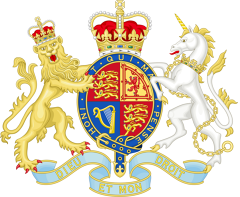
Prime Minister of the United Kingdom
Wikipedia
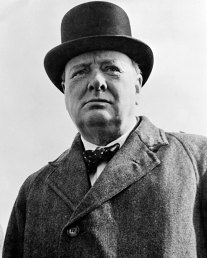
Winston Churchill
Wikipedia
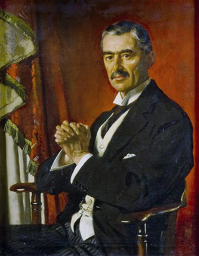
Neville Chamberlain
Wikipedia

Winston Churchill
Wikipedia

Prime Minister of the United Kingdom
Wikipedia

Neville Chamberlain
Wikipedia

Invasion of Iceland
Wikipedia

British
Wikipedia
Geschichte des Vereinigten Königreichs von Großbritannien und Nordirland
Wikipedia
What Else Happened on May 10
The Han astronomers didn't call it a sunspot. They recorded a black vapor within the sun—specific enough to measure its position, detailed enough to date: 28 BC…

Four Roman legions and 80,000 soldiers arrived at the walls of Jerusalem in the spring of 70 AD, and Titus, the emperor's son and field commander, launched his …
Scottish nobles gathered at Norham to acknowledge Edward I as their feudal overlord, hoping he would settle the chaotic succession crisis following the death of…
Temür Khan ascended the throne as the second Yuan emperor, securing his power after a brief succession struggle following Kublai Khan’s death. His reign stabili…
Amerigo Vespucci departed Cádiz on his first expedition across the Atlantic, aiming to map the coastlines of the Americas. His subsequent letters describing the…
Columbus sailed past two small Caribbean islands and couldn't stop talking about the turtles. Thousands of them. Maybe tens of thousands crawling across beaches…
Talk to History
Have a conversation with historical figures who witnessed this era. Ask questions, explore perspectives, and bring history to life.