Sino-Japanese War Ends: Peace Treaty Reshapes East Asia
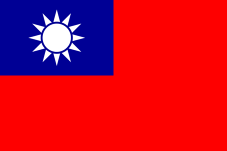
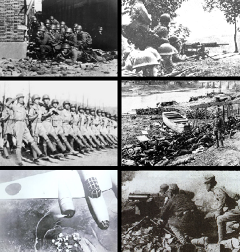
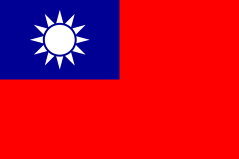
Japan and the Republic of China signed the Treaty of Taipei on April 28, 1952, formally ending the state of war that had existed between them since the Marco Polo Bridge Incident of July 1937. The treaty came into force the same day as the San Francisco Peace Treaty, which restored Japanese sovereignty and ended the Allied occupation. Together, the two agreements settled, at least legally, the conflicts of the Pacific War. The political reality was far more complicated than the signatures suggested. The Treaty of Taipei was necessitated by the Chinese Civil War. The San Francisco conference in 1951 had invited neither the People's Republic of China nor the Republic of China to sign the broader peace treaty, because the Western powers and the Soviet bloc could not agree on which government represented China. The United States, which recognized the Republic of China on Taiwan as the legitimate Chinese government, pressured Japan to sign a separate bilateral treaty with Taipei. Japan complied, though Prime Minister Yoshida Shigeru privately expressed discomfort with a treaty that implicitly denied the reality of Communist control of the mainland. The treaty's terms required Japan to renounce all territorial claims derived from the 1895 Treaty of Shimonoseki, including Taiwan and the Pescadores, without specifying to whom these territories were renounced. This deliberate ambiguity reflected the unresolved question of Taiwan's sovereignty, a question that remains unresolved today. Japan also waived Chinese reparation claims, a concession that the Republic of China, dependent on American support and in no position to negotiate from strength, accepted reluctantly. The Treaty of Taipei became a dead letter in 1972 when Japan normalized relations with the People's Republic of China and severed diplomatic ties with Taiwan. Beijing declared the Taipei treaty illegal and void from its inception. The episode illustrates how the unfinished business of World War II in Asia was entangled with the Cold War, producing legal arrangements that satisfied geopolitical convenience rather than historical justice. Japan's wartime conduct in China, including the Nanjing Massacre and the use of chemical and biological weapons, remained sources of deep anger that no treaty could extinguish.
April 28, 1952
74 years ago
Key Figures & Places
What Else Happened on April 28
Ardashir didn't just win; he crushed Artabanus V beneath the hooves of his own cavalry near Hormozdgan in 224. The Parthian king, once the master of a vast real…
He marched in wearing purple, but his boots were stained with the mud of a three-day massacre where 20,000 soldiers fell. The city he entered was silent; the cr…
Just two days after Tyre's crowd cheered him King, Conrad of Montferrat died in a narrow street by an assassin's blade. The Hashshashin struck while he walked f…
Nichiren, a Buddhist monk from eastern Japan, chanted "Nam Myoho Renge Kyo" for the first time on April 28, 1253, at Seicho-ji temple in Awa Province, declaring…
Temür Khan secured the Mongol throne following a grand kurultai, consolidating power as the grandson of Kublai. His ascension stabilized the Yuan dynasty’s admi…
Spanish forces decimated the French army at the Battle of Cerignola by anchoring their defense behind a fortified ditch and unleashing a devastating volley of a…
Talk to History
Have a conversation with historical figures who witnessed this era. Ask questions, explore perspectives, and bring history to life.