
Culloden Decisive: Jacobite Uprising Crushed Forever
The Battle of Culloden lasted less than an hour on April 16, 1746, but it permanently destroyed the Jacobite cause and the Highland clan system that had sustained Scottish Gaelic culture for centuries. The Duke of Cumberland's government army of 8,000 regulars, well-fed, rested, and equipped with muskets and bayonets, annihilated the exhausted Jacobite force of roughly 5,500 Highlanders on a flat, boggy moor east of Inverness. Between 1,500 and 2,000 Jacobites died on the field and in the pursuit that followed, against fewer than 300 government casualties. Prince Charles Edward Stuart, "Bonnie Prince Charlie," had launched his campaign to reclaim the British throne for the exiled Stuart dynasty in August 1745 with remarkable initial success. Landing in Scotland with just seven companions, he rallied the Highland clans, captured Edinburgh, routed a government army at Prestonpans, and marched into England as far as Derby, 125 miles from London. But English Jacobite support never materialized, and Charles reluctantly retreated to Scotland through the winter of 1745-1746, his army shrinking from desertion and hunger. The decision to fight at Culloden was catastrophic. Charles's Irish adviser, John William O'Sullivan, chose the ground against the objections of Lord George Murray, the Jacobites' most capable general. The open moorland favored Cumberland's disciplined infantry and artillery, negating the Highlanders' traditional advantage in broken terrain. The clansmen had marched all night in a failed attempt at a surprise attack and arrived at the battlefield exhausted and hungry. When the charge came, government grapeshot and musket volleys tore the Highland lines apart before most could reach the enemy. Cumberland earned the nickname "Butcher" for what followed. Wounded Jacobites were bayoneted where they lay. Prisoners were executed. The government then systematically dismantled Highland society, banning tartan, bagpipes, and the carrying of weapons. Clan chiefs lost their hereditary jurisdictions. The Highlands were opened to commercial sheep farming, beginning the clearances that would depopulate the region over the next century. Culloden was the last pitched battle fought on British soil, and for Scotland it marked the end of an entire way of life.
April 16, 1746
280 years ago
Key Figures & Places
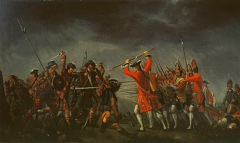
Battle of Culloden
Wikipedia

Jacobitism
Wikipedia
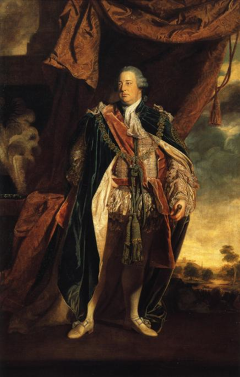
Prince William, Duke of Cumberland
Wikipedia
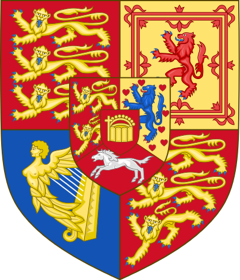
Hanoverian
Wikipedia
Battle of Culloden
Wikipedia
Jacobitism
Wikipedia
House of Hanover
Wikipedia
Prince William, Duke of Cumberland
Wikipedia
Inverness
Wikipedia
Scotland
Wikipedia
British Army
Wikipedia
Charles Edward Stuart
Wikipedia
Histoire de l'Écosse
Wikipedia
James Francis Edward Stuart
Wikipedia
George II of Great Britain
Wikipedia
What Else Happened on April 16
Thutmose III didn't march through the narrow pass; he marched right past the enemy's flank, catching the Canaanite coalition completely off guard. Over a thousa…
Pharaoh Thutmose III squeezed through a narrow pass called Megiddo, risking his army to outflank a coalition of Canaanite kings. He didn't just win; he stripped…
Otho killed himself just three months after taking the throne. His troops had lost at Bedriacum to Vitellius, and the emperor decided a quick death was better t…
Nine hundred and sixty Jewish men, women, and children chose death over surrender atop the desert fortress of Masada in April 73 AD, ending a three-year siege b…
In 682, a man named Leo got voted in while sitting on a chair that wasn't even holy yet. He'd wait six weeks for his actual consecration, staring at empty stone…
Robert Guiscard captured the port of Bari, extinguishing five centuries of Byzantine authority in Southern Italy. This collapse forced the Eastern Roman Empire …
Talk to History
Have a conversation with historical figures who witnessed this era. Ask questions, explore perspectives, and bring history to life.