
Lincoln Calls 75,000 Volunteers: The Civil War Begins in Earnest
Lincoln's proclamation on April 15, 1861, calling for 75,000 state militia volunteers to serve for ninety days, transformed a political crisis into a shooting war. Issued the day after Fort Sumter's surrender, the call to arms assumed the rebellion would be brief, a short, sharp correction that would restore the Union before summer ended. The response in the North was overwhelming. Governors wired back offering more troops than Lincoln had requested. Massachusetts had a regiment on a train to Washington within four days. But the proclamation had a devastating secondary effect that Lincoln either underestimated or accepted as unavoidable. Four slave states that had remained in the Union, Virginia, Arkansas, Tennessee, and North Carolina, saw the call for troops as an act of coercion against their Southern neighbors. Virginia seceded within two days, taking with it the largest industrial base in the South, including the Tredegar Iron Works in Richmond, and Robert E. Lee, the officer Lincoln had wanted to command the Union army. Arkansas, Tennessee, and North Carolina followed within weeks. The addition of these four states roughly doubled the Confederacy's white population, industrial output, and military potential. Virginia's secession alone forced a complete rethinking of Union strategy, moving the front line from the Deep South to just across the Potomac River from Washington. Richmond became the Confederate capital, and the war's eastern theater became a struggle for the hundred miles of territory between the two capitals. Lincoln's ninety-day timeline revealed how profoundly both sides misjudged the war's duration and cost. The volunteers who enlisted in April 1861 expected a quick adventure. Four years later, 750,000 Americans were dead. The militia system Lincoln invoked proved completely inadequate for a sustained conflict, and Congress authorized a national draft in 1863. The April proclamation remains the moment when political secession became military conflict, when the question of whether states could leave the Union shifted from the Senate floor to the battlefield.
April 15, 1861
165 years ago
Key Figures & Places
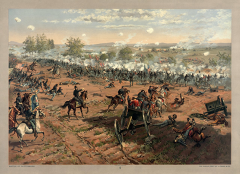
American Civil War
Wikipedia
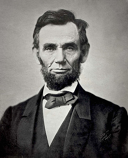
Abraham Lincoln
Wikipedia
President Lincoln%27s 75,000 Volunteers
Wikipedia
President Lincoln's 75,000 Volunteers
Wikipedia
Abraham Lincoln
Wikipedia
Proclamation 80
Wikipedia
American Civil War
Wikipedia
President
Wikipedia
John Wilkes Booth
Wikipedia
Andrew Johnson
Wikipedia
What Else Happened on April 15
Pope Stephen III convened the Lateran Council to formally reject the iconoclastic decrees issued by the Council of Hieria fifteen years earlier. By anathematizi…
Robert Guiscard captured Bari, ending five centuries of Byzantine rule in southern Italy. This surrender forced the Eastern Roman Empire to retreat entirely fro…
A river of blood ran red at the Terek as Timur's vultures circled Sarai's ashes. The Golden Horde's capital didn't just fall; it vanished under fire, leaving on…
French cavalry and cannon shattered the English army at Formigny on April 15, 1450, killing or capturing nearly the entire 4,000-man force and shattering Englan…
Swedish infantry didn't just fight; they marched in perfect lockstep while musketeers fired volleys that turned the mud red. Gustavus Adolphus led them at Lütze…
Thousands of starving peasants and hidden Christians held out for months inside Hara Castle. When the Tokugawa forces finally stormed the walls, they didn't jus…
Talk to History
Have a conversation with historical figures who witnessed this era. Ask questions, explore perspectives, and bring history to life.