

Rwanda's Genocide Begins: 100 Days of Slaughter
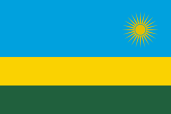
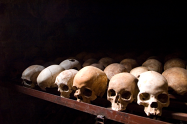
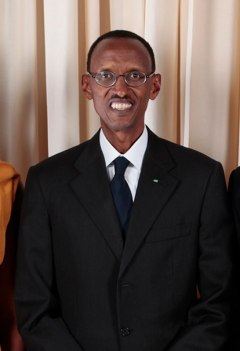
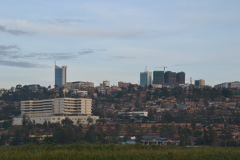
The assassination of President Juvenal Habyarimana on the evening of April 6, 1994, when his plane was shot down approaching Kigali airport, served as the trigger for a genocide that had been planned for months. Within hours of the crash, Hutu Power militias erected roadblocks across the capital and began systematically murdering Tutsi civilians and moderate Hutu politicians. Presidential Guard units assassinated Prime Minister Agathe Uwilingiyimana, and ten Belgian UN peacekeepers assigned to protect her were tortured and killed. By the morning of April 7, the killing was organized and accelerating. The genocide had deep roots in colonial manipulation. Belgian administrators had formalized the Hutu-Tutsi distinction in the 1930s, issuing ethnic identity cards and granting Tutsi a privileged position in colonial governance. After independence in 1962, the Hutu majority seized power and subjected Tutsi to periodic waves of violence that drove hundreds of thousands into exile. The Rwandan Patriotic Front, formed by Tutsi refugees in Uganda, invaded Rwanda in 1990, triggering a civil war that ended with the Arusha Accords power-sharing agreement in 1993. Hutu extremists viewed the accords as a surrender. The killing infrastructure was built in plain sight. Radio Television Libre des Mille Collines broadcast anti-Tutsi propaganda for months before the genocide, referring to Tutsi as "inyenzi" (cockroaches) and calling for their extermination. The Interahamwe militia, nominally a youth wing of the ruling party, was trained and armed by the Rwandan military. Machetes were imported in massive quantities, distributed to civilian populations, and stored at collection points throughout the country. Foreign diplomats, journalists, and UN officials reported the preparations. The international community did nothing. Over approximately 100 days, an estimated 500,000 to 1,000,000 people were murdered, constituting roughly 70 percent of Rwanda's Tutsi population and as much as 20 percent of the country's total population. Most victims were killed with machetes and clubs by their neighbors. The speed of the killing exceeded the Holocaust on a per-day basis. The United Nations, which had peacekeepers on the ground, withdrew most of its force. The United States refused to use the word "genocide" because doing so would have obligated intervention. The RPF, led by Paul Kagame, advanced from the north and ended the genocide by military victory in mid-July 1994.
April 7, 1994
32 years ago
Key Figures & Places
What Else Happened on April 7
Attila the Hun razed the city of Metz, slaughtering its inhabitants and incinerating the structures in a brutal display of force. This devastation forced the Ro…

Attila the Hun sacked the Roman city of Metz on April 7, 451 AD, burning it so thoroughly that only a single chapel reportedly survived the destruction. The att…

Emperor Justinian I commissioned the Corpus Juris Civilis in 529 AD, ordering the jurist Tribonian to compile, organize, and reconcile over a thousand years of …
King Uneh Chan of Calakmul shattered the defenses of Palenque, plunging the rival city-state into a period of political chaos and architectural stagnation. This…
She didn't just wear a crown; she marched into London with her brother-in-law's head in a basket. In 1141, after crushing King Stephen at Lincoln, Matilda decla…
A single scroll in 1348 didn't just open doors; it burned bridges between Prague and Paris, forcing scholars to flee France for Bohemia. Charles IV bet his crow…
Talk to History
Have a conversation with historical figures who witnessed this era. Ask questions, explore perspectives, and bring history to life.