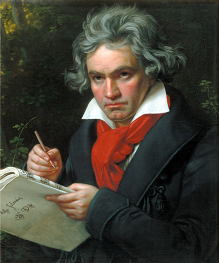
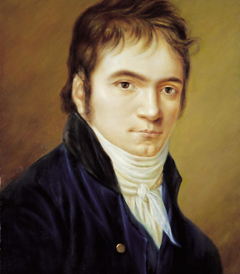
Beethoven's First Symphony: A New Era Begins
Ludwig van Beethoven was 29 years old and already losing his hearing when he conducted the premiere of his First Symphony at Vienna's Burgtheater on April 2, 1800. The program placed his work after a Mozart symphony and a Haydn oratorio, positioning the young composer as the inheritor of a tradition he would spend the next quarter-century demolishing. The audience heard a competent, somewhat conventional symphony. What they could not hear was the sound of a revolution warming up. The First Symphony announced its independence in its opening bars. Beethoven began with a dissonance that resolved into the wrong key before finally arriving at the home key of C major, a gesture that puzzled and delighted Viennese critics. Haydn had occasionally played similar games, but Beethoven's approach was more deliberate, almost confrontational. The finale replaced the standard elegant conclusion with something closer to a musical joke, building the main theme note by note from a ascending scale. Beethoven had arrived in Vienna from Bonn in 1792, ostensibly to study with Haydn. The relationship was difficult. Haydn found his student stubborn; Beethoven found his teacher inattentive. By 1800, Beethoven had established himself primarily as a pianist and improviser of frightening intensity. His keyboard performances left audiences shaken. The First Symphony served notice that he intended to be taken equally seriously as a composer of orchestral music. The timing was significant beyond music. Vienna in 1800 was absorbing the shock of the French Revolution and Napoleon's military campaigns. The old aristocratic order that had sustained Haydn and Mozart was fracturing. Beethoven, born into the lower middle class in a provincial Rhineland city, embodied a new kind of artist who derived authority from genius rather than patronage. His dedication of the symphony to Baron van Swieten, a notable patron, was one of his last gestures toward the old system. Within three years, Beethoven would premiere the Eroica Symphony and render the classical tradition permanently unrecognizable.
April 2, 1800
226 years ago
Key Figures & Places

What Else Happened on April 2
Mehmed II positioned his massive bronze cannons before the walls of Constantinople, initiating a siege that shattered the final remnants of the Byzantine Empire…
Juan Ponce de León waded ashore on the Florida coast, claiming the peninsula for the Spanish Crown under the name La Florida. This expedition initiated centurie…
He thought he'd found an island full of gold and youth springs, not a swampy peninsula. Ponce de León's men suffered scurvy and heatstroke while mapping a land …
Juan Ponce de Leon made landfall near present-day St. Augustine on April 2, 1513, naming the land "La Florida" because he arrived during Pascua Florida, the Spa…
J. S. Bach premiered his cantata "Bleib bei uns, denn es will Abend werden" (BWV 6) in Leipzig on Easter Monday, weaving a luminous oboe melody through a medita…
Commodore William James shattered the perceived invincibility of the Maratha Navy by capturing the fortress of Suvarnadurg with a small squadron. This victory d…
Talk to History
Have a conversation with historical figures who witnessed this era. Ask questions, explore perspectives, and bring history to life.