Typhoid Mary Quarantined: The Ethics of Public Health
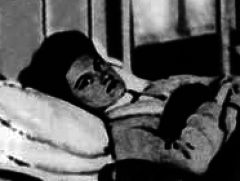
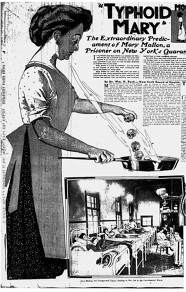
Mary Mallon never believed she was dangerous. Authorities arrested her for the second time on March 27, 1915, after a typhoid outbreak at Sloane Hospital for Women in Manhattan was traced to a cook matching her description. She had been released five years earlier on the condition that she never work as a cook again. She promptly changed her name and went back to cooking, the only trade she knew, infecting at least 25 more people. Mallon was an Irish immigrant working as a cook for wealthy New York families when sanitary engineer George Soper identified her in 1907 as the source of typhoid outbreaks in seven households where she had worked. She was the first person in the United States identified as an asymptomatic carrier of Salmonella typhi: perfectly healthy herself, she shed the bacteria in her stool and transmitted it through the food she prepared. Over her career, she infected at least 51 people, three of whom died. She fought her quarantine furiously, arguing that she could not be sick because she felt fine. The concept of an asymptomatic carrier was new to medicine and incomprehensible to Mallon, who believed she was being persecuted because she was a poor Irish woman. She sued for her release in 1909, and public health authorities freed her in 1910 after she promised to stop cooking. When she was caught cooking at Sloane Hospital under the name "Mrs. Brown," authorities returned her to North Brother Island. Mallon spent the remaining 23 years of her life in quarantine on the island, dying in 1938 after a stroke. Her case established the legal precedent that public health authorities could quarantine asymptomatic carriers, a principle still invoked today. It also exposed an uncomfortable truth about class and disease: wealthy carriers were allowed to live freely with monitoring, while Mallon, a working-class immigrant, was imprisoned for life.
March 27, 1915
111 years ago
Key Figures & Places

What Else Happened on March 27
Emperor Wu of Han secured the future of his dynasty by naming his eight-year-old son, Fuling, as his successor. This transition prevented a power vacuum during …
He was five years old when they placed the double crown on his head. Ptolemy V's regents immediately murdered his mother and plunged Egypt into civil war, losin…
He'd just murdered his rival in a church. Twenty-four hours earlier. Still, Robert the Bruce showed up at Scone for his coronation, knowing Edward I had spies e…
Pope Clement V excommunicated the entire city of Venice and banned all international trade with its merchants after the Republic seized the papal territory of F…
Pope John XXII issued the papal bull In Agro Dominico, formally condemning twenty-eight propositions from Meister Eckhart’s mystical writings as heretical. This…
Juan Ponce de Leon was not looking for the Fountain of Youth. That story was invented decades after his death by a political rival. What the Spanish conquistado…
Talk to History
Have a conversation with historical figures who witnessed this era. Ask questions, explore perspectives, and bring history to life.