
Pancho Villa Attacks Columbus: U.S. Launches Punitive Expedition
Pancho Villa led approximately 500 mounted guerrillas across the US-Mexico border before dawn on March 9, 1916, and attacked the sleeping town of Columbus, New Mexico, burning buildings, looting stores, and killing 18 Americans — ten civilians and eight soldiers. The raid was the last armed invasion of the continental United States by a foreign force and triggered the largest American military expedition since the Spanish-American War. Villa's motives remain debated. He had been a major figure in the Mexican Revolution since 1910, commanding the Division del Norte that captured key cities across northern Mexico. By 1916, his fortunes had reversed. His rival Venustiano Carranza had gained American diplomatic recognition in October 1915, and the United States had allowed Carranza's troops to travel through American territory by rail to reinforce positions against Villa. Villa saw the Columbus raid as retaliation against American interference and possibly as a provocation designed to undermine Carranza's relationship with Washington. The town of Columbus, population roughly 400, was defended by a detachment of the 13th US Cavalry under Colonel Herbert J. Slocum. Villa's raiders struck at 4:15 AM, screaming "Viva Villa!" and "Muerte a los Americanos!" The surprised cavalrymen rallied and set up machine gun positions that eventually drove the Mexicans back across the border. Villa lost approximately 90 men killed; several more were captured and later executed. President Woodrow Wilson ordered Brigadier General John J. Pershing to lead a Punitive Expedition into Mexico to capture Villa. Pershing crossed the border on March 15 with 4,800 troops that eventually grew to nearly 10,000, including cavalry, infantry, artillery, and for the first time in US military history, motorized vehicles and aircraft used in a combat operation. The expedition penetrated over 350 miles into Mexican territory. Villa was never caught. He dispersed his forces into the Sierra Madre and avoided major engagements while Pershing's supply lines stretched thin across hostile terrain. The expedition was withdrawn in February 1917 as the United States prepared for entry into World War I. The Punitive Expedition served as a training ground for officers who would lead American forces in France, and Pershing's experience in Mexico directly informed his command of the American Expeditionary Forces.
March 9, 1916
110 years ago
Key Figures & Places
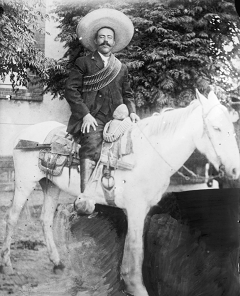
Pancho Villa
Wikipedia
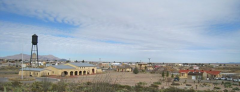
Columbus, New Mexico
Wikipedia
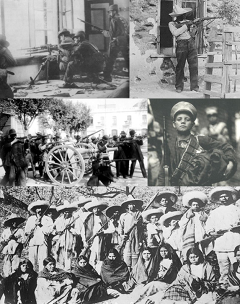
Mexican Revolution
Wikipedia
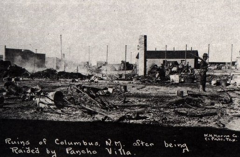
an attack
Wikipedia
Mexican Revolution
Wikipedia
Pancho Villa
Wikipedia
Battle of Columbus (1916)
Wikipedia
Columbus, New Mexico
Wikipedia
New Mexico
Wikipedia
Mexican Border War
Wikipedia
United States
Wikipedia
Japan
Wikipedia
Tokyo
Wikipedia
What Else Happened on March 9
Emperor Wu of Han took the Chinese throne at age fifteen in 141 BC and held it for 54 years, the longest reign in Chinese imperial history until the Kangxi Empe…
Liu Che ascended the throne as Emperor Wu, initiating a fifty-four-year reign that transformed China into a centralized Confucian state. By expanding imperial b…
100,000 pilgrims heard Muhammad deliver what nobody knew would be his final words at Mount Arafat. The sermon lasted just minutes, but Muhammad made his scribe …
Monks at the Quedlinburg Abbey recorded the name Litua for the first time in 1009, documenting the death of Saint Bruno of Querfurt during his mission to conver…
The emperor's mistress got her own palace wing, wore purple silks reserved for empresses, and sat beside Constantine IX at state banquets while his actual wife …
Jalal ad-Din Mingburnu seized Tbilisi, slaughtering thousands of its Christian inhabitants and forcing the Georgian royal court to flee to Kutaisi. This brutal …
Talk to History
Have a conversation with historical figures who witnessed this era. Ask questions, explore perspectives, and bring history to life.