

Wireless Waves Cross Sea: SS Kaiser Wilhelm der Grosse Makes History
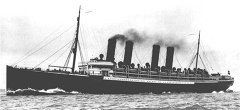
The German liner SS Kaiser Wilhelm der Grosse sent a wireless telegraph message to a shore station on March 7, 1900, becoming one of the first ships to use radio technology for ship-to-shore communication. The demonstration proved that Guglielmo Marconi's wireless apparatus could work reliably on the open ocean, transforming maritime safety and naval warfare within a decade. The Kaiser Wilhelm der Grosse was already famous before it carried a radio. Launched in 1897, it was the first four-funneled liner and held the Blue Riband for the fastest Atlantic crossing from 1897 to 1900. The Norddeutscher Lloyd shipping company agreed to install a Marconi wireless set aboard the vessel as a commercial experiment, equipping the ship with a transmitter and antenna system powerful enough to reach shore stations at distances of several dozen miles. Marconi's system used spark-gap transmitters that generated electromagnetic pulses encoding Morse code. The shipboard installation required a tall antenna strung between the masts and a dedicated wireless room staffed by an operator. Early maritime wireless was limited to Morse code and short ranges, but even rudimentary communication with shore could relay passenger messages, weather information, and distress calls. The commercial possibilities were immediately apparent. Wealthy passengers on Atlantic liners would pay handsomely to send and receive telegrams while at sea. Shipping companies saw wireless as a competitive advantage, and Marconi's company pursued exclusive contracts with major transatlantic lines. By 1904, the Marconi International Marine Communication Company operated wireless stations on dozens of ships and at coastal stations around the Atlantic. The safety implications proved even more consequential. Before wireless, a ship in distress had no means of summoning help beyond visual signals and rockets. The first notable rescue aided by wireless telegraphy came in 1899, when the East Goodwin lightship used Marconi equipment to call for assistance. The Titanic disaster of 1912, in which wireless operators sent distress calls that brought rescue ships to the scene, made maritime radio mandatory under international law. The Kaiser Wilhelm der Grosse's 1900 transmission marked the moment when the open ocean ceased to be a communications void.
March 7, 1900
126 years ago
Key Figures & Places


What Else Happened on March 7
Antoninus Pius died after a peaceful twenty-three-year reign, leaving the Roman Empire to his adoptive sons, Marcus Aurelius and Lucius Verus. This transition e…
Rome got two emperors for the price of one when Marcus Aurelius refused to rule alone. His adoptive father Antoninus Pius had just died, and Marcus immediately …
The 80-year-old governor was reading poetry when the mob arrived demanding he become emperor. Gordian I hadn't sought power—African landowners rebelled against …

Emperor Constantine I declared the dies Solis — the day of the Sun — an official day of rest throughout the Roman Empire on March 7, 321 AD, and the world has o…
Macarius I refused to recant even as the emperor's guards dragged him from the council chamber. The Third Council of Constantinople had spent months debating wh…
Konrad III secured the German throne at Coblenz, backed by the papal legate Theodwin. This election formally launched the Hohenstaufen dynasty, initiating a cen…
Talk to History
Have a conversation with historical figures who witnessed this era. Ask questions, explore perspectives, and bring history to life.