

HMS Dreadnought Launched: Naval Warfare Transformed
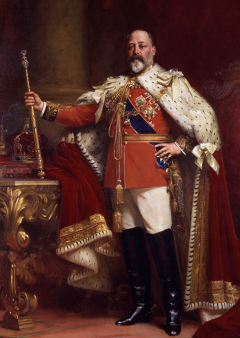
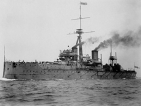
HMS Dreadnought made every other warship on Earth obsolete the day it launched. King Edward VII christened the battleship on February 10, 1906, at Portsmouth, and the Royal Navy had built it in just fourteen months, a construction speed intended to shock rival navies as much as the ship’s revolutionary design. Dreadnought carried ten 12-inch guns in five turrets, all mounted on the centerline, giving it roughly twice the broadside firepower of any existing battleship. Its steam turbine engines made it the fastest battleship afloat. The ship was the brainchild of First Sea Lord Admiral John "Jackie" Fisher, who had been arguing for years that naval warfare was being transformed by advances in fire control, armor, and propulsion. Fisher believed that a battleship armed exclusively with heavy guns of the same caliber could deliver devastating salvos at ranges that made the mixed-caliber batteries of existing warships useless. He pushed the project through with extraordinary urgency, laying the keel on October 2, 1905, and completing sea trials by October 1906. Dreadnought’s design was so superior that it immediately divided the world’s navies into two categories: dreadnoughts and everything else. Every pre-dreadnought battleship, including the Royal Navy’s own massive fleet, was reclassified as second-line tonnage. This was Fisher’s calculated gamble: by resetting the naval arms race to zero, Britain could exploit its industrial and financial advantages to build more dreadnoughts faster than any rival. Germany, which had been building a fleet to challenge British supremacy, was forced to start over. The result was a naval arms race between Britain and Germany that consumed enormous national resources and contributed to the tensions that produced World War I. Germany laid down its first dreadnought-type battleship, Nassau, in 1907. By 1914, Britain had twenty-nine dreadnoughts and battlecruisers to Germany’s seventeen. The two fleets met once, at the Battle of Jutland in 1916, in the largest naval battle in history. Dreadnought itself missed the engagement, having been reassigned to coastal defense. The ship that reset naval warfare never fired its guns in anger against an enemy fleet.
February 10, 1906
120 years ago
Key Figures & Places

What Else Happened on February 10
The Mongols destroyed Baghdad's libraries by throwing books into the Tigris. The river ran black with ink for six months. The House of Wisdom — 500 years of acc…

Hulagu Khan’s Mongol army breached the walls of Baghdad on February 10, 1258, beginning a week of slaughter that destroyed the Abbasid Caliphate and ended five …
Robert the Bruce stabbed John Comyn in front of a church altar during peace negotiations. His companion asked if Comyn was dead. Bruce said he wasn't sure. The …
A tavern brawl between Oxford scholars and a local innkeeper erupted into two days of pitched street fighting that left sixty-three students and about thirty to…
Byzantine Emperor Manuel II married Helena Dragash, daughter of Serbian Prince Constantine, forging a dynastic alliance between Constantinople and Serbia as bot…
Vasco da Gama departed Lisbon with twenty ships to secure Portuguese dominance over the lucrative spice trade. This second voyage established a permanent naval …
Talk to History
Have a conversation with historical figures who witnessed this era. Ask questions, explore perspectives, and bring history to life.