Baghdad Falls: Mongols End Abbasid Caliphate
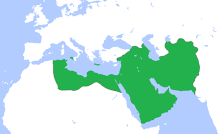
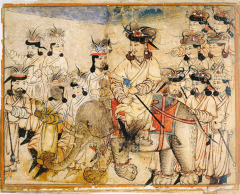
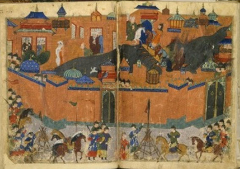
Hulagu Khan’s Mongol army breached the walls of Baghdad on February 10, 1258, beginning a week of slaughter that destroyed the Abbasid Caliphate and ended five centuries of Islamic cultural supremacy. Contemporary historians estimated the death toll between 200,000 and over a million, though modern scholars consider the higher figures exaggerated. The Tigris River reportedly ran black with ink from the libraries and red with blood from the inhabitants. Baghdad, which had been the intellectual capital of the world, would not recover for centuries. The Mongol advance on Baghdad was methodical and massive. Hulagu, a grandson of Genghis Khan, had been dispatched by his brother, the Great Khan Mongke, with orders to destroy the Abbasid Caliphate and extend Mongol rule to Egypt. He assembled an army estimated between 150,000 and 300,000 soldiers, including Mongol cavalry, Chinese siege engineers, Christian Georgian and Armenian contingents, and Persian auxiliaries. The force represented the most diverse military coalition of the medieval world. Caliph al-Musta’sim, the thirty-seventh and last Abbasid caliph, fatally miscalculated. He refused Hulagu’s demand to surrender and dismantle his fortifications, reportedly telling the Mongol commander that the entire Islamic world would rise to defend the caliphate. It did not. The caliph had neglected his military, alienated potential allies, and failed to maintain Baghdad’s defenses. When the Mongol siege began on January 29, the city’s walls crumbled within days under bombardment from Chinese-designed catapults and gunpowder weapons. The sack of Baghdad destroyed the House of Wisdom, the legendary center of learning that had preserved and translated Greek, Persian, and Indian texts during Europe’s Dark Ages. Libraries containing irreplaceable manuscripts on mathematics, astronomy, medicine, and philosophy were dumped into the river. The Mongols executed the caliph by rolling him in a carpet and trampling him with horses, fulfilling a Mongol taboo against spilling royal blood on the ground. The fall of Baghdad marked the end of the Islamic Golden Age and shifted the center of Islamic power permanently from Mesopotamia to Cairo and later Istanbul.
February 10, 1258
768 years ago
Key Figures & Places
What Else Happened on February 10
The Mongols destroyed Baghdad's libraries by throwing books into the Tigris. The river ran black with ink for six months. The House of Wisdom — 500 years of acc…
Robert the Bruce stabbed John Comyn in front of a church altar during peace negotiations. His companion asked if Comyn was dead. Bruce said he wasn't sure. The …
A tavern brawl between Oxford scholars and a local innkeeper erupted into two days of pitched street fighting that left sixty-three students and about thirty to…
Byzantine Emperor Manuel II married Helena Dragash, daughter of Serbian Prince Constantine, forging a dynastic alliance between Constantinople and Serbia as bot…
Vasco da Gama departed Lisbon with twenty ships to secure Portuguese dominance over the lucrative spice trade. This second voyage established a permanent naval …
Lord Darnley was found dead in a garden wearing only his nightshirt. The house behind him was rubble — gunpowder had torn it apart. But he wasn't burned. He was…
Talk to History
Have a conversation with historical figures who witnessed this era. Ask questions, explore perspectives, and bring history to life.