Treaty of Paris Signed: Britain Dominates North America
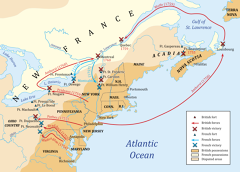
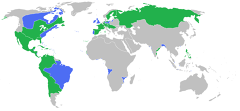
Britain, France, and Spain signed the Treaty of Paris on February 10, 1763, redrawing the map of the world after the Seven Years’ War. France surrendered virtually all of its North American territory, ceding Canada and all lands east of the Mississippi River to Britain, while handing Louisiana west of the Mississippi to Spain as compensation for Spain’s loss of Florida, which went to Britain. The treaty ended the first truly global conflict and established Britain as the dominant imperial power on three continents. The Seven Years’ War had begun in 1756 as a European power struggle between Britain and France, but it sprawled across North America, the Caribbean, West Africa, India, and the Philippines. In North America, known as the French and Indian War, British and colonial forces captured Quebec in 1759 and Montreal in 1760, effectively ending French military presence on the continent. The British Navy dominated the Atlantic, strangling French supply lines and capturing sugar-producing islands in the Caribbean worth more, per acre, than all of Canada. The negotiations in Paris were shaped by a ruthless cost-benefit calculation. France chose to keep its lucrative Caribbean sugar islands of Guadeloupe and Martinique rather than fight for Canada, which it considered a frozen wilderness of fur traders. Voltaire famously dismissed the territory as "a few acres of snow." Spain, which had entered the war late as France’s ally, lost Florida but recovered Havana and Manila, both of which Britain had captured. The treaty also required France to withdraw from Hanover and return Minorca to Britain. The consequences reshaped the Americas. Without the French threat on their borders, Britain’s American colonies no longer needed British military protection, a shift that emboldened colonial resistance to taxation. Britain’s attempt to pay for the war by taxing its colonies triggered the revolt that became the American Revolution twelve years later. France, humiliated and seeking revenge, would bankroll that revolution. The treaty that made Britain master of North America planted the seeds of the empire’s first great loss.
February 10, 1763
263 years ago
Key Figures & Places
What Else Happened on February 10
The Mongols destroyed Baghdad's libraries by throwing books into the Tigris. The river ran black with ink for six months. The House of Wisdom — 500 years of acc…
Hulagu Khan’s Mongol army breached the walls of Baghdad on February 10, 1258, beginning a week of slaughter that destroyed the Abbasid Caliphate and ended five …
Robert the Bruce stabbed John Comyn in front of a church altar during peace negotiations. His companion asked if Comyn was dead. Bruce said he wasn't sure. The …
A tavern brawl between Oxford scholars and a local innkeeper erupted into two days of pitched street fighting that left sixty-three students and about thirty to…
Byzantine Emperor Manuel II married Helena Dragash, daughter of Serbian Prince Constantine, forging a dynastic alliance between Constantinople and Serbia as bot…
Vasco da Gama departed Lisbon with twenty ships to secure Portuguese dominance over the lucrative spice trade. This second voyage established a permanent naval …
Talk to History
Have a conversation with historical figures who witnessed this era. Ask questions, explore perspectives, and bring history to life.