

Last Man Standing: Dr. Brydon Reaches Jalalabad, Sole Survivor of 16,500
He was more skeleton than soldier when he arrived. Alone on a half-dead horse, Dr. William Brydon represented the entire British Army's catastrophic retreat from Afghanistan—a brutal 90-mile journey through mountain passes where Afghan warriors systematically annihilated every single other soldier and camp follower. His tattered uniform, his bleeding horse, his barely-alive body told a story of total military disaster. And when British commanders saw him approach, they knew the First Anglo-Afghan War had become something worse than a defeat: a complete, humiliating obliteration.
January 13, 1842
184 years ago
Key Figures & Places
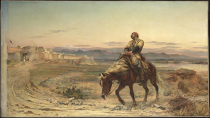
William Brydon
Wikipedia
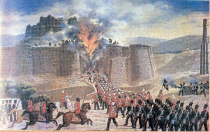
First Anglo-Afghan War
Wikipedia

Jalalabad
Wikipedia

East India Company
Wikipedia
Camp follower
Wikipedia
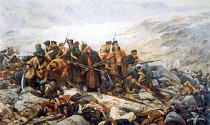
sole survivor of an army
Wikipedia

William Brydon
Wikipedia

East India Company
Wikipedia

First Anglo-Afghan War
Wikipedia

1842 retreat from Kabul
Wikipedia
Camp follower
Wikipedia

Jalalabad
Wikipedia

Emirate of Afghanistan
Wikipedia
Bataille de Gandamak
Wikipedia

William George Keith Elphinstone
Wikipedia

British Army
Wikipedia

Afghanistan
Wikipedia
What Else Happened on January 13
He'd just become the most powerful man in the world—and decided to make it look like a gift. Octavian, fresh from defeating Mark Antony, handed back "control" t…
The crowd wasn't just angry—they were murderous. What started as a chariot racing dispute between rival fan clubs in Constantinople exploded into the most destr…
Andrew Jackson was furious — and he put it in writing. His letter to Van Buren during the Nullification Crisis made clear he viewed South Carolina's defiance of…
en España, Recaredo, rey visigodo hispánico, declara su adhesión y la de su familia a la fe católica.
The Vikings had been terrorizing Paris for years, burning monasteries and demanding tribute. But Odo wasn't backing down. When the siege of Paris ended after a …

Twelve French knights. That's how the Knights Templar began - not with a battle, but a promise to protect pilgrims in a land torn by religious conflict. And her…
Talk to History
Have a conversation with historical figures who witnessed this era. Ask questions, explore perspectives, and bring history to life.