

Hay Announces Open Door: US Trade in China
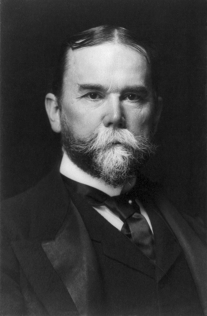
Secretary of State John Hay pulled off one of the boldest diplomatic bluffs of the twentieth century. He sent identical notes to six imperial powers, Britain, Germany, France, Russia, Japan, and Italy, asking them to keep China''s markets open to all trading nations equally. Not a single country agreed. Britain hedged. Russia stalled. Germany ignored him. So Hay simply announced that their silence constituted consent and declared the Open Door Policy official on January 2, 1900. The context was the frantic scramble to carve China into exclusive spheres of influence following the Sino-Japanese War of 1895. Germany had seized the port of Qingdao. Russia controlled Manchuria. France dominated the southern provinces. Britain held the Yangtze valley and Hong Kong. American commercial interests, particularly cotton exporters and Standard Oil, which was selling kerosene to Chinese consumers by the millions of gallons, feared being locked out of the world''s largest potential market. Hay''s notes, drafted largely by State Department advisor William Rockhill based on ideas from British customs official Alfred Hippisley, proposed three principles: no interference with treaty ports, equal harbor duties and railroad rates for all nations, and respect for Chinese territorial integrity. The language was deliberately vague enough that no power could openly reject it without appearing to endorse imperial greed, but specific enough to protect American commercial access. The policy had zero enforcement mechanism. When Russia violated it by occupying Manchuria, the United States did nothing. When Japan carved out its own sphere after the Russo-Japanese War, Hay was already dead. But the Open Door principle reshaped Pacific geopolitics for the next half century, positioning the United States as the self-appointed referee of Asian commerce. That role eventually led to Pearl Harbor, the Korean War, and the Pacific alliance system that persists today.
January 2, 1900
126 years ago
Key Figures & Places

What Else Happened on January 2
The Roman legions stationed in Germania Superior refused to swear their annual oath of loyalty to Emperor Galba on January 2 of the Year of the Four Emperors. W…
The Rhine froze solid in the winter of 366 AD. The Alemanni walked across. Thousands of Germanic warriors poured into Roman Gaul on a highway of ice, looting to…
Mercurius became Pope John II on January 2, 533, and set a precedent that has lasted nearly 1,500 years. He was the first pope to change his name upon election.…
Christian forces defeated an Ottoman Turkish army at the Battle of Kunovica in 1444, near modern-day Serbia. The victory was part of the larger Crusade of Varna…
This is a duplicate entry for the fall of Granada in 1492. The Emirate of Granada, the last Moorish stronghold on the Iberian Peninsula, surrendered to Ferdinan…

Boabdil wept as he surrendered the keys to Granada. His mother supposedly told him: "You weep like a woman for what you could not defend as a man." The mountain…
Talk to History
Have a conversation with historical figures who witnessed this era. Ask questions, explore perspectives, and bring history to life.