

Great Society Launched: Johnson Fights Poverty
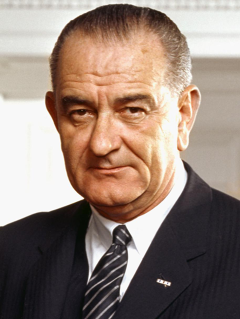
Lyndon Johnson stood before Congress on January 4, 1965, and turned the phrase "Great Society" from campaign rhetoric into a governing agenda. He had first used the term at Ohio University eight months earlier, but on this night, riding a landslide election victory that gave Democrats their largest House majority since 1938, he laid out the most ambitious domestic program since Franklin Roosevelt''s New Deal. What followed was a legislative blitz without parallel in American history. In 1965 alone, Congress passed Medicare, Medicaid, the Voting Rights Act, the Elementary and Secondary Education Act, the Immigration and Nationality Act, the Higher Education Act, and the establishment of the Department of Housing and Urban Development. Johnson had served in the Senate for twelve years before becoming vice president. He knew every procedural trick, every pressure point, every vulnerable committee chairman. His former colleagues learned to dread his phone calls. Johnson understood he had a narrow window. The 1964 landslide had brought dozens of liberal freshmen into Congress, many from districts that would revert to Republican control in the next cycle. His chief of staff later recalled Johnson making 85 phone calls in a single evening, cajoling, threatening, and trading favors with the methodical intensity of a man who knew the clock was running. Many of these programs had originated in John F. Kennedy''s unfinished New Frontier agenda, but Kennedy had lacked both Johnson''s legislative skills and his overwhelming congressional majority. Vietnam eventually consumed the presidency. Anti-war Democrats complained that military spending starved domestic programs. Johnson chose not to run for reelection in 1968. But Medicare now covers over 65 million Americans. Medicaid covers 90 million more. Federal education funding transformed schools nationwide. The window Johnson saw on January 4, 1965, lasted roughly eighteen months. He ran through it at full speed.
January 4, 1965
61 years ago
Key Figures & Places


What Else Happened on January 4
Julius Caesar suffered his first tactical defeat at the Battle of Ruspina, narrowly escaping total annihilation after Titus Labienus’s cavalry surrounded his ou…
Ethelred of Wessex clashed with a Danish army at Reading, suffering a defeat that foreshadowed the Viking's growing power. This loss, though a setback, didn't b…
Anna of Brittany was sixteen years old when she declared that any Breton noble who allied with the French king would be guilty of lese-majesty, a crime punishab…
Sunburned, seasick, and hauling exotic parrots and kidnapped indigenous people, Columbus limped back to Spain with ten weeks of wild stories. His ships were pac…

Charles I did not come alone. He marched into the House of Commons on January 4, 1642, with 400 armed soldiers at his back, intent on arresting five members of …
King Charles I marched 400 soldiers into the House of Commons to arrest five defiant members for treason, only to find their benches empty. This failed intimida…
Talk to History
Have a conversation with historical figures who witnessed this era. Ask questions, explore perspectives, and bring history to life.