

Colt Sells First Revolver to the US Government: The Gun That Won the West
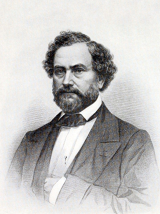
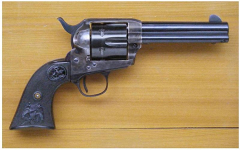
Samuel Colt had already failed twice. Two factories. Two bankruptcies. His first revolver — the Paterson Colt — went bust in 1842 after the US Army passed on it, and Colt spent the next few years trying to sell an underwater telegraph cable just to stay solvent. Then a letter arrived from Captain Samuel Walker of the Texas Rangers. Walker wanted something that could fire six shots without reloading and survive combat against Comanche warriors on horseback. Colt built it. The Walker Colt came out weighing four and a half pounds — the most powerful handgun the 19th century would produce. On January 4, 1847, the government ordered 1,000 of them at $28 each. It saved the business. The Mexican-American War expanded it. By the Civil War, Colt revolvers were standard Union cavalry issue. Walker was shot dead in Mexico that October, eight months before his guns reached the troops.
January 4, 1847
179 years ago
Key Figures & Places

What Else Happened on January 4
Julius Caesar suffered his first tactical defeat at the Battle of Ruspina, narrowly escaping total annihilation after Titus Labienus’s cavalry surrounded his ou…
en Roma, Eutiquiano sucede a Félix I como papa.
Ethelred of Wessex clashed with a Danish army at Reading, suffering a defeat that foreshadowed the Viking's growing power. This loss, though a setback, didn't b…
Alphonse III prend le titre de roi de Portugal.
In Spandau bei Berlin unterzeichnet Markgraf Johann I. von Brandenburg die Gründungsurkunde der Stadt Neubrandenburg.
Der flämische Forschungsreisende Wilhelm von Rubruk und seine Begleiter erhalten eine Audienz beim mongolischen Großkhan Möngke Khan, an dessen Hof sie sich sei…
Talk to History
Have a conversation with historical figures who witnessed this era. Ask questions, explore perspectives, and bring history to life.