Today In History logo TIH

Today In History

March 28 in History

Your birthday shares the stage with stories that shaped the world. Born on this day: Francisco de Miranda, Henry Paulson, and Jackson Wang.

Three Mile Island Meltdown: Nuclear Safety Crisis Ignites
1979Event

Three Mile Island Meltdown: Nuclear Safety Crisis Ignites

A stuck valve and a series of human errors triggered America's worst nuclear accident. At 4:00 AM on March 28, 1979, a pressure relief valve on the Unit 2 reactor at the Three Mile Island nuclear power plant near Harrisburg, Pennsylvania, opened automatically during a routine malfunction and then failed to close. Coolant drained from the reactor core for more than two hours while operators, misreading their instruments, actually reduced emergency cooling water flow, believing the system had too much water rather than too little. The reactor's core began to overheat within minutes. Zirconium fuel rod cladding reacted with steam to produce hydrogen gas, which accumulated in the reactor building. By the time operators realized the valve was stuck open, roughly half the core had melted. Radioactive gases and contaminated water leaked into the containment building and, in smaller quantities, into the atmosphere. Pennsylvania Governor Richard Thornburgh ordered the evacuation of pregnant women and children within a five-mile radius. The crisis lasted five days. A hydrogen bubble formed inside the reactor vessel, raising fears of a catastrophic explosion. Nuclear Regulatory Commission officials gave conflicting information to the public and the press, creating panic that spread far beyond the evacuation zone. An estimated 140,000 residents fled the area voluntarily. President Carter, a former nuclear submarine officer, visited the plant on April 1 to calm public fears. No deaths or injuries were directly attributed to the accident, and the amount of radiation released was small. But Three Mile Island effectively killed the American nuclear industry for a generation. No new nuclear plant was ordered in the United States for over 30 years. The NRC implemented sweeping safety reforms, and the incident became a case study in how cascading equipment failures and poor operator training can combine to produce a disaster that no one designed for.

Famous Birthdays

Francisco de Miranda

Francisco de Miranda

1750–1816

Henry Paulson

Henry Paulson

b. 1946

Jackson Wang

Jackson Wang

b. 1994

Rodrigo Duterte

Rodrigo Duterte

b. 1945

Shanna Moakler

Shanna Moakler

b. 1975

Aristide Briand

Aristide Briand

d. 1932

Chae Rim

Chae Rim

b. 1979

Edmund Muskie

Edmund Muskie

d. 1996

Harold B. Lee

Harold B. Lee

1899–1973

José Maria Neves

José Maria Neves

b. 1960

Melchior Ndadaye

Melchior Ndadaye

b. 1953

Spencer W. Kimball

Spencer W. Kimball

1895–1985

Historical Events

A stuck valve and a series of human errors triggered America's worst nuclear accident. At 4:00 AM on March 28, 1979, a pressure relief valve on the Unit 2 reactor at the Three Mile Island nuclear power plant near Harrisburg, Pennsylvania, opened automatically during a routine malfunction and then failed to close. Coolant drained from the reactor core for more than two hours while operators, misreading their instruments, actually reduced emergency cooling water flow, believing the system had too much water rather than too little.

The reactor's core began to overheat within minutes. Zirconium fuel rod cladding reacted with steam to produce hydrogen gas, which accumulated in the reactor building. By the time operators realized the valve was stuck open, roughly half the core had melted. Radioactive gases and contaminated water leaked into the containment building and, in smaller quantities, into the atmosphere. Pennsylvania Governor Richard Thornburgh ordered the evacuation of pregnant women and children within a five-mile radius.

The crisis lasted five days. A hydrogen bubble formed inside the reactor vessel, raising fears of a catastrophic explosion. Nuclear Regulatory Commission officials gave conflicting information to the public and the press, creating panic that spread far beyond the evacuation zone. An estimated 140,000 residents fled the area voluntarily. President Carter, a former nuclear submarine officer, visited the plant on April 1 to calm public fears.

No deaths or injuries were directly attributed to the accident, and the amount of radiation released was small. But Three Mile Island effectively killed the American nuclear industry for a generation. No new nuclear plant was ordered in the United States for over 30 years. The NRC implemented sweeping safety reforms, and the incident became a case study in how cascading equipment failures and poor operator training can combine to produce a disaster that no one designed for.
1979

A stuck valve and a series of human errors triggered America's worst nuclear accident. At 4:00 AM on March 28, 1979, a pressure relief valve on the Unit 2 reactor at the Three Mile Island nuclear power plant near Harrisburg, Pennsylvania, opened automatically during a routine malfunction and then failed to close. Coolant drained from the reactor core for more than two hours while operators, misreading their instruments, actually reduced emergency cooling water flow, believing the system had too much water rather than too little. The reactor's core began to overheat within minutes. Zirconium fuel rod cladding reacted with steam to produce hydrogen gas, which accumulated in the reactor building. By the time operators realized the valve was stuck open, roughly half the core had melted. Radioactive gases and contaminated water leaked into the containment building and, in smaller quantities, into the atmosphere. Pennsylvania Governor Richard Thornburgh ordered the evacuation of pregnant women and children within a five-mile radius. The crisis lasted five days. A hydrogen bubble formed inside the reactor vessel, raising fears of a catastrophic explosion. Nuclear Regulatory Commission officials gave conflicting information to the public and the press, creating panic that spread far beyond the evacuation zone. An estimated 140,000 residents fled the area voluntarily. President Carter, a former nuclear submarine officer, visited the plant on April 1 to calm public fears. No deaths or injuries were directly attributed to the accident, and the amount of radiation released was small. But Three Mile Island effectively killed the American nuclear industry for a generation. No new nuclear plant was ordered in the United States for over 30 years. The NRC implemented sweeping safety reforms, and the incident became a case study in how cascading equipment failures and poor operator training can combine to produce a disaster that no one designed for.

Britain and France declared war on Russia on March 28, 1854, entering a conflict that neither country fully understood and that no one would fight well. The Crimean War pitted the two Western European powers and the Ottoman Empire against Tsarist Russia over control of religious sites in the Holy Land, a pretext so thin that it masked the real issue: whether Russia would be allowed to expand at Ottoman expense and dominate the Black Sea.

The immediate trigger was a dispute between Orthodox and Catholic monks over custody of holy sites in Jerusalem and Bethlehem, then part of the Ottoman Empire. Russia demanded that the Ottomans recognize the Tsar as protector of all Orthodox Christians within Ottoman territory, a demand that would have given Russia enormous influence over millions of Ottoman subjects. When the Ottomans refused, Russia occupied the Danubian Principalities (modern Romania). Britain and France, determined to prevent Russian expansion toward the Mediterranean, intervened.

The war concentrated around the Russian naval base at Sevastopol on the Crimean Peninsula, where Allied forces landed in September 1854. The siege lasted nearly a year, conducted by armies ravaged by cholera, dysentery, and incompetent leadership. The Charge of the Light Brigade, a suicidal cavalry assault ordered by miscommunication, became the war's most famous episode and a symbol of aristocratic military incompetence. Florence Nightingale's work at the Scutari hospital, where she reduced mortality from 42 percent to 2 percent through sanitation reforms, had a more lasting impact.

The Treaty of Paris in 1856 demilitarized the Black Sea and preserved Ottoman territorial integrity. More than 600,000 soldiers died, the majority from disease rather than combat. The war's lasting legacies were Nightingale's transformation of military nursing, the birth of modern war correspondence through journalists like William Howard Russell, and Russia's realization that it needed to modernize or decline.
1854

Britain and France declared war on Russia on March 28, 1854, entering a conflict that neither country fully understood and that no one would fight well. The Crimean War pitted the two Western European powers and the Ottoman Empire against Tsarist Russia over control of religious sites in the Holy Land, a pretext so thin that it masked the real issue: whether Russia would be allowed to expand at Ottoman expense and dominate the Black Sea. The immediate trigger was a dispute between Orthodox and Catholic monks over custody of holy sites in Jerusalem and Bethlehem, then part of the Ottoman Empire. Russia demanded that the Ottomans recognize the Tsar as protector of all Orthodox Christians within Ottoman territory, a demand that would have given Russia enormous influence over millions of Ottoman subjects. When the Ottomans refused, Russia occupied the Danubian Principalities (modern Romania). Britain and France, determined to prevent Russian expansion toward the Mediterranean, intervened. The war concentrated around the Russian naval base at Sevastopol on the Crimean Peninsula, where Allied forces landed in September 1854. The siege lasted nearly a year, conducted by armies ravaged by cholera, dysentery, and incompetent leadership. The Charge of the Light Brigade, a suicidal cavalry assault ordered by miscommunication, became the war's most famous episode and a symbol of aristocratic military incompetence. Florence Nightingale's work at the Scutari hospital, where she reduced mortality from 42 percent to 2 percent through sanitation reforms, had a more lasting impact. The Treaty of Paris in 1856 demilitarized the Black Sea and preserved Ottoman territorial integrity. More than 600,000 soldiers died, the majority from disease rather than combat. The war's lasting legacies were Nightingale's transformation of military nursing, the birth of modern war correspondence through journalists like William Howard Russell, and Russia's realization that it needed to modernize or decline.

Madrid fell without a fight. On March 28, 1939, Nationalist forces under Francisco Franco entered the Spanish capital after a siege that had lasted nearly three years, ending the Spanish Civil War. The Republican government had already collapsed; its military commander in Madrid, Colonel Segismundo Casado, had staged a coup against the Republic's own prime minister a month earlier, hoping to negotiate better surrender terms. Franco refused to negotiate anything.

The Civil War had begun in July 1936 when a military coup against Spain's elected Republican government split the country. Franco emerged as the leader of the Nationalist faction, backed by Nazi Germany and Fascist Italy, who sent troops, aircraft, and weapons. The Republic received support from the Soviet Union and the International Brigades, volunteer fighters from over 50 countries who came to Spain to fight fascism. The war killed an estimated 500,000 people, including tens of thousands of civilians murdered by both sides.

Madrid had been a Republican stronghold from the war's first days. The famous rallying cry "No pasaran!" (They shall not pass) was coined during the siege of Madrid in November 1936, when Republican defenders, including International Brigade volunteers, stopped the Nationalist advance. The city endured nearly 30 months of shelling, bombardment, and starvation. By March 1939, the population was starving, and the military situation was hopeless.

Franco established a dictatorship that lasted until his death in 1975. His regime executed an estimated 30,000 to 50,000 political prisoners after the war ended, buried them in mass graves, and spent decades erasing the Republic's memory from Spanish public life. Spain did not become a constitutional monarchy until 1978, and the country's reckoning with its civil war history remains incomplete to this day.
1939

Madrid fell without a fight. On March 28, 1939, Nationalist forces under Francisco Franco entered the Spanish capital after a siege that had lasted nearly three years, ending the Spanish Civil War. The Republican government had already collapsed; its military commander in Madrid, Colonel Segismundo Casado, had staged a coup against the Republic's own prime minister a month earlier, hoping to negotiate better surrender terms. Franco refused to negotiate anything. The Civil War had begun in July 1936 when a military coup against Spain's elected Republican government split the country. Franco emerged as the leader of the Nationalist faction, backed by Nazi Germany and Fascist Italy, who sent troops, aircraft, and weapons. The Republic received support from the Soviet Union and the International Brigades, volunteer fighters from over 50 countries who came to Spain to fight fascism. The war killed an estimated 500,000 people, including tens of thousands of civilians murdered by both sides. Madrid had been a Republican stronghold from the war's first days. The famous rallying cry "No pasaran!" (They shall not pass) was coined during the siege of Madrid in November 1936, when Republican defenders, including International Brigade volunteers, stopped the Nationalist advance. The city endured nearly 30 months of shelling, bombardment, and starvation. By March 1939, the population was starving, and the military situation was hopeless. Franco established a dictatorship that lasted until his death in 1975. His regime executed an estimated 30,000 to 50,000 political prisoners after the war ended, buried them in mass graves, and spent decades erasing the Republic's memory from Spanish public life. Spain did not become a constitutional monarchy until 1978, and the country's reckoning with its civil war history remains incomplete to this day.

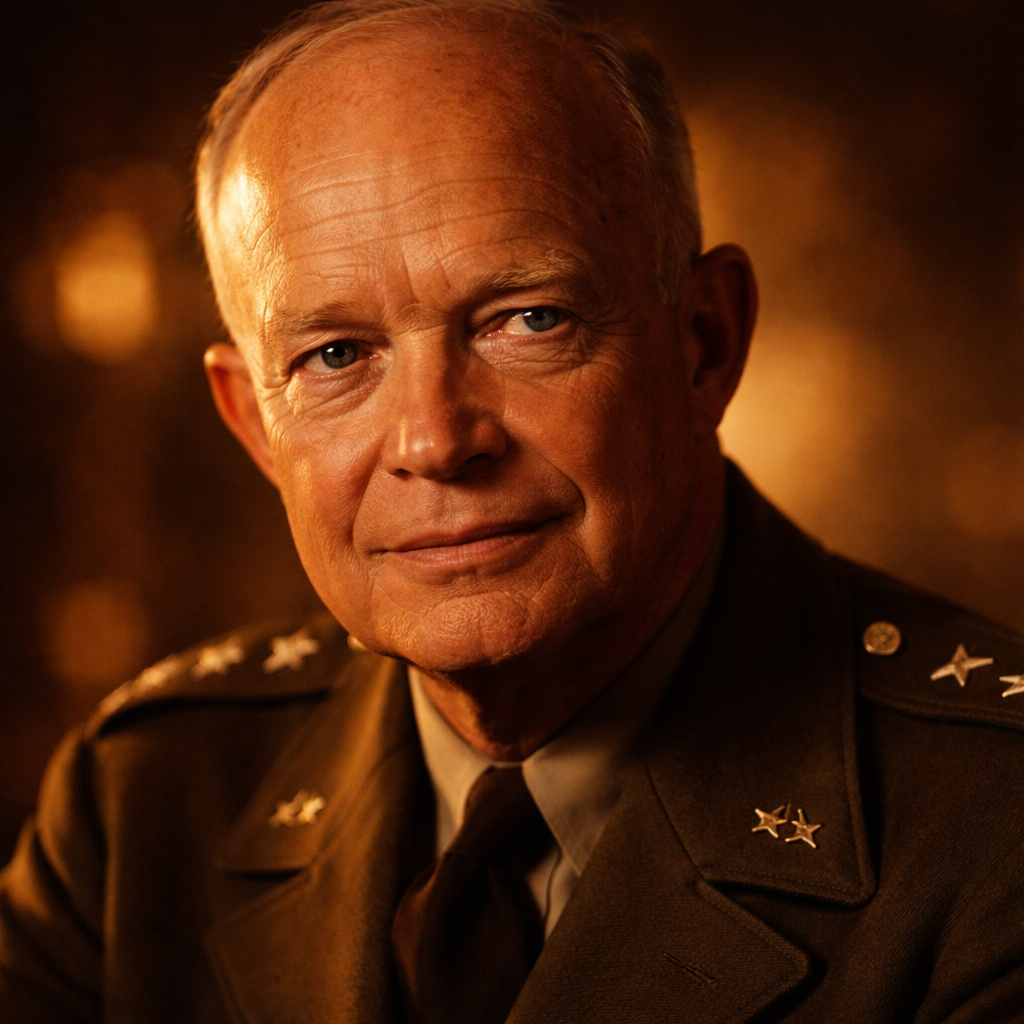
Dwight Eisenhower wrote two letters before D-Day. One announced the invasion's success. The other took full personal responsibility for its failure. That second letter, scrawled on a notepad and stuffed in his pocket on June 5, 1944, revealed the character of a man who understood that leadership meant owning the worst outcome. Eisenhower died on March 28, 1969, at age 78, having commanded the largest military operation in history and then served two terms as president during the most dangerous years of the Cold War.

Eisenhower's military career was distinguished less by battlefield heroism than by an extraordinary ability to manage competing egos, national interests, and strategic priorities. As Supreme Allied Commander, he held together a coalition of American, British, Canadian, and Free French forces whose leaders often despised each other. Churchill wanted to invade through the Balkans. Montgomery demanded more supplies. Patton insulted everyone. Eisenhower managed all of them while planning the invasion of Normandy, the largest amphibious assault in history, involving 156,000 troops, 5,000 ships, and 13,000 aircraft.

As president from 1953 to 1961, Eisenhower ended the Korean War, built the Interstate Highway System, enforced school desegregation in Little Rock, and managed nuclear brinkmanship with the Soviet Union without triggering World War III. His farewell address warned against the "military-industrial complex," a phrase he coined that remains one of the most frequently quoted presidential statements in American political discourse.

His public image as a genial, grandfatherly figure obscured a sharp strategic mind. Eisenhower authorized covert CIA operations in Iran and Guatemala, launched the U-2 spy plane program, and created NASA. He left office with one of the highest approval ratings of any departing president, a five-star general who governed with restraint during an era when restraint may have prevented nuclear war.
1969

Dwight Eisenhower wrote two letters before D-Day. One announced the invasion's success. The other took full personal responsibility for its failure. That second letter, scrawled on a notepad and stuffed in his pocket on June 5, 1944, revealed the character of a man who understood that leadership meant owning the worst outcome. Eisenhower died on March 28, 1969, at age 78, having commanded the largest military operation in history and then served two terms as president during the most dangerous years of the Cold War. Eisenhower's military career was distinguished less by battlefield heroism than by an extraordinary ability to manage competing egos, national interests, and strategic priorities. As Supreme Allied Commander, he held together a coalition of American, British, Canadian, and Free French forces whose leaders often despised each other. Churchill wanted to invade through the Balkans. Montgomery demanded more supplies. Patton insulted everyone. Eisenhower managed all of them while planning the invasion of Normandy, the largest amphibious assault in history, involving 156,000 troops, 5,000 ships, and 13,000 aircraft. As president from 1953 to 1961, Eisenhower ended the Korean War, built the Interstate Highway System, enforced school desegregation in Little Rock, and managed nuclear brinkmanship with the Soviet Union without triggering World War III. His farewell address warned against the "military-industrial complex," a phrase he coined that remains one of the most frequently quoted presidential statements in American political discourse. His public image as a genial, grandfatherly figure obscured a sharp strategic mind. Eisenhower authorized covert CIA operations in Iran and Guatemala, launched the U-2 spy plane program, and created NASA. He left office with one of the highest approval ratings of any departing president, a five-star general who governed with restraint during an era when restraint may have prevented nuclear war.

A single bullet over the price of student meals brought 50,000 Brazilians into the streets of Rio de Janeiro. On March 28, 1968, military police shot and killed Edson Luis de Lima Souto, an 18-year-old high school student, during a protest over the quality and cost of food at the Calabouco restaurant, a subsidized cafeteria serving low-income students in downtown Rio. His death transformed a student grievance into a national uprising against Brazil's four-year-old military dictatorship.

Brazil's military had seized power in a 1964 coup, overthrowing the democratically elected government of Joao Goulart. By 1968, the regime had suppressed political parties, censored the press, and purged universities of left-leaning professors. Student movements were among the few organized opposition groups still active. The Calabouco restaurant had become a gathering point for student activists, and police had been monitoring it for weeks before the confrontation.

Edson Luis was shot in the chest during a clash between students and military police outside the restaurant. Students carried his body to the state legislature, where it lay in state as thousands filed past. His funeral the following day drew 50,000 mourners who marched through Rio's streets in what became the largest anti-government demonstration since the coup. Protests erupted in cities across Brazil over the following months, culminating in the Passeata dos Cem Mil (March of the One Hundred Thousand) in June 1968.

The military regime's response was to get harder, not softer. In December 1968, General Costa e Silva issued Institutional Act Number Five, which dissolved Congress, suspended habeas corpus, and gave the government unlimited power to persecute opponents. The act inaugurated the dictatorship's most repressive period, the "years of lead," during which hundreds of dissidents were tortured, killed, or disappeared. Brazil did not return to civilian democratic rule until 1985.
1968

A single bullet over the price of student meals brought 50,000 Brazilians into the streets of Rio de Janeiro. On March 28, 1968, military police shot and killed Edson Luis de Lima Souto, an 18-year-old high school student, during a protest over the quality and cost of food at the Calabouco restaurant, a subsidized cafeteria serving low-income students in downtown Rio. His death transformed a student grievance into a national uprising against Brazil's four-year-old military dictatorship. Brazil's military had seized power in a 1964 coup, overthrowing the democratically elected government of Joao Goulart. By 1968, the regime had suppressed political parties, censored the press, and purged universities of left-leaning professors. Student movements were among the few organized opposition groups still active. The Calabouco restaurant had become a gathering point for student activists, and police had been monitoring it for weeks before the confrontation. Edson Luis was shot in the chest during a clash between students and military police outside the restaurant. Students carried his body to the state legislature, where it lay in state as thousands filed past. His funeral the following day drew 50,000 mourners who marched through Rio's streets in what became the largest anti-government demonstration since the coup. Protests erupted in cities across Brazil over the following months, culminating in the Passeata dos Cem Mil (March of the One Hundred Thousand) in June 1968. The military regime's response was to get harder, not softer. In December 1968, General Costa e Silva issued Institutional Act Number Five, which dissolved Congress, suspended habeas corpus, and gave the government unlimited power to persecute opponents. The act inaugurated the dictatorship's most repressive period, the "years of lead," during which hundreds of dissidents were tortured, killed, or disappeared. Brazil did not return to civilian democratic rule until 1985.

The Roman throne went to the highest bidder. After murdering Emperor Pertinax in March 193 AD, the Praetorian Guard, the elite unit theoretically responsible for protecting the emperor, literally auctioned off control of the Roman Empire from the walls of their barracks. Two senators competed for the prize. Titus Flavius Claudius Sulpicianus, the prefect of Rome and Pertinax's father-in-law, arrived first and began bidding from inside the camp. Didius Julianus, a wealthy senator and former provincial governor, arrived at the gates and shouted his bids over the wall. The guardsmen compared offers like merchants at a livestock market. Julianus won with a bid of 25,000 sesterces per guardsman, roughly five years' military salary for each of the roughly five thousand Praetorians. The total cost of purchasing the Roman Empire was approximately 125 million sesterces. Julianus entered the imperial palace that evening, but his purchase was worthless from the moment he made it. The frontier legions, who hadn't been consulted and wouldn't receive a share of the payment, immediately proclaimed their own candidates. Septimius Severus in Pannonia, Pescennius Niger in Syria, and Clodius Albinus in Britain all declared themselves emperor within weeks. Severus marched on Rome first. The Senate, recognizing that Julianus could not defend them, condemned him to death before Severus even arrived at the gates. Julianus was found in the palace on June 1, 193, and executed. He had been emperor for sixty-six days. The year 193 became known as the Year of the Five Emperors, and the auction of the empire became one of the most frequently cited examples of institutional corruption in Roman history.
193

The Roman throne went to the highest bidder. After murdering Emperor Pertinax in March 193 AD, the Praetorian Guard, the elite unit theoretically responsible for protecting the emperor, literally auctioned off control of the Roman Empire from the walls of their barracks. Two senators competed for the prize. Titus Flavius Claudius Sulpicianus, the prefect of Rome and Pertinax's father-in-law, arrived first and began bidding from inside the camp. Didius Julianus, a wealthy senator and former provincial governor, arrived at the gates and shouted his bids over the wall. The guardsmen compared offers like merchants at a livestock market. Julianus won with a bid of 25,000 sesterces per guardsman, roughly five years' military salary for each of the roughly five thousand Praetorians. The total cost of purchasing the Roman Empire was approximately 125 million sesterces. Julianus entered the imperial palace that evening, but his purchase was worthless from the moment he made it. The frontier legions, who hadn't been consulted and wouldn't receive a share of the payment, immediately proclaimed their own candidates. Septimius Severus in Pannonia, Pescennius Niger in Syria, and Clodius Albinus in Britain all declared themselves emperor within weeks. Severus marched on Rome first. The Senate, recognizing that Julianus could not defend them, condemned him to death before Severus even arrived at the gates. Julianus was found in the palace on June 1, 193, and executed. He had been emperor for sixty-six days. The year 193 became known as the Year of the Five Emperors, and the auction of the empire became one of the most frequently cited examples of institutional corruption in Roman history.

The Praetorian Guards literally auctioned the Roman Empire to the highest bidder. After murdering Emperor Pertinax in March 193 CE, they stood on their camp walls and invited wealthy senators to shout out bids. Didius Julianus offered 25,000 sesterces per guard—roughly five years' salary each. He won. The guards opened the gates, proclaimed him emperor, and collected their payment. Sixty-six days later, rival general Septimius Severus marched into Rome, executed Julianus, and disbanded the Praetorian Guard entirely. The empire's most elite military unit had sold the one thing they were sworn to protect, and it cost them everything.
193

The Praetorian Guards literally auctioned the Roman Empire to the highest bidder. After murdering Emperor Pertinax in March 193 CE, they stood on their camp walls and invited wealthy senators to shout out bids. Didius Julianus offered 25,000 sesterces per guard—roughly five years' salary each. He won. The guards opened the gates, proclaimed him emperor, and collected their payment. Sixty-six days later, rival general Septimius Severus marched into Rome, executed Julianus, and disbanded the Praetorian Guard entirely. The empire's most elite military unit had sold the one thing they were sworn to protect, and it cost them everything.

Charles the Bald paid 7,000 pounds of silver to make the Vikings go away, and in doing so, he advertised a business model that would terrorize Europe for the next two centuries. Ragnar Lodbrok's fleet of approximately 120 longships sailed up the Seine River on Easter Sunday, 845 AD, sacking monasteries along the way and encountering almost no organized resistance. The Frankish kingdom was in disarray following the Treaty of Verdun in 843, which had divided Charlemagne's empire among his three grandsons, and Charles lacked the military resources to defend Paris while simultaneously managing threats on his other borders. When the Norse raiders reached the outskirts of the city, Charles assembled a force to resist but was defeated in the field. The Vikings hanged 111 Frankish prisoners on an island in the Seine as a warning. Paris itself was plundered, though the extent of destruction is debated by historians. Some contemporary accounts describe total devastation; others suggest the Vikings focused on churches and monasteries, which held the most portable wealth. Charles opened his treasury and paid the ransom. The Danes withdrew. Word spread across Scandinavia with remarkable speed. The concept of Danegeld, paying raiders to leave rather than fighting them, became a recurring feature of European geopolitics for the next two hundred years. Viking fleets multiplied along every accessible coastline, each chieftain aware that the Franks, and later the Anglo-Saxons, would pay handsomely to avoid destruction. England alone paid an estimated 200,000 pounds of silver in Danegeld between 991 and 1018. The raid on Paris didn't just sack a city. It demonstrated that organized piracy against wealthy Christian kingdoms was both low-risk and extremely profitable.
845

Charles the Bald paid 7,000 pounds of silver to make the Vikings go away, and in doing so, he advertised a business model that would terrorize Europe for the next two centuries. Ragnar Lodbrok's fleet of approximately 120 longships sailed up the Seine River on Easter Sunday, 845 AD, sacking monasteries along the way and encountering almost no organized resistance. The Frankish kingdom was in disarray following the Treaty of Verdun in 843, which had divided Charlemagne's empire among his three grandsons, and Charles lacked the military resources to defend Paris while simultaneously managing threats on his other borders. When the Norse raiders reached the outskirts of the city, Charles assembled a force to resist but was defeated in the field. The Vikings hanged 111 Frankish prisoners on an island in the Seine as a warning. Paris itself was plundered, though the extent of destruction is debated by historians. Some contemporary accounts describe total devastation; others suggest the Vikings focused on churches and monasteries, which held the most portable wealth. Charles opened his treasury and paid the ransom. The Danes withdrew. Word spread across Scandinavia with remarkable speed. The concept of Danegeld, paying raiders to leave rather than fighting them, became a recurring feature of European geopolitics for the next two hundred years. Viking fleets multiplied along every accessible coastline, each chieftain aware that the Franks, and later the Anglo-Saxons, would pay handsomely to avoid destruction. England alone paid an estimated 200,000 pounds of silver in Danegeld between 991 and 1018. The raid on Paris didn't just sack a city. It demonstrated that organized piracy against wealthy Christian kingdoms was both low-risk and extremely profitable.

Seven thousand German pilgrims, starving and dying of thirst after three days of Bedouin raids near Caesarea, watched a Muslim army approach across the desert. They braced for death. Instead, the Fatimid governor of Ramla, Mu'tamin al-Khilafa, attacked the bandits and escorted the Christians safely to Jerusalem. He even waived the customary gate fee. This act of protection should've been remembered as proof that Muslim authorities welcomed Christian pilgrims. But when these same Germans returned home with horror stories about the journey's dangers, their accounts helped fuel the very crusading fever that would turn Jerusalem into a battlefield thirty years later. The rescue that saved them inspired the invasion that destroyed the peace.
1065

Seven thousand German pilgrims, starving and dying of thirst after three days of Bedouin raids near Caesarea, watched a Muslim army approach across the desert. They braced for death. Instead, the Fatimid governor of Ramla, Mu'tamin al-Khilafa, attacked the bandits and escorted the Christians safely to Jerusalem. He even waived the customary gate fee. This act of protection should've been remembered as proof that Muslim authorities welcomed Christian pilgrims. But when these same Germans returned home with horror stories about the journey's dangers, their accounts helped fuel the very crusading fever that would turn Jerusalem into a battlefield thirty years later. The rescue that saved them inspired the invasion that destroyed the peace.

De Valette was 72 years old when he laid Valletta's foundation stone, still recovering from wounds he'd personally sustained defending Malta against 40,000 Ottoman troops just months earlier. The elderly warrior had fought sword-in-hand on the ramparts during the Great Siege, refusing to retreat. He designed his new capital city as a fortress—every street a firing line, every corner a defensive position. The grid layout wasn't aesthetic; it was tactical genius that let crossfire cover every approach. Five months after breaking ground, de Valette died, never seeing his city completed. Malta built the world's first planned Baroque city not as a monument to victory, but as preparation for the next invasion.
1566

De Valette was 72 years old when he laid Valletta's foundation stone, still recovering from wounds he'd personally sustained defending Malta against 40,000 Ottoman troops just months earlier. The elderly warrior had fought sword-in-hand on the ramparts during the Great Siege, refusing to retreat. He designed his new capital city as a fortress—every street a firing line, every corner a defensive position. The grid layout wasn't aesthetic; it was tactical genius that let crossfire cover every approach. Five months after breaking ground, de Valette died, never seeing his city completed. Malta built the world's first planned Baroque city not as a monument to victory, but as preparation for the next invasion.

The last duke didn't even live in his own duchy. Peter von Biron spent his final years on his German estates while Catherine the Great's armies marched into Courland, a Baltic territory that had maintained semi-independent status as a fief of the Polish-Lithuanian Commonwealth for 240 years. When Russia formally annexed the Duchy of Courland and Semigallia on March 28, 1795, as part of the Third Partition of Poland, the incorporation occurred without a battle, a siege, or even a formal declaration of war. The approximately 500,000 inhabitants of the duchies woke up as Russian subjects. The annexation was the final act in the partition of Poland-Lithuania, a process in which Russia, Prussia, and Austria carved up one of Europe's largest states in three stages over twenty-three years. Courland's strategic significance lay in its Baltic ports, particularly Liepāja and Ventspils, which gave Russia commercial and naval access to the Baltic Sea. The German-speaking Baltic nobility who had governed the duchy for centuries negotiated favorable terms with St. Petersburg, retaining their estates, their legal system, and their social privileges in exchange for loyalty to the Russian crown. The Latvian-speaking peasant majority, who had no voice in the negotiation, traded one set of overlords for another. Courland's German barons would maintain their dominant position in the Baltic provinces for over a century, serving the Russian Empire as diplomats, military officers, and provincial administrators. The arrangement persisted until the Russian Revolution of 1917 and the subsequent Latvian War of Independence, which established the Republic of Latvia in 1918 and finally dismantled the feudal structures that had governed the region since the Teutonic Knights first arrived in the thirteenth century.
1795

The last duke didn't even live in his own duchy. Peter von Biron spent his final years on his German estates while Catherine the Great's armies marched into Courland, a Baltic territory that had maintained semi-independent status as a fief of the Polish-Lithuanian Commonwealth for 240 years. When Russia formally annexed the Duchy of Courland and Semigallia on March 28, 1795, as part of the Third Partition of Poland, the incorporation occurred without a battle, a siege, or even a formal declaration of war. The approximately 500,000 inhabitants of the duchies woke up as Russian subjects. The annexation was the final act in the partition of Poland-Lithuania, a process in which Russia, Prussia, and Austria carved up one of Europe's largest states in three stages over twenty-three years. Courland's strategic significance lay in its Baltic ports, particularly Liepāja and Ventspils, which gave Russia commercial and naval access to the Baltic Sea. The German-speaking Baltic nobility who had governed the duchy for centuries negotiated favorable terms with St. Petersburg, retaining their estates, their legal system, and their social privileges in exchange for loyalty to the Russian crown. The Latvian-speaking peasant majority, who had no voice in the negotiation, traded one set of overlords for another. Courland's German barons would maintain their dominant position in the Baltic provinces for over a century, serving the Russian Empire as diplomats, military officers, and provincial administrators. The arrangement persisted until the Russian Revolution of 1917 and the subsequent Latvian War of Independence, which established the Republic of Latvia in 1918 and finally dismantled the feudal structures that had governed the region since the Teutonic Knights first arrived in the thirteenth century.

The furthest battle of the War of 1812 happened 5,000 miles from American shores, in neutral Chilean waters. Captain David Porter had sailed the USS Essex around Cape Horn to terrorize British whalers in the Pacific—he'd captured twelve vessels and cost Britain millions. But on March 28, 1814, two British warships cornered him in Valparaíso's harbor. Porter tried to make a run for it. His ship was shredded. Fifty-eight Americans died, many drowning while trying to swim to shore as Chilean crowds watched from the beach. The battle that ended America's only Pacific campaign of the war became a spectator sport for a country that wasn't even fighting.
1814

The furthest battle of the War of 1812 happened 5,000 miles from American shores, in neutral Chilean waters. Captain David Porter had sailed the USS Essex around Cape Horn to terrorize British whalers in the Pacific—he'd captured twelve vessels and cost Britain millions. But on March 28, 1814, two British warships cornered him in Valparaíso's harbor. Porter tried to make a run for it. His ship was shredded. Fifty-eight Americans died, many drowning while trying to swim to shore as Chilean crowds watched from the beach. The battle that ended America's only Pacific campaign of the war became a spectator sport for a country that wasn't even fighting.

The Senate had never censured a sitting president before. When Andrew Jackson defunded the Second Bank of the United States by ordering Treasury Secretary Roger Taney to withdraw all federal deposits in September 1833, he provoked a constitutional confrontation that tested the limits of executive power in ways the Founders hadn't anticipated. Henry Clay, Jackson's most determined political opponent, gathered enough votes to formally condemn the president on March 28, 1834, with a resolution declaring that Jackson had "assumed upon himself authority and power not conferred by the Constitution and laws, but in derogation of both." The vote was 26-20. Jackson responded with a blistering protest message that the Senate refused to even enter into its official journal, on the grounds that the president had no constitutional right to address the body except through formal channels. The censure had no legal force. It couldn't remove Jackson from office, reverse his banking policy, or compel any action. Its power was entirely symbolic, a formal statement of disapproval from one branch of government to another. But Jackson treated it as a mortal insult. He spent his final three years in office lobbying to have the censure expunged from the record, recruiting Thomas Hart Benton as his champion in the Senate. In January 1837, with Jackson's allies finally holding a Senate majority after the 1836 elections, Benton introduced the expunging resolution. It passed on a party-line vote, and the Secretary of the Senate drew thick black lines through the original censure entry in the journal, writing across it: "Expunged by order of the Senate." Whig senators walked out in protest. The president who had expanded executive power beyond anything the Founders imagined couldn't tolerate one paragraph of criticism in a ledger book.
1834

The Senate had never censured a sitting president before. When Andrew Jackson defunded the Second Bank of the United States by ordering Treasury Secretary Roger Taney to withdraw all federal deposits in September 1833, he provoked a constitutional confrontation that tested the limits of executive power in ways the Founders hadn't anticipated. Henry Clay, Jackson's most determined political opponent, gathered enough votes to formally condemn the president on March 28, 1834, with a resolution declaring that Jackson had "assumed upon himself authority and power not conferred by the Constitution and laws, but in derogation of both." The vote was 26-20. Jackson responded with a blistering protest message that the Senate refused to even enter into its official journal, on the grounds that the president had no constitutional right to address the body except through formal channels. The censure had no legal force. It couldn't remove Jackson from office, reverse his banking policy, or compel any action. Its power was entirely symbolic, a formal statement of disapproval from one branch of government to another. But Jackson treated it as a mortal insult. He spent his final three years in office lobbying to have the censure expunged from the record, recruiting Thomas Hart Benton as his champion in the Senate. In January 1837, with Jackson's allies finally holding a Senate majority after the 1836 elections, Benton introduced the expunging resolution. It passed on a party-line vote, and the Secretary of the Senate drew thick black lines through the original censure entry in the journal, writing across it: "Expunged by order of the Senate." Whig senators walked out in protest. The president who had expanded executive power beyond anything the Founders imagined couldn't tolerate one paragraph of criticism in a ledger book.

The Confederates won the battle but lost the war in New Mexico, because a Union spy destroyed their entire supply train while the fighting raged miles away. Major John Chivington led roughly 400 soldiers from the 1st Colorado Volunteers on a forced march through narrow canyon trails on March 28, 1862, bypassing the main Confederate position at Glorieta Pass entirely. While Colonel William Scurry's Texan troops engaged Union forces in the pass itself, fighting a conventional battle that ended in a tactical Confederate victory, Chivington's column descended on the Confederate supply camp at Johnson's Ranch from the cliffs above. They torched eighty wagons, bayoneted over 500 horses and mules, and burned every provision, ammunition supply, and piece of equipment the Texan invaders possessed. Scurry held the battlefield at Glorieta Pass that afternoon and technically won the day's engagement. But when his men returned to their supply base and found nothing but ash and dead animals, the campaign was over. Confederate General Henry Sibley, who had dreamed of capturing Colorado's gold mines, seizing California's ports, and establishing a Confederate corridor to the Pacific, found himself commanding a starving army with no ammunition resupply and no means of transport. Within weeks, his forces retreated over a thousand miles back to Texas, abandoning sick and wounded along the route and suffering desertions that reduced his command by more than half. The Battle of Glorieta Pass is sometimes called the "Gettysburg of the West," though its significance was strategic rather than tactical. It ended Confederate ambitions in the western territories permanently.
1862

The Confederates won the battle but lost the war in New Mexico, because a Union spy destroyed their entire supply train while the fighting raged miles away. Major John Chivington led roughly 400 soldiers from the 1st Colorado Volunteers on a forced march through narrow canyon trails on March 28, 1862, bypassing the main Confederate position at Glorieta Pass entirely. While Colonel William Scurry's Texan troops engaged Union forces in the pass itself, fighting a conventional battle that ended in a tactical Confederate victory, Chivington's column descended on the Confederate supply camp at Johnson's Ranch from the cliffs above. They torched eighty wagons, bayoneted over 500 horses and mules, and burned every provision, ammunition supply, and piece of equipment the Texan invaders possessed. Scurry held the battlefield at Glorieta Pass that afternoon and technically won the day's engagement. But when his men returned to their supply base and found nothing but ash and dead animals, the campaign was over. Confederate General Henry Sibley, who had dreamed of capturing Colorado's gold mines, seizing California's ports, and establishing a Confederate corridor to the Pacific, found himself commanding a starving army with no ammunition resupply and no means of transport. Within weeks, his forces retreated over a thousand miles back to Texas, abandoning sick and wounded along the route and suffering desertions that reduced his command by more than half. The Battle of Glorieta Pass is sometimes called the "Gettysburg of the West," though its significance was strategic rather than tactical. It ended Confederate ambitions in the western territories permanently.

Henri Fabre had never flown before — not as a passenger, not as a student, not even in a tethered balloon. The self-taught French engineer, born into a wealthy Marseille shipping family, spent years studying insect flight, naval architecture, and hydrodynamics in his private workshop before building the Hydravion, a float-equipped monoplane powered by a 50-horsepower Gnome rotary engine. On March 28, 1910, he climbed into the open cockpit at the Étang de Berre lagoon near Martigues, opened the throttle, and lifted off the water's surface for a flight of approximately 800 meters at an altitude of barely two meters. He landed safely. The total airborne time was less than a minute, the altitude barely cleared the waves, and the aircraft was so unstable that a gust of wind on a subsequent flight destroyed it. None of that mattered. Fabre had demonstrated that a heavier-than-air machine could take off from and land on water, proving that flight did not require a prepared runway. The military implications were immediately obvious — a seaplane could operate from any body of water, extending aerial reconnaissance and patrol capabilities to navies that had previously been limited to land-based observation. Within three years, Glenn Curtiss in the United States and several European designers had developed practical flying boats, and by 1914, the Royal Naval Air Service was using seaplanes for fleet reconnaissance. Fabre himself never became a famous aviator. He returned to engineering and boat design, contributing float and hull designs to other aircraft manufacturers rather than pursuing a career as a pilot. The Wright brothers had conquered land seven years earlier, but Fabre proved you didn't need a runway at all — just courage and access to three-quarters of the planet's surface.
1910

Henri Fabre had never flown before — not as a passenger, not as a student, not even in a tethered balloon. The self-taught French engineer, born into a wealthy Marseille shipping family, spent years studying insect flight, naval architecture, and hydrodynamics in his private workshop before building the Hydravion, a float-equipped monoplane powered by a 50-horsepower Gnome rotary engine. On March 28, 1910, he climbed into the open cockpit at the Étang de Berre lagoon near Martigues, opened the throttle, and lifted off the water's surface for a flight of approximately 800 meters at an altitude of barely two meters. He landed safely. The total airborne time was less than a minute, the altitude barely cleared the waves, and the aircraft was so unstable that a gust of wind on a subsequent flight destroyed it. None of that mattered. Fabre had demonstrated that a heavier-than-air machine could take off from and land on water, proving that flight did not require a prepared runway. The military implications were immediately obvious — a seaplane could operate from any body of water, extending aerial reconnaissance and patrol capabilities to navies that had previously been limited to land-based observation. Within three years, Glenn Curtiss in the United States and several European designers had developed practical flying boats, and by 1914, the Royal Naval Air Service was using seaplanes for fleet reconnaissance. Fabre himself never became a famous aviator. He returned to engineering and boat design, contributing float and hull designs to other aircraft manufacturers rather than pursuing a career as a pilot. The Wright brothers had conquered land seven years earlier, but Fabre proved you didn't need a runway at all — just courage and access to three-quarters of the planet's surface.

Fun Facts

Zodiac Sign

Aries

Mar 21 -- Apr 19

Fire sign. Courageous, energetic, and confident.

Birthstone

Aquamarine

Pale blue

Symbolizes courage, serenity, and clear communication.

Next Birthday

--

days until March 28

Quote of the Day

“Happiness always looks small while you hold it in your hands, but let it go, and you learn at once how big and precious it is.”

Share Your Birthday

Create a beautiful birthday card with events and famous birthdays for March 28.

Create Birthday Card

Explore Nearby Dates

Popular Dates

Explore more about March 28 in history. See the full date page for all events, browse March, or look up another birthday. Play history games or talk to historical figures.