Today In History
December 30 in History
Your birthday shares the stage with stories that shaped the world. Born on this day: LeBron James, Hideki Tojo, and Titus.

Saddam Hussein Executed: Iraq's Dictator Hanged
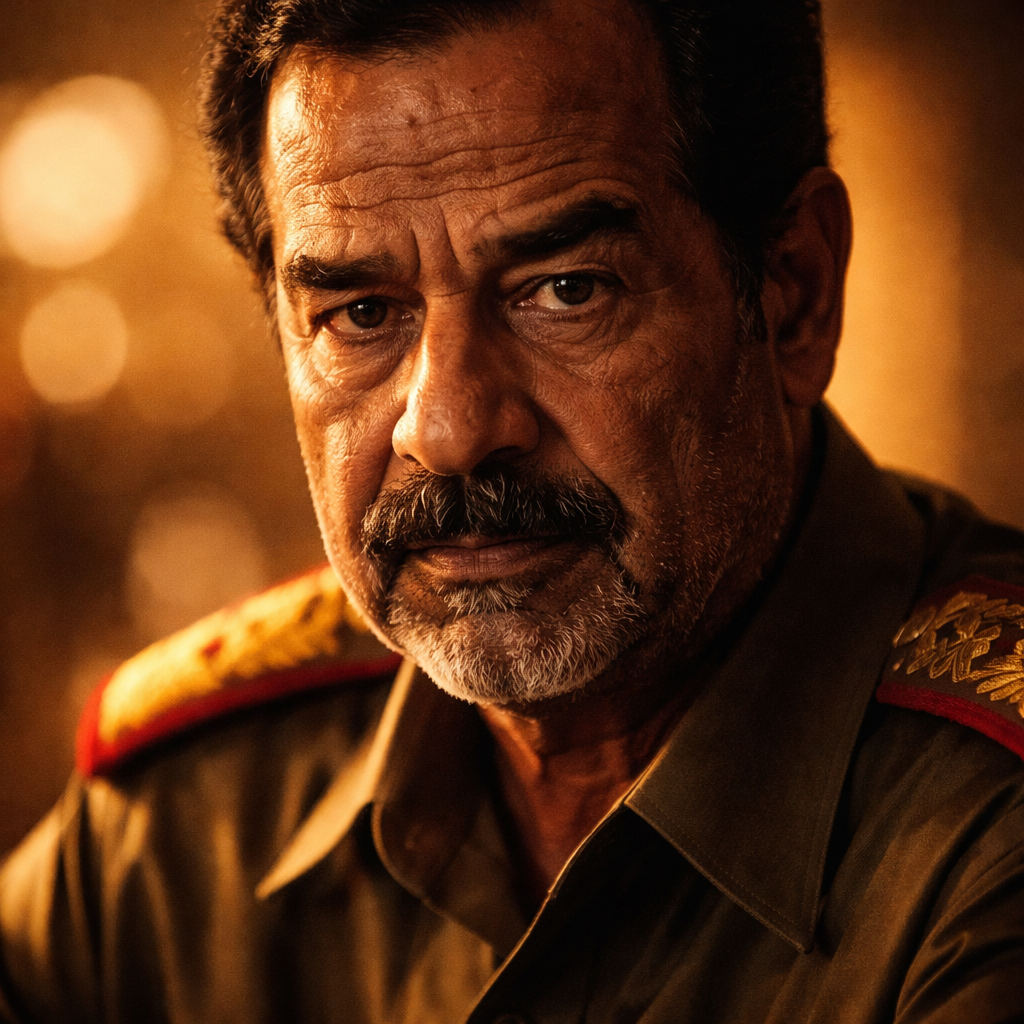
Saddam Hussein dropped through the trapdoor of a makeshift gallows in a fortified Iraqi intelligence building in the Kadhimiya district of Baghdad at approximately 6:10 AM on December 30, 2006, executed by hanging for crimes against humanity. The dictator who had ruled Iraq for twenty-four years, waged two devastating wars, and ordered the gassing of Kurdish villages went to his death reciting the shahada while guards in ski masks taunted him with chants of "Muqtada," a reference to the Shia cleric Muqtada al-Sadr. The execution was the final act of a trial conducted by the Iraqi High Tribunal that had convicted Saddam for the 1982 Dujail massacre, in which his security forces killed 148 Shia men and boys in retaliation for an assassination attempt during a presidential motorcade through the town. The tribunal, widely criticized by international legal observers for procedural irregularities, had sentenced Saddam to death on November 5, 2006. Three defense lawyers were assassinated during the proceedings, and the first presiding judge resigned under government pressure. A cell phone video leaked within hours, showing Saddam calm while executioners shouted Shia militia slogans. The footage spread virally across the internet and satellite television. The timing, on the first day of Eid al-Adha, was interpreted by Sunni Arabs as a deliberate provocation deepening the sectarian divisions tearing Iraq apart. The execution failed to bring the closure or national reconciliation that the Iraqi government and its American backers had hoped for. Sunni insurgent violence escalated sharply in the weeks that followed. Iraq continued to spiral into civil war throughout 2007 before the U.S. troop surge and the Sunni Awakening movement gradually reduced the killing. Saddam was buried in his hometown of Al-Awja near Tikrit, and his grave became a pilgrimage site for Sunni supporters before being destroyed during the Islamic State capture of the area in 2014.
Famous Birthdays
b. 1984
1884–1948
d. 81
b. 1950
b. 1947
Davy Jones
b. 1945
Jay Kay
b. 1969
Kevin Systrom
b. 1983
Omar Bongo
1935–2009
Sean Hannity
b. 1961
Tu Youyou
b. 1930
Asa Griggs Candler
d. 1929
Historical Events
American ambassador James Gadsden signed a treaty with Mexican President Antonio Lopez de Santa Anna on December 30, 1853, purchasing 29,670 square miles of desert territory south of the Gila River for $10 million. The Gadsden Purchase was the last major territorial acquisition by the United States in the contiguous lower 48 states, and its purpose was entirely practical: the flattest feasible route for a transcontinental railroad to the Pacific ran through land that still belonged to Mexico after the 1848 Treaty of Guadalupe Hidalgo. The purchase was driven by Secretary of War Jefferson Davis, a Mississippi senator and future president of the Confederacy, who championed a southern transcontinental railroad route that would connect New Orleans to San Diego and shift economic power toward the slaveholding South. Davis persuaded President Franklin Pierce to send Gadsden, a South Carolina railroad executive, to negotiate with Santa Anna, who desperately needed cash to fund his latest return to power and suppress domestic revolts. The original deal called for a much larger territory at $50 million, including most of northern Sonora and Chihuahua plus Gulf of California access. Northern senators, suspicious of the slavery connection, slashed the territory in half and reduced payment to $10 million. The final boundary created the distinctive notch in the Arizona-New Mexico border that is visible on any map of the United States. The irony of the Gadsden Purchase is that the southern railroad route it was designed to facilitate was not built for decades. The Civil War intervened, and the first transcontinental railroad was completed in 1869 along a central route through Nebraska, Wyoming, and Utah. The Southern Pacific Railroad finally crossed the purchased territory in 1881, connecting Los Angeles to El Paso. The region today encompasses Tucson, Yuma, and southwestern New Mexico.
Wayne Gretzky scored five goals in the third period against the Philadelphia Flyers on December 30, 1981, reaching fifty goals in just thirty-nine games and obliterating a record that hockey purists had considered untouchable. Maurice "Rocket" Richard had scored fifty goals in fifty games during the 1944-45 season, a benchmark so revered that the NHL named its goal-scoring trophy after him. Mike Bossy had matched the fifty-in-fifty mark the previous season. Gretzky did not merely break the record; he rendered it absurd. The Edmonton Oilers trailed 3-1 entering the third period that night at Northlands Coliseum. Gretzky, who had 45 goals entering the game, scored once early in the period to reach 46. Then the floodgates opened. He scored again at 15:46, then twice more in quick succession, reaching 49 with minutes remaining. With time running out and the crowd roaring, Gretzky intercepted a clearing pass, skated in alone on Philadelphia goaltender Pete Peeters, and slid the puck into the empty side of the net with three seconds left on the clock. The final score was Edmonton 7, Philadelphia 5. Gretzky was twenty years old. He had entered the NHL as a skinny teenager who skeptics dismissed as too slow and too fragile for professional hockey. What they missed was his unprecedented spatial intelligence. Gretzky did not skate to where the puck was; he anticipated where it would be, reading plays several passes ahead like a chess grandmaster. His father Walter had trained him on a backyard rink in Brantford, Ontario, having him trace the puck movement on paper during Hockey Night in Canada broadcasts until the patterns became instinctive. The fifty-in-thirty-nine record still stands as one of the most unbreakable in professional sports. Gretzky finished that season with 92 goals, another untouched record. No NHL player has scored more than 65 since 1996. He retired in 1999 holding 61 records, and the league retired his number 99 across all teams.
California opened the Arroyo Seco Parkway on December 30, 1940, connecting downtown Los Angeles to Pasadena along a six-mile ribbon of concrete that became the first freeway in the Western United States and the template for the car-dependent sprawl that would define American urban life for the next century. Governor Culbert Olson cut the ribbon before a crowd of thousands, and motorists immediately flooded onto the road, reaching Pasadena from downtown in just twelve minutes instead of the usual forty-five. The parkway had been conceived in the early 1930s as a scenic divided highway through the Arroyo Seco canyon, inspired by the landscaped parkways of the eastern United States. Engineers designed graceful curves, stone-faced bridges, and planted median strips that gave the road an aesthetic quality that later freeways would abandon entirely in favor of pure throughput. The speed limit was set at 45 miles per hour, and the acceleration lanes were just a few car lengths long, designed for vehicles that topped out at 60 mph and weighed half as much as modern SUVs. Traffic volumes exceeded projections from day one, and within a year the parkway carried twice its design capacity. The success convinced planners that limited-access highways solved urban congestion, launching a freeway boom that produced the 45,000-mile Interstate Highway System authorized by the Federal-Aid Highway Act of 1956. The consequences were deeply contradictory. Freeways enabled explosive suburban growth but destroyed urban neighborhoods, particularly communities of color, through which roads were deliberately routed. The Arroyo Seco Parkway was designated a National Scenic Byway, preserved as a relic of more optimistic highway design. Its tight curves and short merge lanes, charming in 1940, are terrifying at modern speeds, earning one of the highest accident rates per mile in California.
The United States halted the Christmas bombing of North Vietnam on December 30, 1972, ending Operation Linebacker II after eleven days of the most concentrated aerial bombardment of the war. B-52 Stratofortresses had flown over 700 sorties, dropping approximately 20,000 tons of bombs on Hanoi, Haiphong, and surrounding areas. The bombing killed an estimated 1,624 Vietnamese civilians and destroyed much of Hanoi's industrial infrastructure. President Richard Nixon had ordered the operation on December 18 after the Paris peace talks broke down. The North Vietnamese delegation had stiffened its negotiating position, and Nixon wanted to demonstrate that the United States retained the capacity and willingness to inflict devastating damage. He also needed to reassure South Vietnam's President Nguyen Van Thieu, who opposed the draft peace agreement, that the United States would use force if North Vietnam violated any settlement. The operation was controversial from the start. The B-52, a strategic bomber designed to deliver nuclear weapons in a general war with the Soviet Union, was being used against a country with a functioning air defense system. North Vietnam shot down fifteen B-52s during the campaign, killing or capturing over sixty American airmen. The losses challenged the Air Force's doctrine about the survivability of the B-52 in a modern air defense environment. International reaction was overwhelmingly negative. Sweden's Prime Minister Olof Palme compared the bombing to historical atrocities. Pope Paul VI condemned it. American allies in Europe distanced themselves. The bombing's effect on the peace negotiations remains debated. When talks resumed on January 8, 1973, the North Vietnamese agreed to terms similar to what had been on the table before the bombing, leading critics to argue that the campaign achieved nothing. Supporters contend that Linebacker II broke Hanoi's will and forced concessions that wouldn't have come otherwise. The Paris Peace Accords were signed on January 27, 1973. American forces withdrew. South Vietnam fell to the North two years later.
Saddam Hussein dropped through the trapdoor of a makeshift gallows in a fortified Iraqi intelligence building in the Kadhimiya district of Baghdad at approximately 6:10 AM on December 30, 2006, executed by hanging for crimes against humanity. The dictator who had ruled Iraq for twenty-four years, waged two devastating wars, and ordered the gassing of Kurdish villages went to his death reciting the shahada while guards in ski masks taunted him with chants of "Muqtada," a reference to the Shia cleric Muqtada al-Sadr. The execution was the final act of a trial conducted by the Iraqi High Tribunal that had convicted Saddam for the 1982 Dujail massacre, in which his security forces killed 148 Shia men and boys in retaliation for an assassination attempt during a presidential motorcade through the town. The tribunal, widely criticized by international legal observers for procedural irregularities, had sentenced Saddam to death on November 5, 2006. Three defense lawyers were assassinated during the proceedings, and the first presiding judge resigned under government pressure. A cell phone video leaked within hours, showing Saddam calm while executioners shouted Shia militia slogans. The footage spread virally across the internet and satellite television. The timing, on the first day of Eid al-Adha, was interpreted by Sunni Arabs as a deliberate provocation deepening the sectarian divisions tearing Iraq apart. The execution failed to bring the closure or national reconciliation that the Iraqi government and its American backers had hoped for. Sunni insurgent violence escalated sharply in the weeks that followed. Iraq continued to spiral into civil war throughout 2007 before the U.S. troop surge and the Sunni Awakening movement gradually reduced the killing. Saddam was buried in his hometown of Al-Awja near Tikrit, and his grave became a pilgrimage site for Sunni supporters before being destroyed during the Islamic State capture of the area in 2014.
Delegates from the Russian, Ukrainian, Byelorussian, and Transcaucasian Soviet republics gathered in the Bolshoi Theatre in Moscow on December 30, 1922, and voted to ratify the Treaty on the Creation of the Union of Soviet Socialist Republics, establishing the state that would dominate global politics for the next seven decades. Vladimir Lenin, the architect of the Bolshevik revolution, was too ill to attend. He was at his dacha in Gorki, partially paralyzed from a series of strokes, dictating increasingly alarmed memoranda warning that the union was being constructed on terms that would enable authoritarian abuse. Lenin envisioned a voluntary federation of equals, but Stalin, then Commissar of Nationalities, pushed for a structure subordinating the other republics to Russia. The compromise granted each republic the right to secede on paper, but the Party centralized all power in Moscow. Georgia, which had been forcibly incorporated into the Transcaucasian Federation by the Red Army in 1921, was particularly resistant. Lenin, upon learning that Stalin envoy Sergo Ordzhonikidze had physically struck a Georgian Bolshevik during negotiations, was furious and began drafting what became known as his "Testament," which recommended Stalin removal from power. The new state controlled one-sixth of the Earth land surface and encompassed more than a hundred nationalities speaking dozens of languages. The founding treaty established Moscow as the capital and declared the union open to any socialist republic worldwide. The Soviet flag bore no national emblems, only the universal hammer and sickle. Lenin died on January 21, 1924, before he could act on his warnings. Within five years, Stalin had eliminated all rivals and built the totalitarian system Lenin feared. The Soviet Union survived sixty-nine years before collapsing on Christmas Day 1991. The right to secede, dismissed as decorative for decades, was the legal mechanism the republics ultimately used to dissolve it.
Twenty-two people dead in six hours across Metro Manila. Five bombs detonated on December 30, 2000, the Philippines' most sacred national holiday, Rizal Day, commemorating the execution of national hero Jose Rizal in 1896. The first bomb exploded at 5:30 in the afternoon on a commuter bus in Makati, the financial district. The second hit a park in Pandacan. The third struck a mall parking lot. The fourth detonated near an airport cargo area. The fifth exploded at an LRT train station. Police found three more devices that failed to detonate. Most victims were ordinary Filipinos heading home after holiday celebrations or shopping for New Year's preparations. The deadliest attack occurred at 8:20 PM on a bus that had just picked up passengers near Glorietta Mall, killing thirteen people. The bombings targeted the holiday most associated with Filipino national identity, an act designed to maximize both casualties and psychological impact. Investigators traced the attacks to the Moro Islamic Liberation Front, the largest Muslim separatist group in Mindanao, though the MILF denied direct involvement and suggested a rogue faction was responsible. The Philippine government used the bombings as justification for its largest military offensive in years against separatist camps in central Mindanao, escalating a conflict that had simmered for decades. The Rizal Day bombings demonstrated that the insurgency in the southern Philippines could project violence into the national capital, a capability that fundamentally changed the security calculus. None of the bombers were ever conclusively identified in court. The attacks remain among the deadliest acts of terrorism in Philippine history.
King Brian Boru shatters the allied armies of Leinster and Dublin at Glenmama, ending their resistance to his rule. This crushing victory secures Munster's dominance over southern Ireland and sets the stage for Brian Boru's eventual coronation as High King of all Ireland. The aftermath reshaped military strategies and diplomatic calculations across the region for years, altering the balance of power between the combatants.
Joseph ibn Naghrela wasn't just any vizier — he was the most powerful Jew in Muslim Spain, commanding armies and collecting taxes for Granada's Berber king. That made him dangerous. On December 30th, a mob broke into the palace, dragged him through streets where he'd walked freely for years, and nailed him to a cross. Then they turned on the Jewish quarter. Over 4,000 dead in a single day. The massacre proved what medieval Jews already feared: rise too high under one ruler's protection and you become the next ruler's scapegoat. Granada's Jewish community never recovered. Most survivors fled to Christian kingdoms in the north, where protection came with its own price.
Louis XIII swears to uphold Catalan constitutions and accepts the title of Count of Barcelona, formally binding the Principality of Catalonia to the French crown. This act creates a personal union that temporarily halts the Reapers' War but ultimately deepens local resentment against Bourbon rule, fueling decades of conflict over autonomy. The aftermath reshaped military strategies and diplomatic calculations across the region for years, altering the balance of power between the combatants.
Governor James Moore had 500 English colonists and 300 Native American allies. He had Spanish Florida's capital surrounded for two months. Then Spanish ships appeared on the horizon with reinforcements. Moore burned his own siege equipment, torched the town outside the fort's walls, and ran. The retreat cost Carolina £4,000 — nearly bankrupting the colony — and Moore lost his governorship within a year. But the Spanish never rebuilt St. Augustine's outer town. For decades after, it stayed a garrison inside walls, nothing more. Moore's failure drew the battle lines for fifty years of colonial war.
The chiefs arrived in St. Louis expecting to negotiate hunting rights. They left having signed away 13.5 million acres across Illinois, Wisconsin, and Michigan — land the U.S. government needed to pay war debts from 1812. The treaty promised annual payments of $1,000 per tribe. Forever, it said. The payments stopped in 1833. But the land loss stuck: it opened the entire southern Great Lakes to settlement and pushed the tribes north into shrinking territories. Within 20 years, most would be forced west of the Mississippi entirely. The signatures on the treaty were X's — marks made by men who couldn't read what they were signing away.
Twenty-one Victorian scientists squeezed into the hollow belly of a concrete dinosaur and ate turtle soup. Benjamin Waterhouse Hawkins had built the first life-size model of an Iguanodon for the Crystal Palace grounds — 30 feet long, crouched on all fours like a massive iguana. On New Year's Eve 1853, he threw a dinner inside it. Richard Owen presided from the head, literally sitting where he thought the brain would be. They got the anatomy spectacularly wrong: Hawkins mounted the Iguanodon's thumb spike on its nose like a horn. But the party worked. When the Crystal Palace opened, two million people came to see the dinosaurs. Paleontology became a public obsession, and the word "dinosaur" — Owen had coined it just eleven years earlier — entered everyday language. That dinner made extinction entertaining.
The U.S. Army and Lakota warriors clash at the Drexel Mission just days after Wounded Knee, ending with a chaotic retreat that leaves twenty soldiers dead. This final armed engagement effectively extinguishes organized Native resistance on the Northern Plains, sealing the fate of the Sioux people under federal control. The aftermath reshaped military strategies and diplomatic calculations across the region for years, altering the balance of power between the combatants.
The Spanish soldiers aimed at his back. Rizal, 35, refused a blindfold and asked not to be shot in the head — he wanted to face his executors. They denied the request. At dawn in Bagumbayan Field, eight rifles fired. His final poem, smuggled out in an oil lamp the night before, wouldn't surface for weeks. Spain thought killing him would end the independence movement. Instead, it gave Filipinos their first martyr. Revolution exploded four months later. The doctor who wrote novels criticizing Spanish rule never picked up a weapon — but his death armed a nation. Today that field is called Rizal Park.
Fun Facts
Zodiac Sign
Sagittarius
Nov 22 -- Dec 21
Fire sign. Optimistic, adventurous, and philosophical.
Birthstone
Tanzanite
Violet blue
Symbolizes transformation, intuition, and spiritual growth.
Next Birthday
--
days until December 30
Quote of the Day
“Words are, of course, the most powerful drug used by mankind.”
Share Your Birthday
Create a beautiful birthday card with events and famous birthdays for December 30.
Create Birthday CardExplore Nearby Dates
Popular Dates
Explore more about December 30 in history. See the full date page for all events, browse December, or look up another birthday. Play history games or talk to historical figures.