

Historical Figure
Walter Raleigh
d. 1618
English statesman and explorer (1552–1618)
Talk to Walter Raleigh
Have a conversation with this historical figure through AI
Biography
Sir Walter Raleigh was an English statesman, soldier, writer and explorer. One of the most notable figures of the Elizabethan era, he played a leading part in English colonisation of North America, suppressed rebellion in Ireland, helped defend England against the Spanish Armada and held political positions under Elizabeth I.
Timeline
The story of Walter Raleigh, told in moments.
Knighted by Elizabeth I. Granted a royal patent to explore and colonize Virginia. He financed and organized the Roanoke voyages but never set foot in the colony himself. The settlement vanished without a trace.
Secretly married Elizabeth Throckmorton, one of the Queen's ladies-in-waiting. Elizabeth I hadn't given permission. Both were thrown in the Tower of London. After release, they retired to Sherborne in Dorset.
Arrested on dubious treason charges after James I took the throne. Spent 13 years imprisoned in the Tower, where he wrote a massive History of the World and conducted chemistry experiments.
Beheaded at Westminster. He'd been released from the Tower for one last expedition to find El Dorado in South America. It failed. Spain demanded his execution. He reportedly felt the axe blade and said, "This is a sharp medicine, but it is a physician for all diseases."
In Their Own Words (20)
Our passions are most like to floods and streams;The shallow murmur, but the deep are dumb.
Sir Walter Raleigh to the Queen (published 1655); alternately reported in Bartlett's Familiar Quotations, 10th ed. (1919) as:"Passions are likened best to floods and streams:The shallow murmur, but the deep are dumb"and titled The Silent Lover. Compare: "Altissima quæque flumina minimo sono labi", (translated: "The deepest rivers flow with the least sound"), Q. Curtius, vii. 4. 13. "Smooth runs the water where the brook is deep", William Shakespeare, 2 Henry VI. act iii. sc. i., 1919
The world itself is but a larger prison, out of which some are daily selected for execution.
Supposed to have been said by Raleigh to his friends as he was being taken to prison, on the day before his execution (William Stebbing Sir Walter Raleigh (1891), chapter 30), 1891
What dependence can I have on the alleged events of ancient history, when I find such difficulty in ascertaining the truth regarding a matter that has taken place only a few minutes ago, and almost in my own presence!
Upon receiving discrepant accounts from the participants in a recent quarrel below his window., 1859
He that doth not as other men do, but endeavoureth that which ought to be done, shall thereby rather incur peril than preservation; for whoso laboureth to be sincerely perfect and good shall necessarily perish, living among men that are generally evil.
Chapter 25, 1658
Whoso desireth to govern well and securely, it behoveth him to have a vigilant eye to the proceedings of great princes, and to consider seriously of their designs.
Chapter 25, 1658
Artifacts (15)

Design for Frame Surrounding the Portrait of Sir Walter Raleigh
Gravelot, French
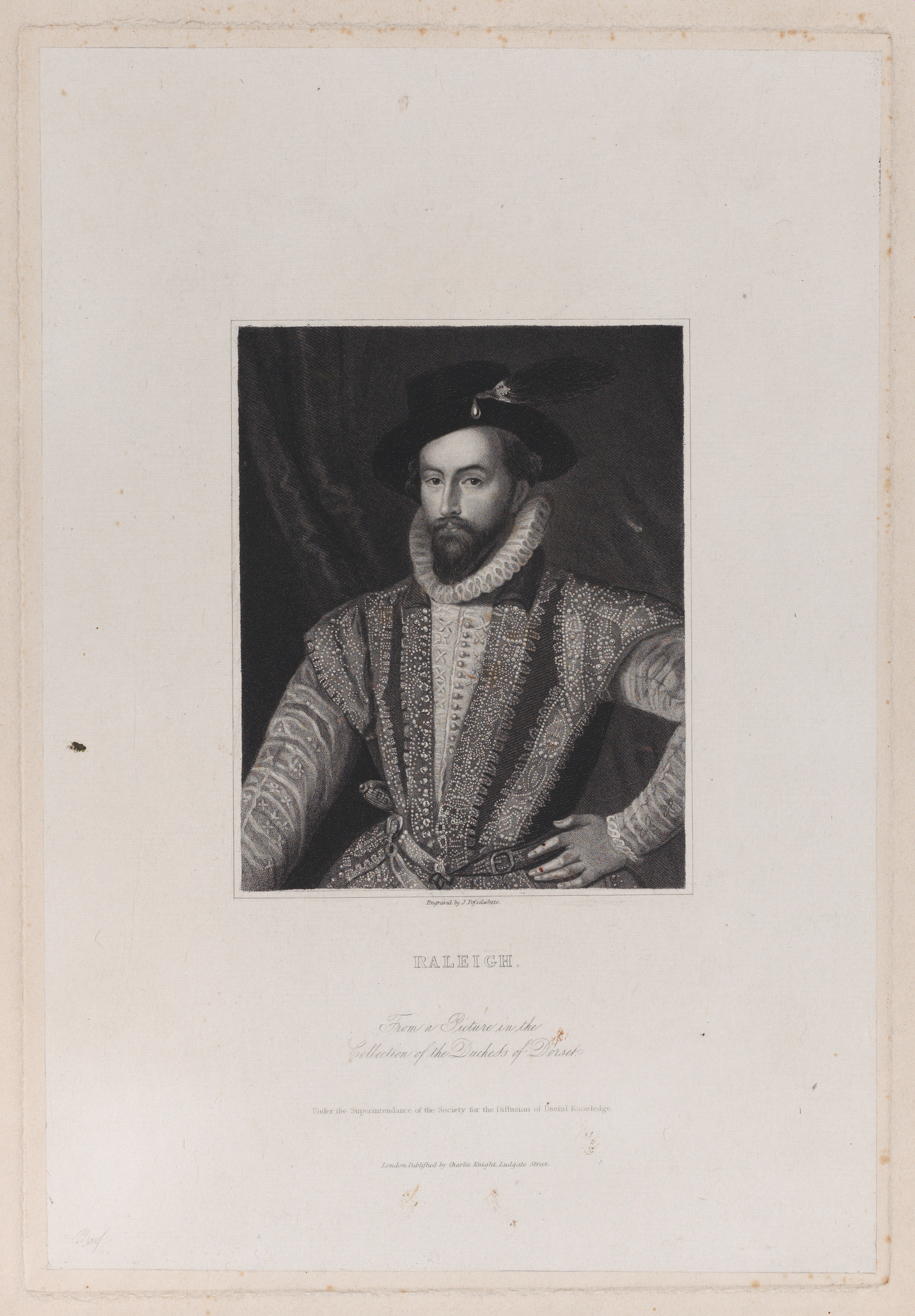
Sir Walter Raleigh
James Posselwhite|Charles Knight I|Sir Walter Raleigh

Sir Walter Raleigh Parting with His Wife
Charles Burt, born Edinburgh, Scotland 1823-died New York City 1892

Sir Walter Raleigh Parting with His Wife
Charles Burt, born Edinburgh, Scotland 1823-died New York City 1892

Sir Walter Raleigh
Simon van de Passe, c. 1595 - 6 May 1647

Related Historical Figures


Explore what happened on the days that shaped Walter Raleigh's life. Today In History connects historical figures with the events, births, and deaths that defined their era. Browse all historical figures or explore today's events.